 Save
Save There's something about a pot roast that stops time in a kitchen. My grandmother used to make this on Sunday afternoons, and the smell would drift through the house by the time we arrived for dinner, announcing comfort before we even walked through the door. I learned that the secret isn't in rushing it—it's in letting the oven do the heavy lifting while you sit nearby with a cup of coffee. The first time I made it myself, I was nervous about whether three hours was too long, but the moment I lifted that lid and saw the beef practically dissolving at the touch of a fork, I understood why she never worried.
I made this for my brother during his first week back home after moving away, and I watched him eat in complete silence for a few minutes before he looked up and said it tasted exactly like Sunday dinner. That moment reminded me that cooking isn't about impressing anyone—it's about making people feel like they belong. Now whenever someone's had a rough day or we need an excuse to gather, this is what I reach for.
Ingredients
- Chuck roast (3–4 lbs): This cut has enough fat and connective tissue to become silky under long, slow heat—don't skip it or use a leaner cut, or you'll miss the whole point.
- Kosher salt and black pepper: Pat the meat dry first so the seasoning sticks, and don't be shy with either one.
- Olive oil: You need enough to create a proper sear, which locks in flavor and gives the gravy depth.
- Yukon Gold or Russet potatoes: Cut them large so they don't fall apart during the long braise—you want them tender but whole.
- Carrots and onions: Cut everything into similar-sized pieces so everything cooks evenly and looks intentional on the plate.
- Garlic: Smashed cloves release their flavor without overpowering the dish.
- Beef broth: Good broth tastes like it's been simmered all day—cheap broth tastes like it hasn't, so spend a little here.
- Red wine: It's optional only if you decide it is; it adds a subtle richness that makes people ask what your secret ingredient is.
- Tomato paste, Worcestershire sauce: These two add umami depth that makes the gravy taste like you've been cooking for hours, not just watching the oven.
- Thyme and bay leaves: Fresh thyme is better if you have it, but dried works beautifully too.
- Flour or cornstarch: Save this for the end to thicken the gravy into something silky and elegant.
Tired of Takeout? 🥡
Get 10 meals you can make faster than delivery arrives. Seriously.
One email. No spam. Unsubscribe anytime.
Instructions
- Set your oven to low and patient:
- Preheat to 300°F—this gentle heat is what transforms a tough cut of meat into something tender enough to cut with a spoon.
- Dry the roast and season generously:
- Pat it completely dry with paper towels, then season all sides with salt and pepper, getting into any crevices you can find.
- Sear the beef until it's deeply golden:
- Get your Dutch oven smoking hot with olive oil, then place the roast down and don't move it for 4–5 minutes per side until a dark crust forms—this is where flavor lives.
- Build flavor with aromatics:
- After removing the roast, sauté the onions and garlic in the same pot until fragrant, then stir in tomato paste for a minute to deepen it.
- Deglaze with wine and gather the browned bits:
- Pour in red wine (if using) and scrape the bottom with a wooden spoon—all those crusty bits are pure flavor.
- Return the roast to its braising liquid:
- Add back the beef, then pour in broth, Worcestershire, thyme, and bay leaves, letting everything become acquainted.
- Nestle vegetables around the beef:
- Arrange potatoes and carrots in the liquid so they'll cook through and absorb all the flavors while the roast braises.
- Cover and let the oven work its magic:
- Transfer to the 300°F oven for 3–3½ hours, until the beef is fork-tender and the vegetables are soft but still holding their shape.
- Transfer everything to a platter and skim the fat:
- Remove the roast and vegetables carefully, then skim or pour off the excess fat from the braising liquid so the gravy isn't greasy.
- Make the gravy silky:
- Whisk flour with cold water until smooth, stir it into the pot on medium heat, and whisk constantly for 3–5 minutes until the gravy thickens into something glossy and clingable.
- Slice and serve with ceremony:
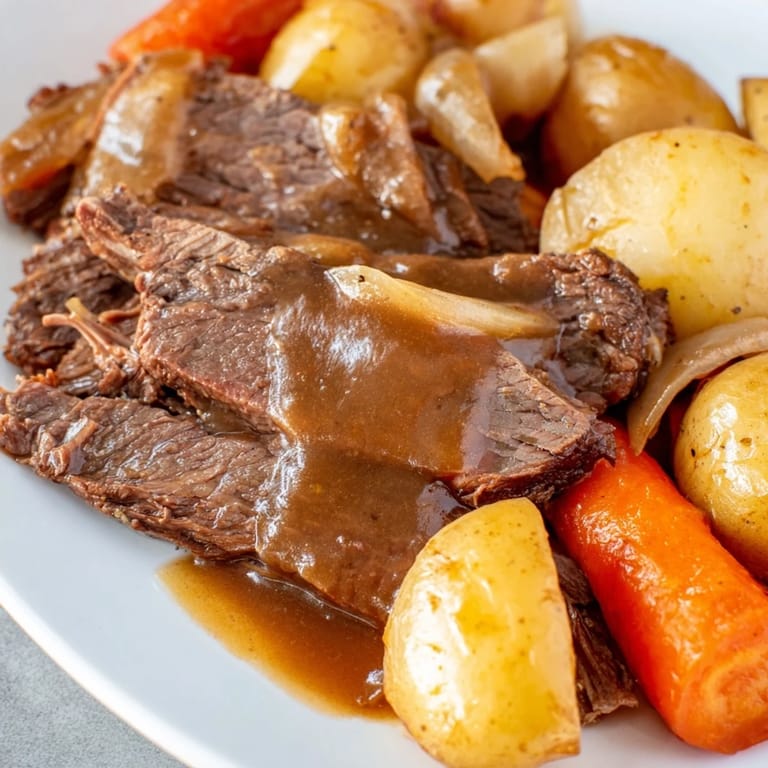
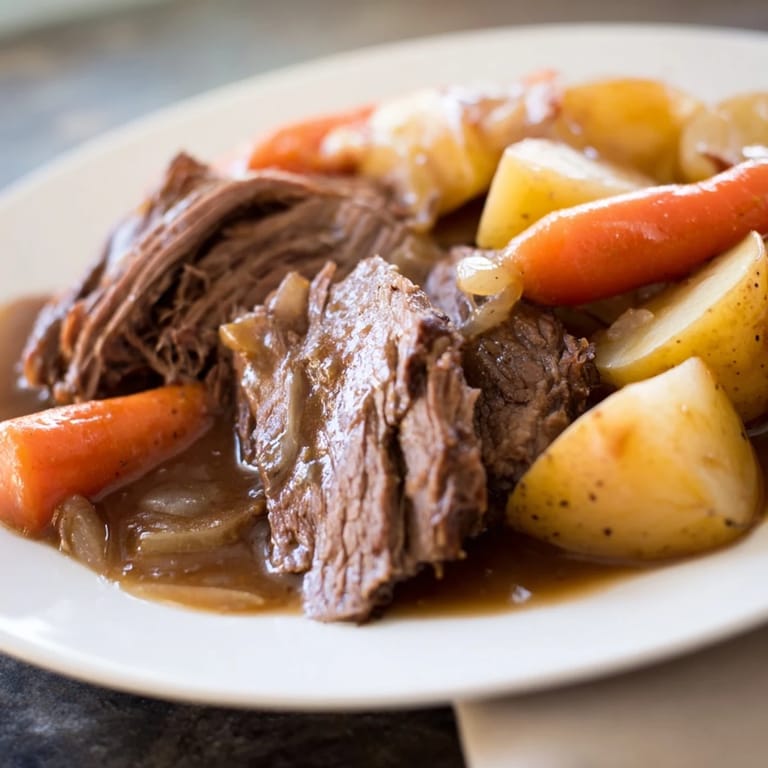
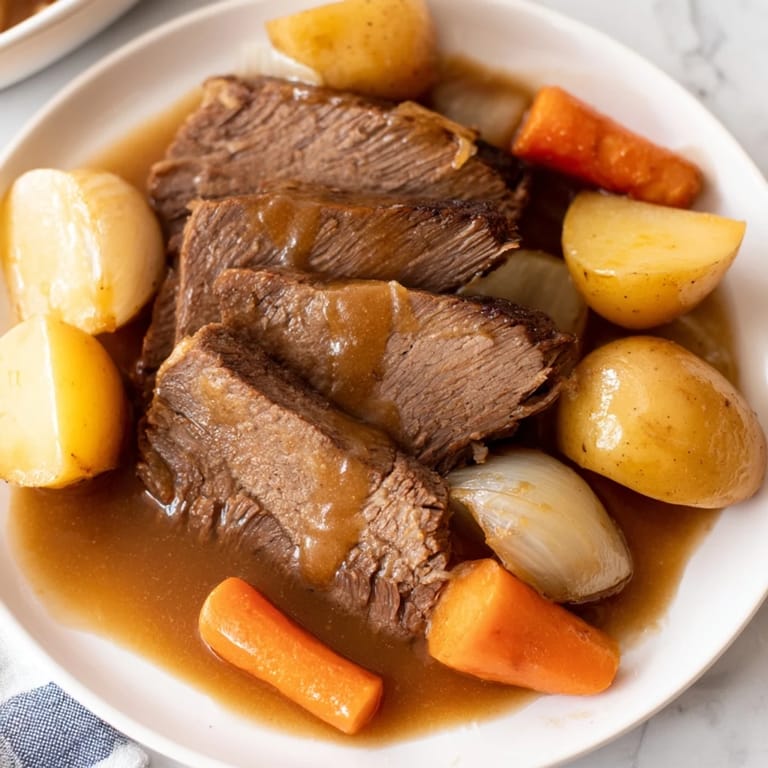
- Slice the beef into thick pieces and arrange it with vegetables, pouring that rich gravy over everything.
 Save
Save My neighbor once asked me why I made pot roast when I could just order it, and I realized I'd never thought of it as an alternative to something—it's its own kind of ritual, the specific kind of care that says someone matters enough to spend an afternoon on. Every time I make it now, I'm teaching myself something about patience.
The Power of Slow Cooking
Pot roast taught me that some of the best things in cooking happen when you stop trying to rush them. The low oven temperature works steadily, breaking down tough muscle fibers into something yielding and tender. There's no substitute for time here, and no shortcut that won't show up in the final bite.
Making It Your Own
My uncle adds parsnips because his mother did, and my friend swears by a dash of balsamic vinegar at the end. The beauty of pot roast is that it's forgiving enough to welcome your own preferences without losing its essential character. I've added mushrooms on nights when I had them, celery when I wanted more earthiness, and extra garlic whenever I was feeling bold.
Serving and Storing
Crusty bread is non-negotiable if you want to capture every drop of gravy—I learned this the hard way by watching it pool on plates and wishing I had something to soak it up. Leftovers are genuinely better the next day after the flavors have become even more intimate, and they make sandwiches that taste like comfort food in edible form.
- Serve with bread hearty enough to hold up to the gravy without falling apart.
- Store leftovers in an airtight container in the fridge for up to four days, and reheat gently on the stovetop with a splash of water if needed.
- Freeze portions in individual containers for moments when you need exactly this kind of dinner without the hours of cooking.
 Save
Save This is the meal that teaches you cooking isn't about perfection—it's about showing up and letting time do what it does best. Make this when you want to feel like you belong in your own kitchen.
Recipe FAQs
- → What cut of beef works best?
A chuck roast of about 3 to 4 pounds is ideal for slow cooking as it becomes tender and flavorful.
- → Can I skip the red wine?
Yes, you can substitute red wine with extra beef broth for a similar depth of flavor.
- → How do I make the gravy gluten-free?
Use cornstarch instead of all-purpose flour to thicken the gravy without gluten.
- → How long should the dish braise?
It needs 3 to 3½ hours of slow cooking to ensure the beef is fork-tender and vegetables are perfectly cooked.
- → Can I add other vegetables?
Yes, parsnips or celery can be added with the potatoes and carrots for extra flavor and texture.
- → What sides complement this dish?
Crusty bread is excellent for soaking up the gravy, and a robust red wine pairs nicely.