 Save
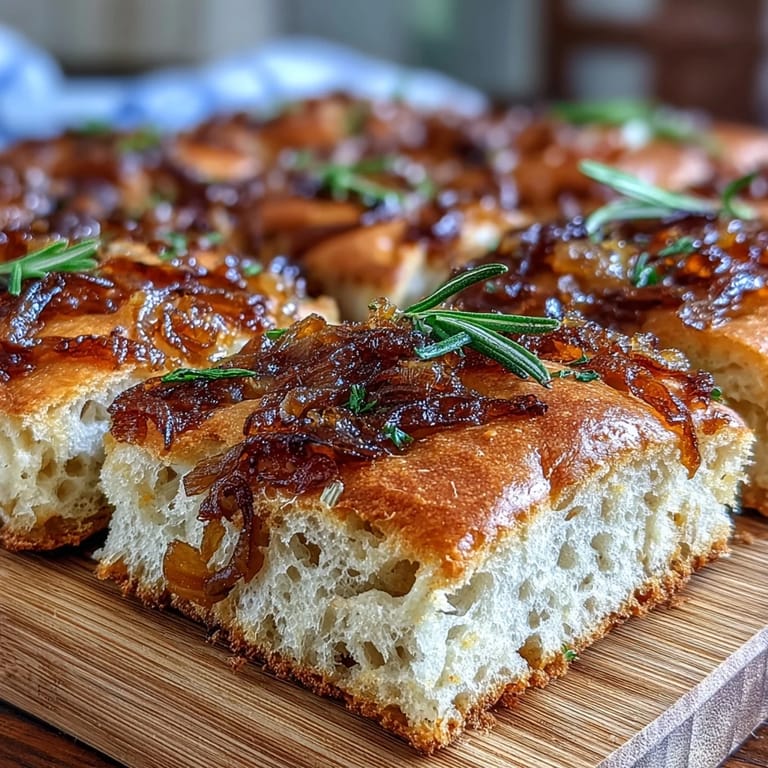
Save There's something almost meditative about watching sourdough transform in your hands—the way it goes from a loose, sticky mess to something with actual structure and personality. I discovered this focaccia recipe during one of those weeks when my starter was particularly bubbly and demanding, and I needed something more interesting than plain bread. The first time I pressed those dimples into the dough and scattered caramelized onions across the top, my kitchen smelled like a Venetian bakery, and honestly, I knew I'd found something special.
I made this for my sister's potluck last month, and watching people's faces when they bit into it—that perfect combination of chewy crumb and crispy crust with the savory sweetness of the onions—made me realize why focaccia has been around for centuries. She actually asked for the recipe before she'd even finished her first slice, which felt like the highest compliment.
Ingredients
- Active sourdough starter (100 g, 100% hydration): This is the soul of your bread; use it when it's bubbly and at its peak, ideally right after feeding.
- Bread flour (400 g): The protein content matters here for structure—it'll give you those beautiful open crumbs you're after.
- Lukewarm water (300 ml): Temperature matters more than you'd think; too hot kills the starter, too cold and fermentation crawls.
- Fine sea salt (10 g): Added after the autolyse to avoid inhibiting gluten development right from the start.
- Extra-virgin olive oil (20 ml for dough, plus more for topping): This enriches the dough and creates that tender, almost brioche-like crumb that makes focaccia different from other breads.
- Yellow onions (2 medium, thinly sliced): The thinner you slice them, the faster they caramelize and the more evenly they cook.
- Flaky sea salt (1 tsp) and fresh rosemary (1 tsp, optional): The flaky salt gives you those satisfying texture pops; rosemary adds a subtle earthiness that whispers rather than shouts.
Tired of Takeout? 🥡
Get 10 meals you can make faster than delivery arrives. Seriously.
One email. No spam. Unsubscribe anytime.
Instructions
- Mix your base and let it rest:
- Combine your starter, flour, and water in a large bowl until everything is shaggy and shaggy—no need for it to look pretty yet. Cover it and walk away for 30 minutes while the flour fully hydrates and the gluten network begins to wake up.
- Bring salt and oil into the party:
- Add your salt and olive oil, then mix until they're fully incorporated into the dough. This might feel a bit stiff at first, but trust the process.
- Build strength through stretch and folds:
- Over the next 2 hours, perform 3–4 sets of stretch and folds every 30 minutes—literally grab one side of the dough, stretch it up and fold it over itself, rotate the bowl, and repeat. You'll feel the dough getting stronger and more cohesive with each set.
- Let it rise and develop:
- Cover the bowl and let it hang out at room temperature for 6–8 hours until it's roughly doubled. You'll see bubbles on the surface and smell that distinctive sourdough tang developing.
- Transfer with care:
- Oil your 9x13-inch pan generously, then gently tip your dough into it, being careful not to deflate all those bubbles you've worked to create. This is where patience pays off.
- Stretch, cover, and chill:
- With oiled fingers, gently stretch the dough to fit the pan edges, cover it, and refrigerate overnight for 8–12 hours. This cold rise is where the real flavor magic happens.
- Get your onions golden:
- While the dough sleeps, heat 1 tbsp olive oil in a skillet over medium-low heat and add your sliced onions. Stir occasionally for 20–25 minutes until they're soft, golden, and smell unbelievably sweet—don't rush this step. Let them cool completely before using.
- Bring dough back to room temperature:
- Remove the dough from the fridge about an hour before baking so it wakes up and comes back to life.
- Dimple, dress, and bake:
- Preheat your oven to 220°C (425°F), then use your fingertips to create those signature focaccia dimples across the entire surface. Drizzle with a bit more olive oil, scatter your caramelized onions evenly, then finish with flaky salt, rosemary if you're using it, and a grind of black pepper.
- Bake until golden:
- Bake for 25–30 minutes until the edges are crispy and golden brown and the aroma fills your entire home. You'll know it's done when it sounds hollow if you tap the bottom.
- Cool and enjoy:
- Let it rest for a few minutes before slicing—this helps everything set so you get clean, beautiful pieces instead of a crumbly mess.
 Save
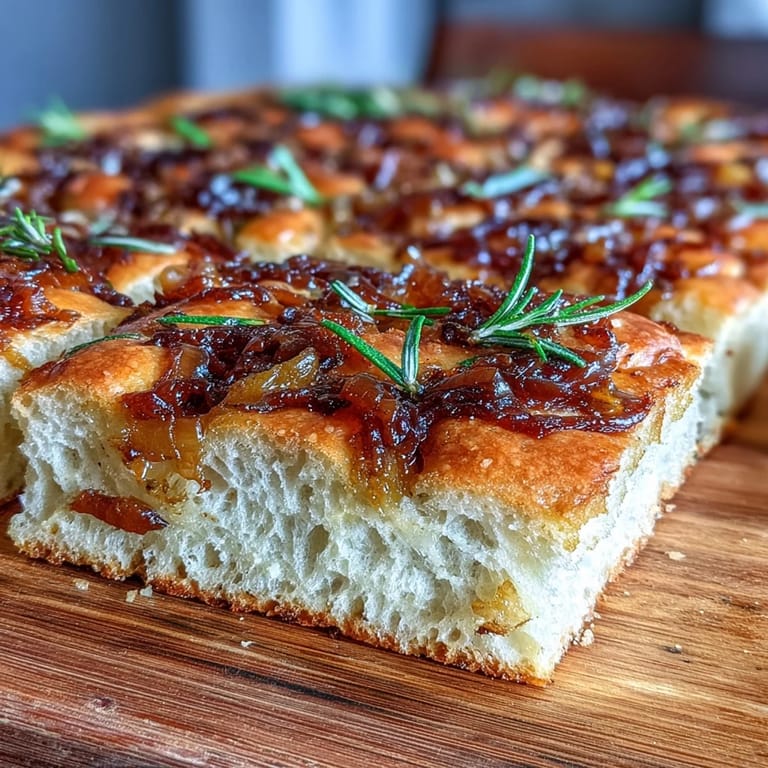
Save There was this quiet moment while the focaccia was baking—my kitchen filled with that warm, yeasty, onion-sweet smell—when I realized this bread had become something I make not because I need to prove myself as a baker, but because it makes people happy. That's when I knew it was truly special.
Understanding Your Sourdough Starter
Your starter is a living thing, and it has moods just like you do—sometimes it's enthusiastic and bubbly, sometimes it needs more time. If your kitchen is cold, fermentation takes longer, and that's actually fine; cold slow rises develop deeper flavors. If you've just fed it, wait until it's doubled and showing those visible bubbles on top before using it in this recipe. I learned this the hard way by assuming my starter was ready when it really needed another couple of hours, and the resulting focaccia was a bit dense and underwhelming.
The Science Behind the Overnight Rest
That cold overnight refrigeration does three beautiful things simultaneously: the gluten continues to develop slowly and evenly, the flavor compounds multiply and deepen (this is called cold fermentation), and the dough becomes easier to handle because the gluten has fully relaxed. When you pull it out the next morning and let it come to room temperature, you're essentially giving it the perfect conditions to rise one final time before baking. This is why focaccia made with an overnight rest tastes so much more complex than focaccia made in a single day.
Variations and Serving Ideas
This focaccia is beautiful as-is, but it's also a wonderful foundation for your own creative additions. Consider mixing sliced olives or sun-dried tomatoes in with the caramelized onions, or try adding a handful of fresh herbs like thyme or oregano to the topping. It's equally delicious served warm with a simple olive oil for dipping, torn into pieces for a crowd, or even sliced horizontally and used as sandwich bread the next day.
- If you add extra toppings, go light on them so the bread's airiness isn't weighed down.
- Leftovers reheat beautifully in a toaster oven at low heat for about five minutes, reviving the crispy crust.
- This bread pairs wonderfully with soup, makes incredible bruschetta base, or stands entirely on its own with just good olive oil and sea salt.
 Save
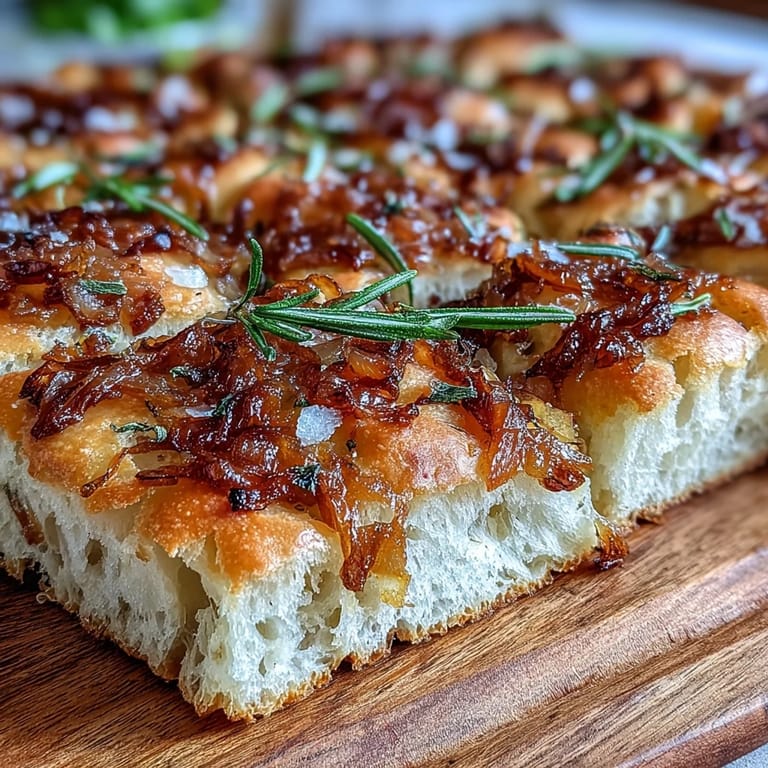
Save This focaccia has become my go-to bread for sharing, the one people remember and ask about months later. Make it once and you'll understand why it's been beloved in Italian kitchens for generations.
Recipe FAQs
- → How do I achieve a chewy texture in focaccia?
Using a slow fermentation process with sourdough starter and performing stretch and folds builds gluten, resulting in a chewy, airy texture.
- → What’s the best way to caramelize onions for the topping?
Cook sliced onions slowly over medium-low heat with olive oil, stirring occasionally, until golden and soft, about 20-25 minutes.
- → Can I add other toppings to this focaccia?
Yes, sliced olives or sun-dried tomatoes work well alongside caramelized onions for extra flavor.
- → How should I store leftovers for best quality?
Store wrapped at room temperature for up to two days or reheat slices in a toaster oven before serving.
- → What’s the ideal baking temperature for focaccia?
Bake at a high temperature around 220°C (425°F) to achieve a crisp, golden crust.