 Save
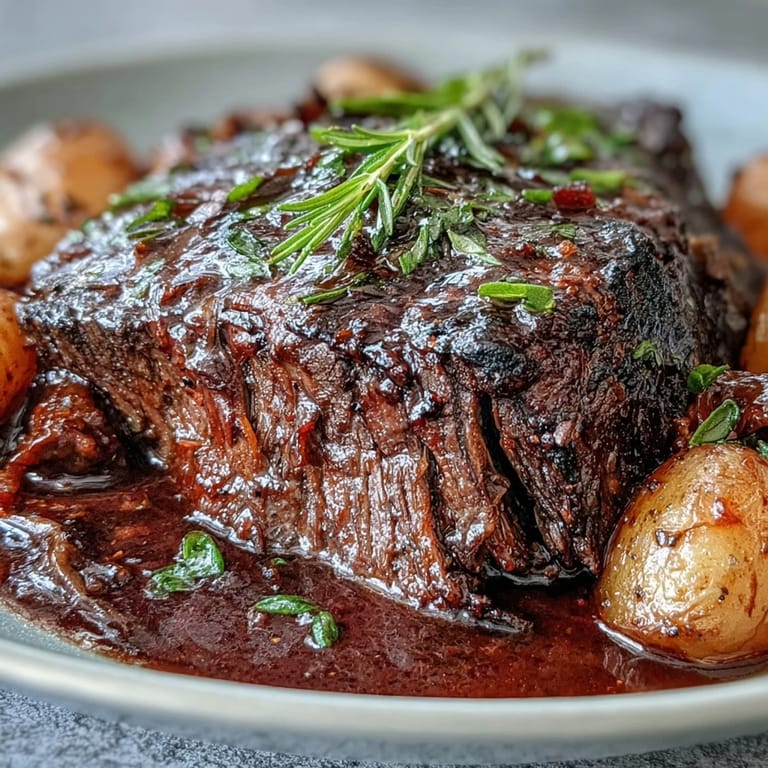
Save The smell of seared meat hitting a hot pan still reminds me of Sunday afternoons when my kitchen would fog up with the kind of rich, savory steam that clings to your sweater. I used to think pot roast was something only grandmothers could master, but one winter I grabbed a chuck roast on sale and decided to stop overthinking it. Three hours later, my apartment smelled like a French bistro, and I realized the secret was just time and a little bit of courage with the browning. Now it's my go-to when I want to feel like I've accomplished something warm and real. This recipe has pulled me out of more dinner ruts than I can count.
I made this for my neighbors once during a snowstorm, and they still bring it up every winter. We ate straight from the pot at my kitchen counter, dipping crusty bread into the gravy and laughing about how none of us wanted to go back outside. The potatoes had soaked up all that winey, herby broth, and the carrots were sweet and soft but still held their shape. It was one of those meals where no one talked much because everyone was too busy eating. I think that's when I realized pot roast isn't just food, it's a reason to gather.
Ingredients
- Beef chuck roast (3 to 3.5 lb): Look for good marbling, those white streaks of fat are what make the meat melt-in-your-mouth tender after hours of braising.
- Kosher salt and black pepper: Season generously, the meat is thick and needs bold flavor on every surface before it even hits the pan.
- All-purpose flour (2 tbsp): A light dusting helps create that gorgeous brown crust and also thickens the gravy naturally as it cooks.
- Olive oil and butter (3 tbsp oil, 1 tbsp butter): The combination gives you a high smoke point plus rich flavor, perfect for getting a deep sear without burning.
- Yellow onion (1 large): Cut into thick wedges so they soften and sweeten but don't disappear into the sauce.
- Garlic (4 cloves, smashed): Smashing releases more flavor than mincing, and it mellows beautifully during the long braise.
- Carrots, celery, baby potatoes: These soak up the braising liquid and become almost as important as the beef itself, so don't skimp.
- Tomato paste (2 tbsp): Cooking it for a minute or two in the pot caramelizes the sugars and adds serious umami depth.
- Dry red wine (1 cup): Use something you'd actually drink, nothing fancy, but not cooking wine either, it deglazes the pan and adds complexity.
- Beef broth (2.5 cups): Low-sodium is key so you control the salt level, especially as the liquid reduces.
- Worcestershire sauce (1 tsp): Just a splash adds a subtle tangy, savory backbone you can't quite place but definitely notice.
- Fresh rosemary, thyme, bay leaves: These herbs transform the broth into something that tastes like it simmered all day in a countryside kitchen.
- Cornstarch slurry (optional): If you like a thicker, gravy-like sauce, this is your friend, but the flour on the meat often does enough on its own.
- Fresh parsley (optional): A sprinkle at the end adds a pop of color and a hint of freshness to balance all that richness.
Tired of Takeout? 🥡
Get 10 meals you can make faster than delivery arrives. Seriously.
One email. No spam. Unsubscribe anytime.
Instructions
- Preheat and Prep the Beef:
- Set your oven to 300°F if you're using it, though stovetop works beautifully too. Pat the roast completely dry with paper towels, this is crucial for a good sear, then season every side generously with salt and pepper before dusting lightly with flour.
- Sear the Roast:
- Heat 2 tablespoons oil and the butter in a heavy Dutch oven over medium-high until shimmering. Lay the roast in carefully and let it sit undisturbed for 4 to 5 minutes per side until it's deeply browned and crusty, don't forget the edges.
- Sauté the Aromatics:
- Remove the beef to a plate and lower the heat to medium. Add the onion wedges and cook until they soften and turn golden, about 3 to 4 minutes, then toss in the garlic and let it bloom for just 30 seconds.
- Build the Base:
- Stir in the tomato paste and cook it for a minute or two until it darkens and smells sweet. Pour in the wine and scrape up all those beautiful browned bits stuck to the bottom, let it bubble and reduce slightly for 2 to 3 minutes.
- Add Broth and Herbs:
- Pour in the beef broth and Worcestershire sauce, stirring to combine. Toss in the rosemary, thyme, and bay leaves, then nestle the roast back into the pot along with any juices from the plate.
- Begin the Braise:
- Bring everything to a gentle simmer, then cover the pot tightly. Either reduce the heat to low on the stovetop or slide it into the oven and let it cook undisturbed for 1 and a half hours.
- Add the Vegetables:
- Carefully flip the roast over, then tuck the carrots, celery, and potatoes around and under the meat. Re-cover and continue cooking for another 1 and a half to 2 hours until the beef shreds easily and the vegetables are tender.
- Rest and Finish the Sauce:
- Transfer the roast and vegetables to a platter and tent with foil. Skim off any excess fat floating on top of the liquid, then bring it to a simmer and whisk in the cornstarch slurry if you want a thicker gravy.
- Serve:
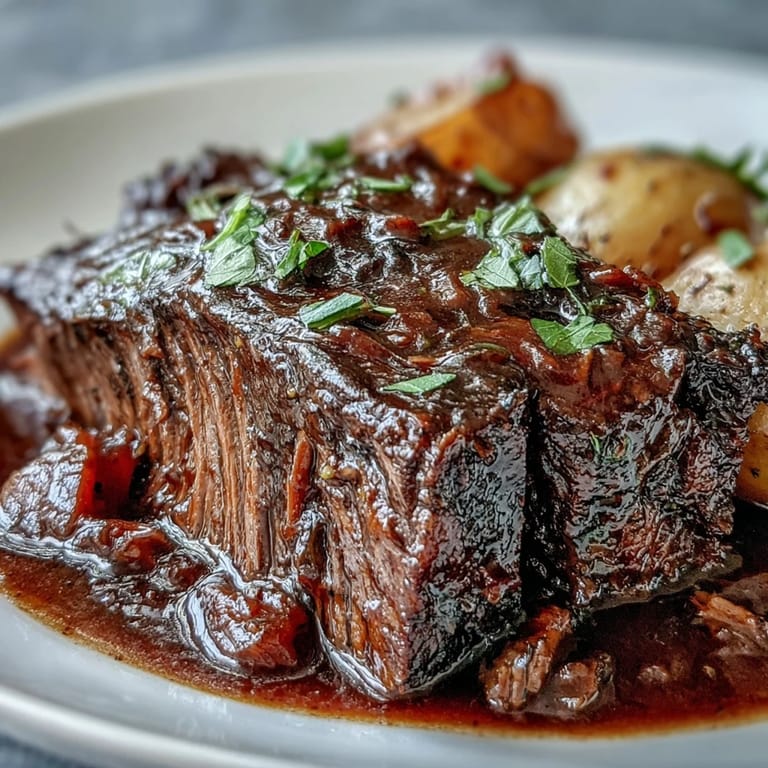
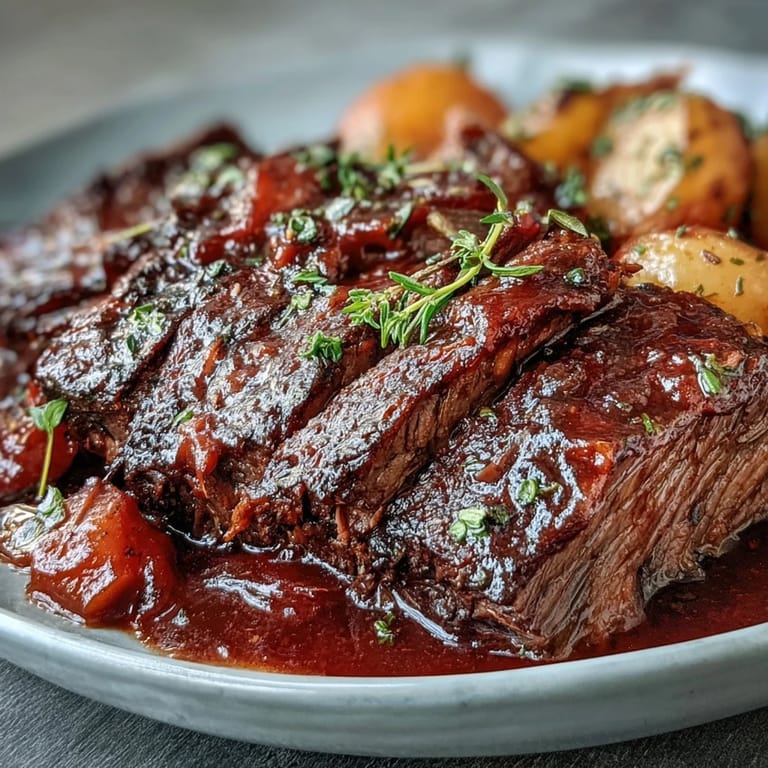
- Remove the herb stems and bay leaves. Slice or shred the beef, arrange it with the vegetables, and spoon that glossy, fragrant sauce all over the top.
 Save
Save One evening I served this to a friend who'd had a terrible week, and she sat at my table and cried a little into her bowl. Not sad tears, just the kind that come when something warm and nourishing reminds you that life can be gentle. She told me it tasted like being taken care of, and I've never forgotten that. It's funny how a pot of beef and vegetables can say things words can't.
How to Store and Reheat Leftovers
Let everything cool to room temperature, then pack the beef, vegetables, and gravy together in an airtight container. It keeps beautifully in the fridge for up to four days, and honestly, the flavors deepen overnight as everything marinates in that rich sauce. To reheat, warm it gently on the stovetop over low heat with a splash of broth or water to loosen the gravy, or microwave in short intervals, stirring in between. I've also frozen portions in heavy-duty freezer bags for up to three months, just thaw in the fridge overnight before reheating.
What to Serve Alongside
This pot roast is hearty enough to stand on its own, but a basket of warm, crusty bread for dipping is almost mandatory in my house. Buttered egg noodles or creamy mashed potatoes are classic pairings that soak up the gravy beautifully, and a simple green salad with a tangy vinaigrette helps cut through all that richness. If you're feeling ambitious, roasted Brussels sprouts or glazed green beans add a nice pop of color and texture. I've even served it over soft polenta when I wanted something a little different, and it was a hit.
Variations and Substitutions
If you don't have red wine or prefer to skip the alcohol, just use an extra cup of beef broth with a splash of balsamic vinegar for acidity. You can swap the chuck roast for a blade roast or even a brisket, though cooking times may vary slightly depending on the cut. For a deeper flavor, try adding a tablespoon of Dijon mustard or a few dashes of soy sauce to the braising liquid. Vegetable-wise, parsnips, turnips, or sweet potatoes all work beautifully in place of or alongside the traditional carrots and potatoes.
- Use gluten-free flour and check your broth and Worcestershire labels if you need this to be gluten-free.
- Skip the butter and use all olive oil for a dairy-free version.
- Add a pinch of smoked paprika or a chipotle pepper for a subtle smoky kick.
 Save
Save This pot roast has become my answer to cold nights, hard days, and the simple desire to make something that feels like a hug. I hope it becomes that for you too.
Recipe FAQs
- → What cut of beef works best?
Chuck roast or blade roast with good marbling is ideal. The connective tissue breaks down during long cooking, creating tender, succulent meat that shreds beautifully.
- → Can I make this without alcohol?
Absolutely. Replace the red wine with additional beef broth. The flavor will still be rich and satisfying from the tomato paste, herbs, and caramelized beef.
- → Why is searing important?
Searing creates a deep brown crust through the Maillard reaction, adding complex flavor compounds that infuse the entire braising liquid with depth and richness.
- → When should I add vegetables?
Add hearty vegetables like carrots, celery, and potatoes halfway through cooking so they become tender without falling apart. More delicate vegetables can go in during the last hour.
- → How do I thicken the gravy?
Either coat the beef in flour before searing, or create a cornstarch slurry at the end. Simmer the liquid after removing the meat and whisk in the slurry until desired thickness.
- → Can this be made ahead?
This dish actually improves overnight. The flavors meld and the fat renders further, making leftovers even more delicious. Cool completely before refrigerating, then reheat gently.