 Save
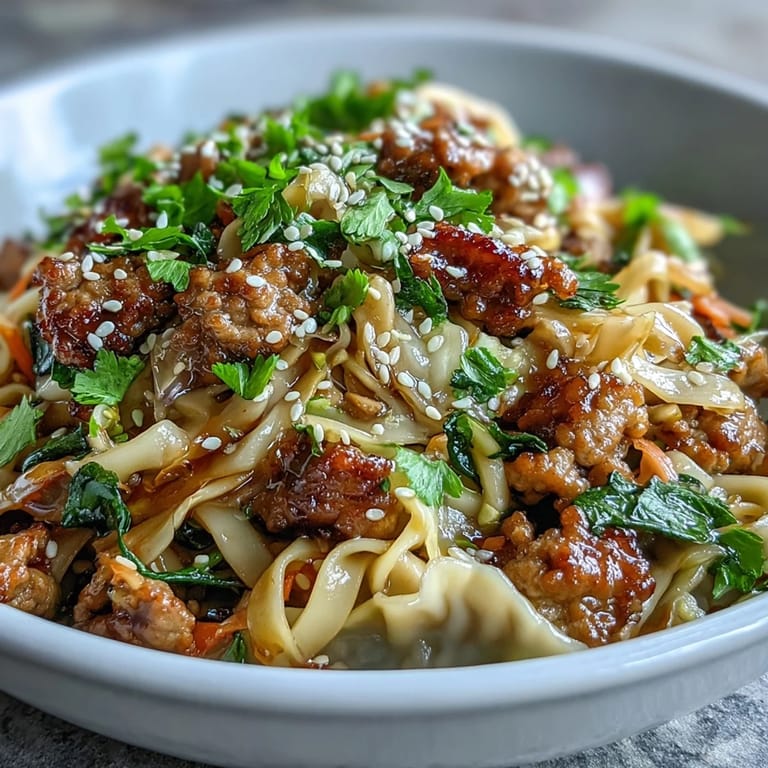
Save The skillet was smoking hot, and I could hear the pork sizzling the moment it hit the pan. I wasn't trying to make potstickers that night, I just wanted their flavor without the folding, the pleating, the anxiety of tearing wrappers. So I threw everything into a bowl with noodles instead. My husband walked in, sniffed the air, and asked if I'd ordered takeout.
I made this for my sister during one of her late-night study sessions, and she ate it straight from the skillet while flipping through textbooks. She told me it tasted like the potstickers we used to split at the campus food court, but better because the noodles soaked up all the sauce. Now she texts me every few weeks asking if I remember the recipe, even though I've sent it to her twice.
Ingredients
- Rice noodles or lo mein noodles: Rice noodles stay tender and slippery, soaking up the sauce beautifully, while lo mein gives you chewier bite; either works, just don't overcook them or they'll turn mushy.
- Ground pork or chicken: Pork gives you that classic dumpling richness, but ground chicken or turkey works if you want something lighter; the key is to let it brown undisturbed so you get crispy, caramelized bits.
- Soy sauce: This is your salt and your umami base, so use low-sodium if you can; it lets you control the seasoning without turning the whole dish too salty.
- Toasted sesame oil: A little goes a long way; it adds that nutty, toasted aroma that makes everything smell like a dumpling house.
- Cornstarch: Mixed into the meat, it helps the pork hold moisture and gives it a slightly bouncy, dumpling-like texture.
- White pepper: It has a sharper, more floral heat than black pepper and is traditional in Chinese dumplings; if you only have black, use it, but use a light hand.
- Garlic and ginger: These are non-negotiable; they're what make the kitchen smell amazing and give the dish its backbone.
- Green onions: Use the white parts for cooking to add sharpness, and save the green tops for garnish to keep them fresh and bright.
- Cabbage and carrots: Shredded thin, they add crunch and sweetness and bulk up the bowl without weighing it down.
- Shiitake or cremini mushrooms: They bring earthiness and a meaty texture; slice them thin so they cook fast and soak up the sauce.
- Rice vinegar: It cuts through the richness and gives the sauce that slightly tangy finish you get when you dip a dumpling.
- Oyster sauce: Thick, sweet, and deeply savory; hoisin works too if you want a little more sweetness and less brininess.
- Chili-garlic sauce or sambal oelek: This is your heat; start with a tablespoon and add more at the table if you like it spicy.
- Chicken broth or water: It loosens the sauce and helps everything come together; broth adds more depth, but water works fine if that's all you have.
- Sesame seeds and cilantro: The final touch; toasted sesame seeds add crunch and nuttiness, cilantro adds freshness, and both make the bowl look like it came from a restaurant.
Tired of Takeout? 🥡
Get 10 meals you can make faster than delivery arrives. Seriously.
One email. No spam. Unsubscribe anytime.
Instructions
- Prepare the noodles:
- Boil the noodles until just tender, then drain and rinse them quickly under cold water to stop the cooking. Toss them with a few drops of oil so they don't clump into a sticky brick while you cook everything else.
- Season the meat:
- Whisk together the soy sauce, sesame oil, cornstarch, white pepper, sugar, and salt, then pour it over the ground pork and mix gently until it feels slightly sticky and cohesive. If you're adding minced napa cabbage, squeeze it dry first so it doesn't make the meat watery.
- Make the sauce:
- Combine soy sauce, rice vinegar, oyster or hoisin sauce, chili-garlic sauce, sesame oil, brown sugar, and broth in a bowl and whisk until the sugar dissolves. Taste it now; this is your chance to adjust the heat, sweetness, or saltiness before it hits the pan.
- Prepare the vegetables:
- Shred the cabbage and carrots, slice the mushrooms thin, and separate the white and green parts of the green onions. Having everything prepped and ready makes the cooking part feel like a quick, satisfying dance.
- Brown the meat:
- Heat the oil until it shimmers, then add the seasoned pork in an even layer and resist the urge to stir it for 2 to 3 minutes. You want those crispy, golden edges that taste like the bottom of a pan-fried dumpling.
- Add aromatics:
- Push the browned meat to one side of the pan, add a little more oil to the empty space, then toss in the garlic, ginger, and white parts of the green onions. Stir them for 30 to 60 seconds until the kitchen smells incredible, then mix everything together.
- Cook vegetables:
- Add the mushrooms first and let them soften for a couple of minutes, then toss in the cabbage and carrots and stir-fry until the cabbage wilts but still has some bite. If the pan looks dry, add a splash of water to keep things moving.
- Combine with sauce:
- Pour the sauce over the meat and vegetables, toss everything to coat, and let it simmer for a minute or two until the sauce thickens slightly and clings to everything. This is where the magic happens.
- Add noodles:
- Add the cooked noodles to the pan and toss gently but thoroughly, adding a splash of water or broth if it looks dry. If you're using bean sprouts, toss them in during the last minute so they stay crisp.
- Finish and serve:
- Taste and adjust with more soy sauce, chili-garlic sauce, or a squeeze of lime, then stir in half the green onion tops and turn off the heat. Divide the noodles between bowls and top with the remaining green onions, cilantro, and toasted sesame seeds.
 Save
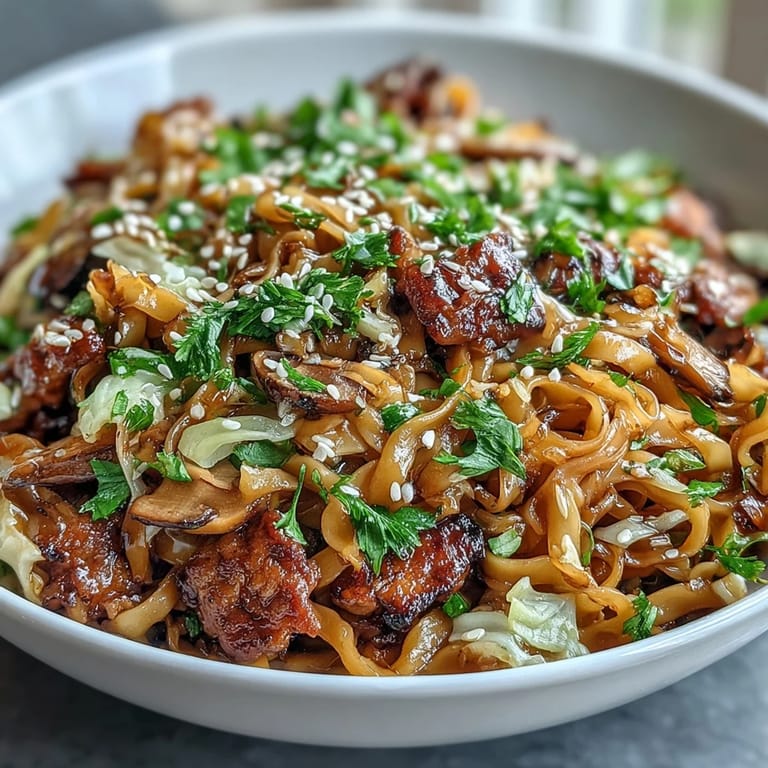
Save One night I served this to a friend who swore she didn't like mushrooms, and she ate two bowls without realizing they were in there. She said it tasted like comfort and conversation, the kind of meal that makes you want to sit at the table a little longer. I didn't tell her about the mushrooms until the next day.
Making It Your Own
This recipe is incredibly flexible. If you don't eat pork, ground chicken or turkey work beautifully, and I've even used crumbled tofu for a plant-based version that my vegetarian neighbor devoured. You can swap the cabbage for baby bok choy or thinly sliced kale, and if you like it spicier, double the chili-garlic sauce or add a few sliced fresh chilies when you cook the aromatics. I've also topped it with a soft-boiled egg, and the runny yolk turns the whole bowl into something even more luxurious.
Storing and Reheating
Leftovers keep well in the fridge for up to three days, though the noodles will soak up more sauce as they sit. When you reheat, add a splash of water or broth to the pan or microwave-safe bowl and stir gently to loosen everything up. I actually think the flavors deepen overnight, and sometimes I'll add a handful of fresh bean sprouts or cilantro when I reheat to wake it back up. If you're meal prepping, store the noodles and the meat-vegetable mixture separately so the noodles don't get too soft.
Serving Suggestions
I love serving this with lime wedges on the side; a squeeze of lime at the table brightens everything and adds a fresh, citrusy lift. If you want to make it feel more like a dinner party, set out small bowls of extra chili-garlic sauce, toasted sesame seeds, and chopped peanuts so everyone can customize their bowl. Sometimes I'll serve it alongside a simple cucumber salad dressed with rice vinegar and a pinch of sugar, which adds a cool, crunchy contrast to the warm, savory noodles.
- Offer lime wedges and extra chili-garlic sauce at the table for people to adjust the heat and brightness.
- Pair it with a quick cucumber salad or pickled vegetables for a refreshing contrast.
- Top each bowl with a fried or soft-boiled egg for extra richness and a restaurant-quality finish.
 Save
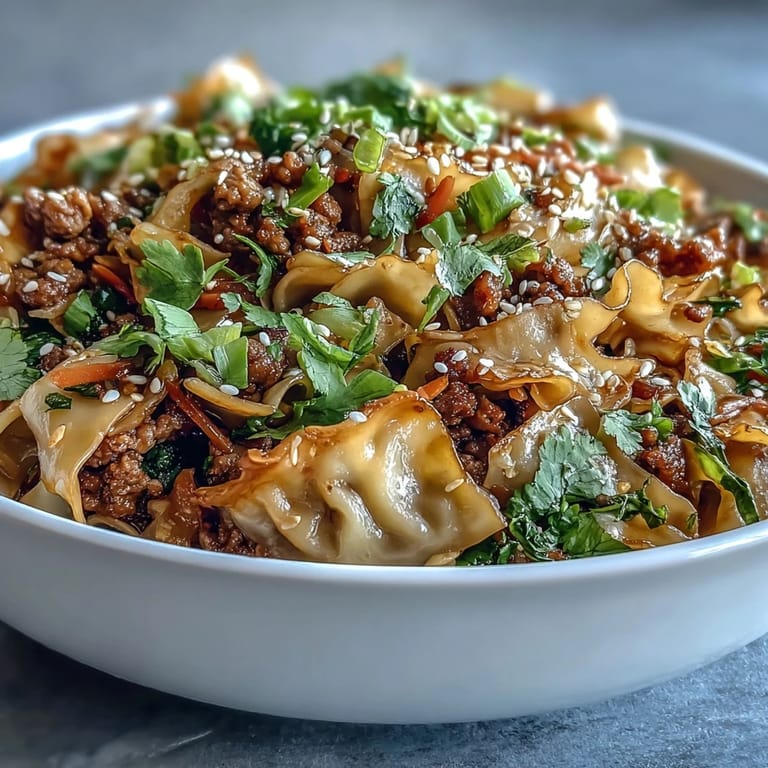
Save This bowl has become my answer to the question of what to make when I want something comforting, fast, and impressive without any fuss. It tastes like a hug in a bowl, and every time I make it, someone asks for the recipe.
Recipe FAQs
- → Can I make this gluten-free?
Yes. Use rice noodles, gluten-free tamari instead of regular soy sauce, and ensure your oyster sauce is certified gluten-free. Most naturally gluten-free ingredients include the vegetables, pork, and fresh aromatics.
- → What other proteins work well?
Ground chicken, turkey, or beef substitute nicely for pork. For plant-based options, use crumbled firm tofu, tempeh, or plant-based ground meat. Adjust cooking time slightly as plant-based proteins brown faster.
- → Can I prepare components ahead?
Absolutely. Chop vegetables up to 2 days ahead and store refrigerated. Mix the sauce and keep it sealed in the refrigerator for up to a week. Season the meat the night before for deeper flavor penetration.
- → How do I store and reheat leftovers?
Store in airtight containers for up to 3 days. Reheat in a skillet over medium heat with a splash of water or broth to refresh the sauce and prevent noodles from drying out. Microwave with additional moisture also works.
- → Can I add extra vegetables?
Certainly. Baby bok choy, snap peas, bell peppers, broccoli, or spinach work beautifully. Add hearty vegetables like broccoli earlier in the cooking process, and delicate greens like spinach in the last minute.