 Save
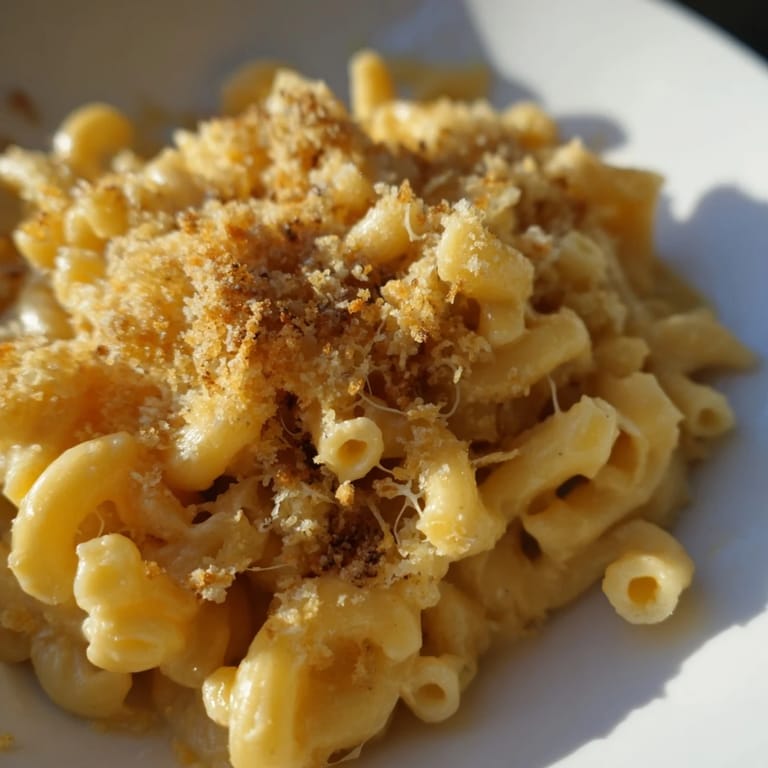
Save There's something about the smell of butter and flour hitting a hot pan that stops me mid-thought every time. I was maybe twelve when my grandmother first let me handle the roux for her mac and cheese, and I burned it within seconds—the whole thing turned bitter and she had to start over. She didn't scold me; she just laughed and said that mistake would teach me more than doing it right the first time. She was correct. Now, decades later, I make this dish because it's genuinely foolproof once you understand that patience with the roux changes everything.
I made this for my friend's potluck when we were all broke grad students, and somehow it became the thing people talked about for weeks. She'd brought a fancy salad with heirloom tomatoes, and another friend showed up with artisanal bread, but everyone kept going back to the mac and cheese. There's a comfort in that—in knowing a simple, honest dish can hold its own next to anything.
Ingredients
- Elbow macaroni (250 g): Choose a shape that actually holds sauce; tiny pasta gets lost, and larger shapes feel wrong here.
- Unsalted butter (2 tbsp for sauce, 1 tbsp melted for topping): Unsalted lets you control the salt and taste the pure butter flavor in the roux.
- All-purpose flour (2 tbsp): This thickens the sauce; don't skip it or use cornstarch as a substitute unless you understand how it changes texture.
- Whole milk, warmed (500 ml): Warming it prevents lumps and keeps the sauce smooth—cold milk makes the roux seize up.
- Sharp cheddar cheese, grated (200 g): Sharp has more flavor than mild; you actually taste the cheese instead of just tasting 'creamy'.
- Gruyère or mozzarella cheese, grated (50 g, optional): Gruyère adds nuttiness and makes the sauce silkier if you want to splurge.
- Mustard powder (½ tsp): A pinch deepens the cheese flavor in a way most people can't identify but definitely notice.
- Ground black pepper (¼ tsp) and salt (½ tsp): Taste as you go; cheese varies in saltiness.
- Breadcrumbs, preferably panko (40 g): Panko stays crispy longer than regular breadcrumbs and gives a satisfying texture on top.
- Parmesan cheese, grated (2 tbsp, optional): It browns faster than cheddar and adds a savory finish to the topping.
Tired of Takeout? 🥡
Get 10 meals you can make faster than delivery arrives. Seriously.
One email. No spam. Unsubscribe anytime.
Instructions
- Get your oven ready and water boiling:
- Set the oven to 200°C (400°F) if you're doing the baked version. Start a large pot of salted water on high heat—it needs a good rolling boil before the pasta goes in.
- Cook the pasta just right:
- Add the elbow macaroni and cook for about 1–2 minutes less than the package instructions tell you. You want it tender but still with the tiniest bit of resistance when you bite it; it will soften more when it bakes.
- Build your roux:
- Melt butter in a medium saucepan over medium heat, then add the flour all at once, whisking constantly for 1–2 minutes. Watch for a smooth, pale paste; if it starts to brown, you've gone too far.
- Add the milk slowly:
- Pour in the warm milk gradually while whisking, making sure you break up any lumps as they form. Keep stirring until the sauce thickens and just begins to bubble—this takes 3–4 minutes and you'll see it transform from thin to glossy.
- Melt the cheese into silence:
- Pull the pan off heat, then add the grated cheddar and Gruyère, stirring gently until every bit of cheese has melted and the sauce is smooth. Add the mustard powder, black pepper, and salt, and taste it—adjust if needed.
- Combine pasta and sauce:
- Pour the drained macaroni into the cheese sauce and stir until every piece is coated.
- Choose your path (stovetop or baked):
- For stovetop, serve immediately while the sauce is creamy. For baked, transfer everything to a lightly greased baking dish.
- Make the topping:
- Toss the breadcrumbs with melted butter and grated Parmesan in a small bowl, then sprinkle it evenly over the mac and cheese in the dish.
- Bake until golden:
- Slide into the oven for 15–20 minutes, watching for the top to turn golden and crisp. Let it cool for 5 minutes—this helps it hold together when you scoop it.
 Save
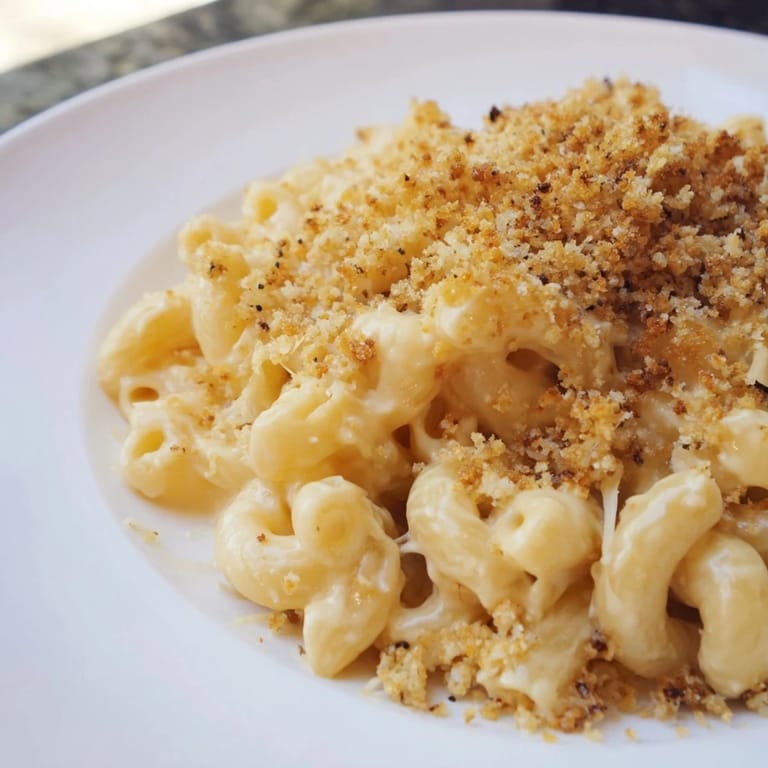
Save My brother brought his new girlfriend over for dinner once and she asked why I'd made 'just' mac and cheese. By the end of the meal, she understood it wasn't a question of simplicity—it was about doing one thing and making it matter. That's when a dish stops being ordinary.
The Roux Is Everything
This sauce lives and dies by the roux. It's butter and flour cooking together, and those two minutes matter more than you'd think. Go too fast and it lumps; go too slow and it browns and tastes bitter. Once you feel comfortable whisking a roux, you can make this without thinking, and that's when it becomes dangerous—in the best way, the way comfort food should be.
When to Use Which Cheese
Sharp cheddar is non-negotiable because it has enough flavor to actually taste like something. If you use mild cheddar, you'll end up wanting to add more cheese and the sauce gets heavy. The Gruyère is optional but shifts the whole thing into richer territory—add it if you have it and want the sauce to feel more like something you'd eat at a nice restaurant. Either way, please use real cheese and grate it yourself; pre-shredded has anti-caking agents that make the sauce grainy.
Stovetop vs. Baked
Make it stovetop when you want to eat immediately and prefer the sauce creamy and loose. Bake it when you want substance, when you're feeding more people, or when you need it to hold together on a plate. Some days I crave one, some days the other, and that flexibility is part of why I keep coming back to this recipe.
- Stovetop version comes together in 20 minutes if you're organized.
- The baked version can sit in the fridge for a day before baking, which makes it perfect for planning ahead.
- Both taste best eaten warm but not scorching; let it rest a few minutes before serving.
 Save
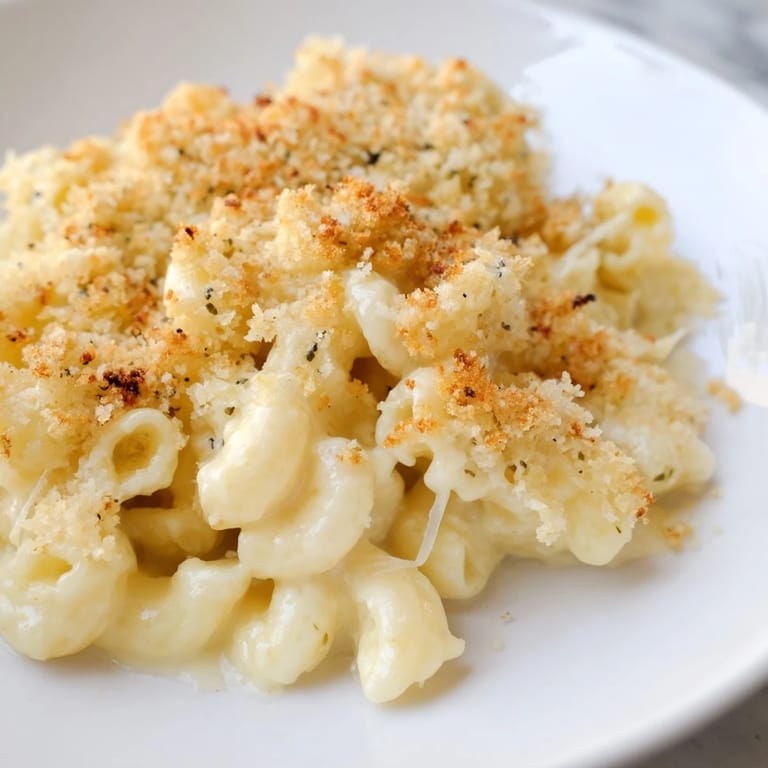
Save This is the dish I make when I want to feel capable in the kitchen, and the one I make when I want to feed someone something that says 'I care.' It's that rare thing that works both ways.
Recipe FAQs
- → What type of pasta works best?
Elbow macaroni is preferred for its shape and ability to hold the cheese sauce well.
- → Can I make this without baking?
Yes, it can be served stovetop immediately after mixing the pasta with cheese sauce, skipping the breadcrumb topping.
- → How to ensure a creamy sauce?
Use a roux-based sauce with warm milk and melt the cheese gently to avoid graininess.
- → What enhances the flavor of the dish?
Adding mustard powder, black pepper, or optional cheeses like Gruyère adds depth and complexity.
- → Can the dish be customized?
Yes, ingredients like bacon, caramelized onions, or spice such as cayenne can be added for extra flavor.