 Save
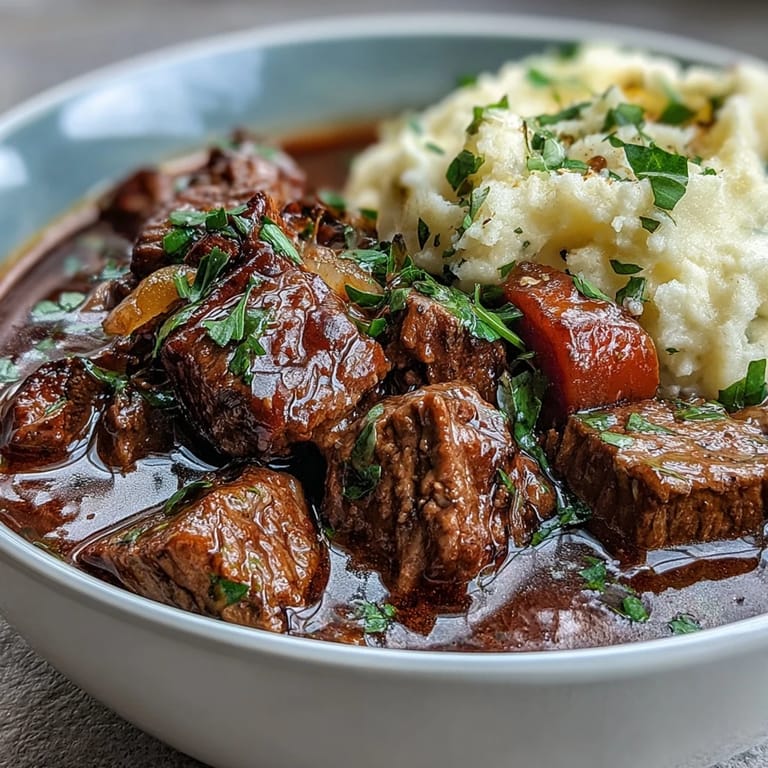
Save There's something about the smell of beef stew simmering on a cold afternoon that makes everything feel manageable. My first attempt at lightening this Irish classic happened almost by accident—I'd grabbed cauliflower instead of potatoes at the market and decided to just go with it. What started as a practical substitution turned into something I couldn't stop making, especially when friends would ask why they weren't feeling sluggish after eating such a rich, comforting bowl of food.
I made this for my sister during one of those grey Dublin-style weeks we get in November, and she actually put her phone down to eat. That's when I knew the cauliflower mash worked—when someone stops multitasking because the food demands attention. She asked for the recipe before she'd even finished her bowl, which felt like the highest compliment possible.
Ingredients
- Lean beef stew meat (1 lb): Trimming the fat yourself costs a bit more in time, but it's worth it because you'll actually taste the beef instead of rendered fat, and the broth stays cleaner.
- Olive oil (1 tbsp): Just enough to get a proper sear on the meat without needing a splash more partway through.
- Onion, carrots, celery (1 medium, 2, 2 stalks): This is your flavor foundation, and cutting them roughly even-sized means they cook at the same pace.
- Garlic cloves (3, minced): Mince them fine so they dissolve into the broth rather than leaving chewy pieces.
- Low-sodium beef broth (3 cups): The low-sodium version lets you control the salt and prevents that overly salty finish that can ruin hours of cooking.
- Dry red wine (1 cup): A wine you'd actually drink—the cheap stuff tastes cheap in the finished stew, and the alcohol cooks off leaving only bitterness.
- Tomato paste (2 tbsp): This adds umami depth that makes people swear you've been cooking all day when really it's just this one ingredient doing the heavy lifting.
- Worcestershire sauce (2 tsp): The secret weapon that makes everyone ask what that savory note is, and you get to smile mysteriously.
- Dried thyme and rosemary (1 tsp each): Use dried here because they'll distribute evenly through the broth, and fresh herbs would get mushy after an hour of cooking.
- Bay leaves (2): They're not for eating—fish them out before serving, but they're doing invisible work making everything taste more rounded.
- Salt and freshly ground black pepper: Season twice: once before browning the meat, once at the very end when you can actually taste what you've made.
- Frozen peas (1 cup): They go in at the last minute so they stay bright and slightly firm rather than becoming a grey mush.
- Cauliflower head (1 large): Cut the florets roughly equal-sized so they steam evenly and mash to the same silky texture.
- Unsalted butter (2 tbsp): The unsalted version lets you control the salt level in the mash—salted butter can push it over the edge.
- Low-fat milk or alternative (2 tbsp): Just enough to loosen the mash to a creamy consistency without making it gluey.
- Fresh chives (optional): A scatter of bright green on top makes this look intentional and restaurant-worthy instead of just thrown together.
Tired of Takeout? 🥡
Get 10 meals you can make faster than delivery arrives. Seriously.
One email. No spam. Unsubscribe anytime.
Instructions
- Prep your beef like you mean it:
- Pat those cubes completely dry with paper towels—this step is where people get lazy and it costs you. Dry meat browns, wet meat steams, and you want a proper crust that locks in flavor.
- Build your sear:
- Heat the oil until it shimmers, then brown the beef in batches so the pot doesn't overcrowd. You'll hear it sizzle properly and smell that caramelized beef aroma that promises everything is going right. Don't rush this part; let each batch sit undisturbed for a minute or two.
- Soften your aromatics:
- In the same pot with all those good browned bits still clinging to the bottom, add onion, carrots, and celery. Stir occasionally as they soften over five minutes, and you'll see them start releasing their own sweetness.
- Toast the aromatics with herbs:
- Add minced garlic and let it bloom for just a minute—you want it fragrant, not burnt. Then stir in tomato paste, thyme, rosemary, and bay leaves, cooking everything together for another minute so the spices wake up.
- Deglaze and build the broth:
- Pour in the red wine and use a wooden spoon to scrape up every brown bit from the bottom of the pot. Those caramelized bits are pure flavor, and you're incorporating them back into the stew.
- Bring it all together:
- Return the beef to the pot, add the beef broth and Worcestershire sauce, then bring everything to a simmer. Once it's bubbling gently, reduce the heat to low, cover, and let it cook undisturbed for about an hour and fifteen minutes.
- Check for doneness:
- The beef should be fork-tender at this point, falling apart when you poke it. If it's still firm, give it another fifteen minutes.
- Finish with brightness:
- Remove the lid, add the frozen peas, and simmer for five to ten minutes more. Taste and adjust salt and pepper now, when you can actually evaluate what you've made.
- Make the cauliflower mash while the stew finishes:
- Boil the cauliflower florets in salted water for ten to twelve minutes until they're so tender a fork passes through without resistance. Overcooked is actually okay here because you're mashing them anyway.
- Process to silky perfection:
- Drain the cauliflower really well—any excess water makes the mash watery and disappointing. Transfer to a food processor with butter and milk, blend until completely smooth, then season with salt and pepper to taste.
- Plate with intention:
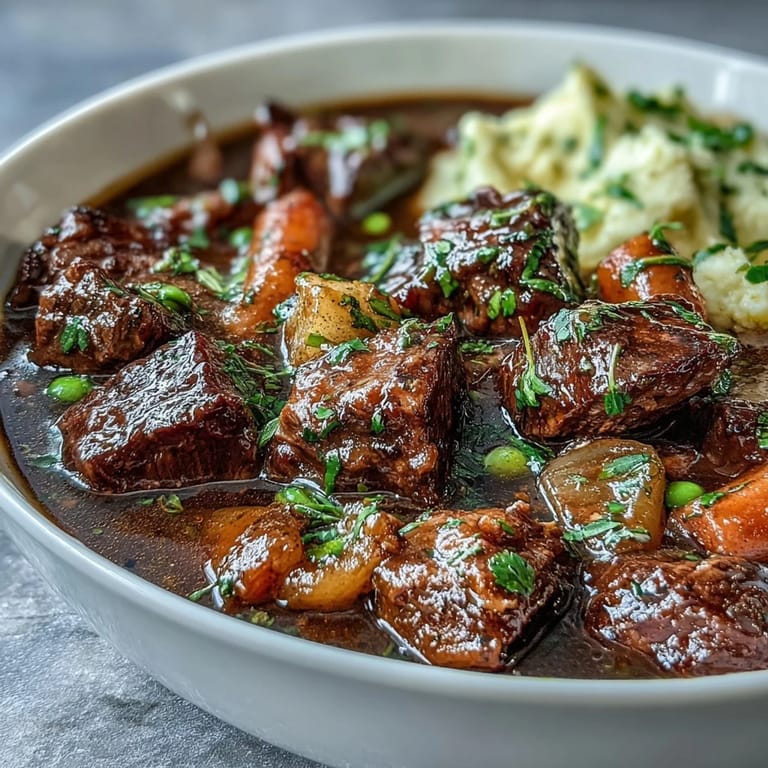
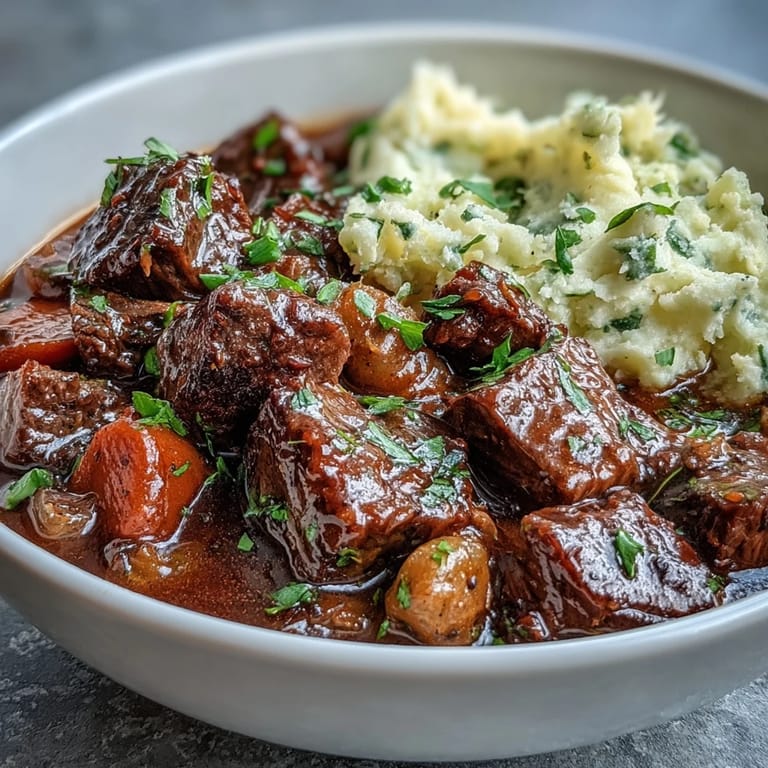
- Spoon a generous mound of cauliflower mash into each bowl, then ladle the hot stew over the top. A scatter of fresh chives on top makes it look like you knew what you were doing all along.
 Save
Save The moment I knew this recipe was truly special came when my usually-strict nutrition-conscious friend asked for seconds without mentioning calories. She just sat there enjoying the stew, and that's when the recipe stopped being about substitutions and started being about something genuinely delicious that happened to be good for you.
Why Cauliflower Works Better Than You'd Think
Cauliflower gets a bad reputation because most people boil it to grey submission and serve it cold. But when you cook it until it's genuinely tender, blend it with butter and just a splash of milk, something magical happens—you get a mash that's indistinguishable from the real thing but without the heaviness. It absorbs the stew flavors beautifully and won't leave you feeling like you've eaten lead for the rest of the evening. The texture is actually superior if you're honest; it's smoother and lighter than mashed potatoes ever manage to be.
Wine Choice Actually Matters Here
This is one of those recipes where people think any cooking wine works, and then they're confused why their stew tastes thin and bitter. A decent dry red wine—nothing fancy, just something drinkable—transforms into something round and complex as it cooks down. Cheap cooking wine tastes cheap at the end; it doesn't magically improve. If you're avoiding alcohol entirely, use an extra cup of beef broth instead, but the stew will be less complex and you'll miss that subtle wine-depth that makes people ask what spice you're using.
Making This Your Own
Once you've made this version a few times and understand how the flavors balance, the recipe becomes a template for endless variations. I've made it with Guinness instead of wine on particularly grey afternoons, and I've experimented with root vegetable swaps depending on what's in season. The beauty of a well-built stew is that it's forgiving enough to adapt but structured enough that you can't really mess it up badly. The cauliflower mash is equally flexible—I've stirred in roasted garlic, added sharp cheddar for a completely different vibe, or whipped in some horseradish when I felt bold.
- Substitute Guinness (3/4 cup stout plus 1/4 cup extra broth) for a deeper, earthier flavor that's particularly good in winter.
- Try swapping half the carrots for parsnips or cubed sweet potato if you want something slightly different but equally satisfying.
- A dollop of Greek yogurt stirred into the finished mash instead of all the milk keeps it creamy while adding protein.
 Save
Save This stew has become my answer to that craving for something genuinely comforting that doesn't make you feel heavy afterward—it's the best version of having it both ways. Make it once and you'll understand why I keep coming back to it.
Recipe FAQs
- → How do I achieve tender beef in this stew?
Simmer the lean beef slowly over low heat for at least 1 hour 15 minutes to break down fibers and develop tenderness.
- → Can I substitute red wine in the stew?
Yes, use additional beef broth or add a splash of Guinness for a different but flavorful variation.
- → What’s the best way to prepare the cauliflower mash?
Boil cauliflower florets until very tender, then blend with butter and low-fat milk until smooth and creamy.
- → Are there options to adjust the vegetable ingredients?
You may swap carrots with sweet potatoes for a subtle sweetness and alternative texture.
- → How to thicken the stew naturally?
Remove half a cup of cooked vegetables, mash them, and stir back into the stew to enhance the thickness.
- → Is this dish suitable for gluten-free diets?
Yes, the ingredients are naturally gluten-free, making it suitable for gluten-conscious eating.