 Save
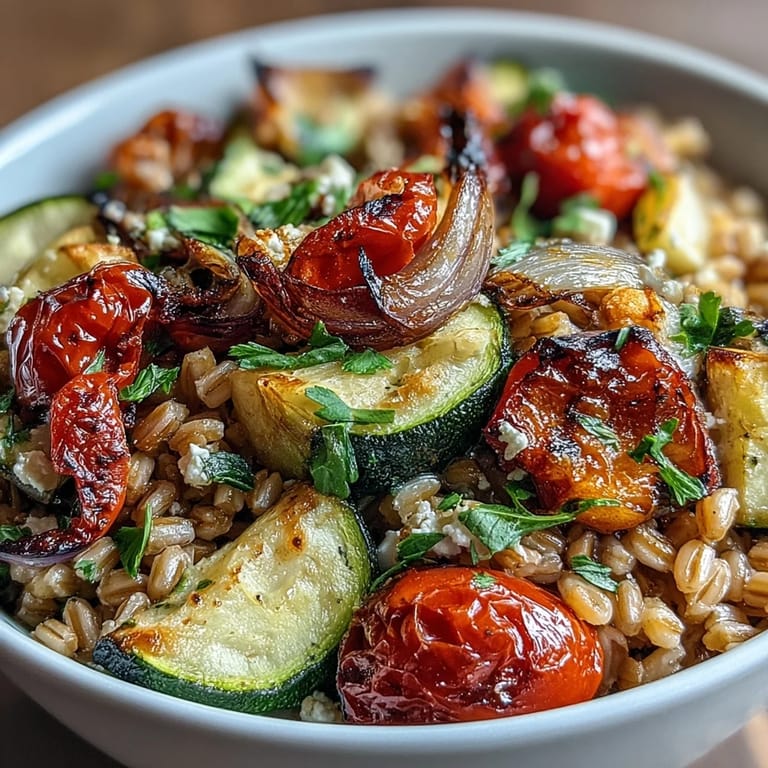
Save My neighbor passed over a bowl of this one autumn evening, still warm from her oven, and I was skeptical at first—farro seemed like one of those grains that took forever and tasted like cardboard. But when I tasted it, chewy and nutty, mingling with vegetables that had turned glossy and caramelized in the heat, something clicked. It became the dish I made whenever I wanted to feel like I was actually cooking something worth my time, without the stress of precision or timing tricks.
I made this for a potluck once when I was running late and thought I'd embarrass myself, but three people asked for the recipe, and one friend actually texted me a photo of her own version a week later. That's when I realized this dish has this quiet power—it doesn't need to be fancy or complicated to make people feel like you cared enough to cook real food for them.
Ingredients
- Farro (1 cup uncooked): This ancient grain has a chewiness that regular rice or pasta can't match, and it holds onto flavors instead of getting mushy—buy it from the bulk bin if your store has one because it's cheaper and fresher.
- Vegetable broth or water (3 cups): Use broth if you want more flavor, but honestly water works fine here since the vegetables bring plenty of taste to the party.
- Bell pepper, zucchini, red onion, carrot, cherry tomatoes: These are just guidelines—use whatever looks good at the market, because any vegetables that roast well will work beautifully here.
- Olive oil (2 tablespoons for roasting): Don't skimp on this step; it's what turns the vegetables golden and brings out their natural sweetness.
- Dried thyme and oregano (1 teaspoon each): These are classic Mediterranean flavors, but you can swap them for rosemary, basil, or whatever dried herbs you have on hand.
- Extra-virgin olive oil and balsamic vinegar (2 tablespoons and 1 tablespoon): These finish the dish with brightness and depth, so use ones you actually like tasting.
- Fresh parsley (1/4 cup): This is the final flavor lift that makes everything feel fresh, even if you're eating it three days later.
- Feta cheese (2 tablespoons, optional): The tanginess cuts through the earthiness of the farro, but leave it out if you're going vegan—the dish stands on its own.
Tired of Takeout? 🥡
Get 10 meals you can make faster than delivery arrives. Seriously.
One email. No spam. Unsubscribe anytime.
Instructions
- Heat your oven and prep your stage:
- Set the oven to 425°F and line a baking sheet with parchment paper so cleanup is painless later and nothing sticks.
- Coat and spread the vegetables:
- Toss your diced peppers, zucchini, onion, carrot, and tomatoes with 2 tablespoons of olive oil, the herbs, salt, and pepper until everything glistens, then spread it all out on the baking sheet in a single layer so each piece can get kissed by the heat.
- Let them caramelize:
- Roast for 25 to 30 minutes, stirring halfway through so they brown evenly—you'll know they're ready when the edges are dark and the vegetables have softened and smell incredible.
- Cook the farro while vegetables roast:
- Rinse the farro under cold water, then combine it with broth in a saucepan, bring to a boil, cover, and reduce to a simmer for 25 to 30 minutes until it's tender but still has a little chew to it, like how pasta should be.
- Bring it all together:
- Once the farro is cooked and the vegetables are roasted, combine them in a large bowl with the extra-virgin olive oil and balsamic vinegar, tossing gently to coat everything evenly.
- Finish and serve:
- Stir in the fresh parsley, top with feta if you're using it, and taste it to see if it needs a pinch more salt or a squeeze of lemon—then serve it warm or let it cool to room temperature.
 Save
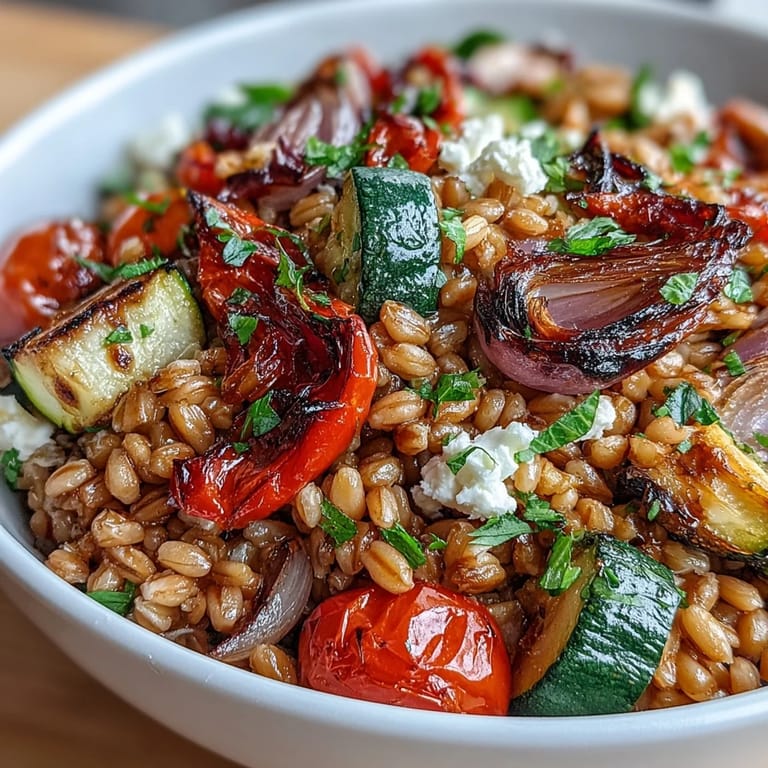
Save There's a moment right when you pull the roasted vegetables out of the oven—that smell of caramelized onions and charred tomatoes—when you understand why people actually enjoy cooking. This dish gave me that feeling consistently, and it made me realize I wasn't just feeding myself, I was creating something I actually wanted to eat.
The Beauty of Seasonal Swaps
One of the best things about this recipe is that it changes with the seasons without losing its soul. In summer I use zucchini and cherry tomatoes; in fall I throw in cubes of butternut squash or chunks of eggplant; in winter, mushrooms and roasted Brussels sprouts shine. The proportions stay the same, but the dish tastes like whatever season you're actually living in, which is a quiet kind of magic in cooking.
How to Make It Your Own
Once you make this once, you'll start seeing it as a template rather than a strict formula. Maybe you'll add roasted chickpeas for more protein, or toss in some toasted pine nuts for crunch, or use a tahini dressing instead of the vinegar. The farro is forgiving enough to welcome whatever you want to add, and that's why I keep making it—because it's never boring and it always feels like I created something new.
Storage and Leftovers
This dish actually improves after a day or two in the fridge because the flavors meld and the farro absorbs all the dressing. Store it in an airtight container for up to four days, and if it seems a little dry when you reheat it, just drizzle on a bit more olive oil or a splash of lemon juice to bring it back to life.
- If you're packing it for lunch, keep the feta separate until you're ready to eat so it doesn't get soggy.
- It's equally delicious straight from the fridge or gently warmed through in a skillet with a splash of water.
- Double the batch if you're cooking for the week—this is exactly the kind of dish that makes workday eating feel intentional instead of like a chore.
 Save
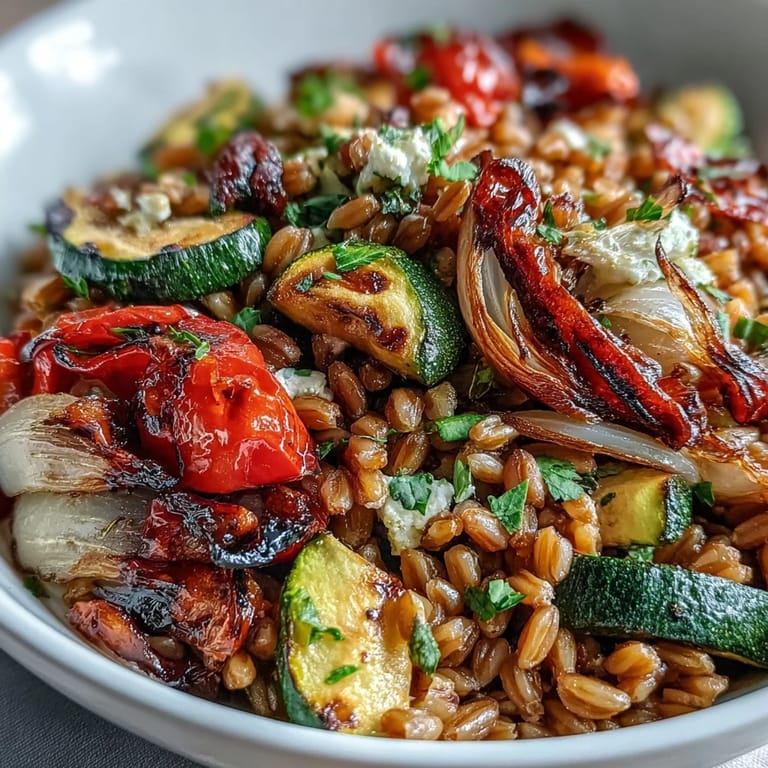
Save This is the kind of dish that makes you feel like you've got your life together, even if you're eating in sweatpants at your kitchen counter. That's worth something.
Recipe FAQs
- → What does farro taste like?
Farro has a nutty, earthy flavor with a satisfyingly chewy texture similar to barley but slightly more tender. It absorbs flavors well from dressings and broths.
- → Do I need to soak farro before cooking?
No soaking is required for most farro varieties. Simply rinse under cold water and simmer in broth or water for 25-30 minutes until tender but still chewy.
- → Can I make this dish ahead of time?
Yes, this actually tastes better after the flavors have time to meld. Store in the refrigerator for up to 4 days and serve chilled, at room temperature, or gently warmed.
- → What vegetables work best for roasting?
Root vegetables, bell peppers, zucchini, eggplant, and cherry tomatoes all roast beautifully. Choose vegetables that will cook in roughly the same time for even results.
- → Is farro gluten-free?
No, farro is a type of wheat and contains gluten. For a gluten-free alternative, try quinoa, brown rice, or buckwheat groats in this dish.
- → How do I know when the vegetables are done roasting?
The vegetables should be tender when pierced with a fork and have golden-brown caramelized edges. Stir halfway through cooking for even browning.