 Save
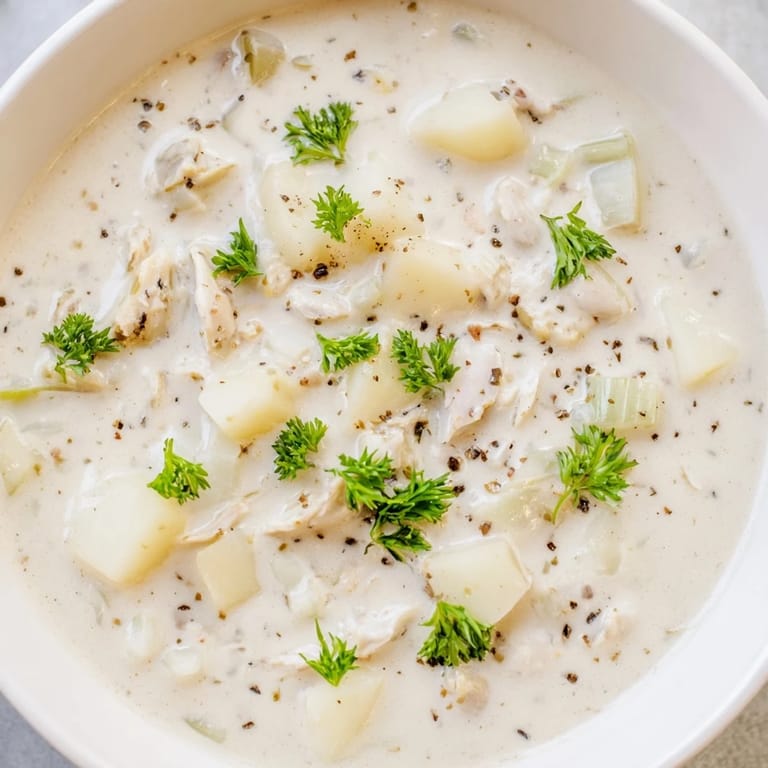
Save The first time I made clam chowder, I was standing in a New England fish market with absolutely no idea what I was doing. A fishmonger caught me staring blankly at the clams and just smiled—he knew. He talked me through picking fresh ones, how to listen for that slight resistance when they're alive, and suddenly I wasn't intimidated anymore. That pot of soup became the bridge between me and a whole new kitchen confidence, the kind that comes when someone believes in you before you believe in yourself.
I made this for my partner on the first truly cold night of fall, and they came home to find the whole apartment filled with that buttery, oceanic warmth. We sat on the couch with bowls in our laps, watching the city lights blur in the rain, barely talking. That's when I realized soup isn't just food—it's a moment where everything slows down.
Ingredients
- Fresh clams (900 g/2 lbs) or canned (500 g): Fresh ones give you that briny, mineral-rich clam juice that's impossible to replicate; if using canned, save every drop of that liquid because it's liquid gold for your broth.
- Potatoes (2 medium): Waxy potatoes hold their shape better than starchy ones, so your chowder stays chunky and textured, not mushy.
- Onion, celery, carrot (1 medium, 2 stalks, 1 medium): This holy trinity builds the savory foundation; the carrot adds a whisper of sweetness that balances the brine.
- Heavy cream (240 ml/1 cup) and whole milk (240 ml/1 cup): The cream is what makes this rich; the milk keeps it from being overwhelming—use both for that perfect balance.
- Unsalted butter (60 g/4 tbsp): It carries flavor and creates the roux base that thickens everything naturally and silkily.
- Clam juice (500 ml/2 cups): This is your broth backbone; never skip it or substitute it with chicken stock.
- Garlic (2 cloves), bay leaf, dried thyme, black pepper, salt: These aromatics build layers; the thyme especially whispers through the whole pot with a gentle herbaceous note.
- Fresh parsley (2 tbsp): It's the bright finish, cutting through the richness with a fresh, almost peppery edge.
Tired of Takeout? 🥡
Get 10 meals you can make faster than delivery arrives. Seriously.
One email. No spam. Unsubscribe anytime.
Instructions
- Preparing your clams:
- If you're using fresh clams, place them in a pot with 1 cup of water, cover it, and steam over medium heat for 5–7 minutes until they crack open like little treasure chests. Discard any stubborn ones that stay closed—they're not worth the risk. Once they cool, chop them up and keep that steaming liquid; it's flavor you paid for and it's going straight into your soup.
- Building the base:
- In a large pot, melt butter over medium heat and watch it foam gently. Toss in your onion, celery, and carrot, stirring occasionally until they soften and smell absolutely incredible—about 5 minutes. Add garlic and let it bloom for just a minute; the aroma will tell you when it's right.
- Making the roux:
- Sprinkle flour over the softened vegetables and stir constantly for 2 minutes, coating everything evenly. This mixture will look sandy and golden, and it's doing the crucial work of thickening your soup.
- Adding the liquids:
- Slowly pour in your clam juice while whisking gently to prevent lumps from forming. It should go from thick and pasty to smooth and pourable. Add the milk and water, then slip in the potatoes, bay leaf, thyme, salt, and pepper.
- Simmering to perfection:
- Bring everything to a gentle simmer—not a rolling boil, which would make potatoes fall apart. Let it bubble softly for 15–20 minutes until the potatoes are tender enough to break with a wooden spoon. Stir it occasionally, just to keep everything from sticking.
- Finishing the soup:
- Stir in your chopped clams and heavy cream, then simmer for 5 more gentle minutes. Remove the bay leaf, taste it, and adjust salt and pepper until it sings. This is your moment to make it exactly right.
 Save
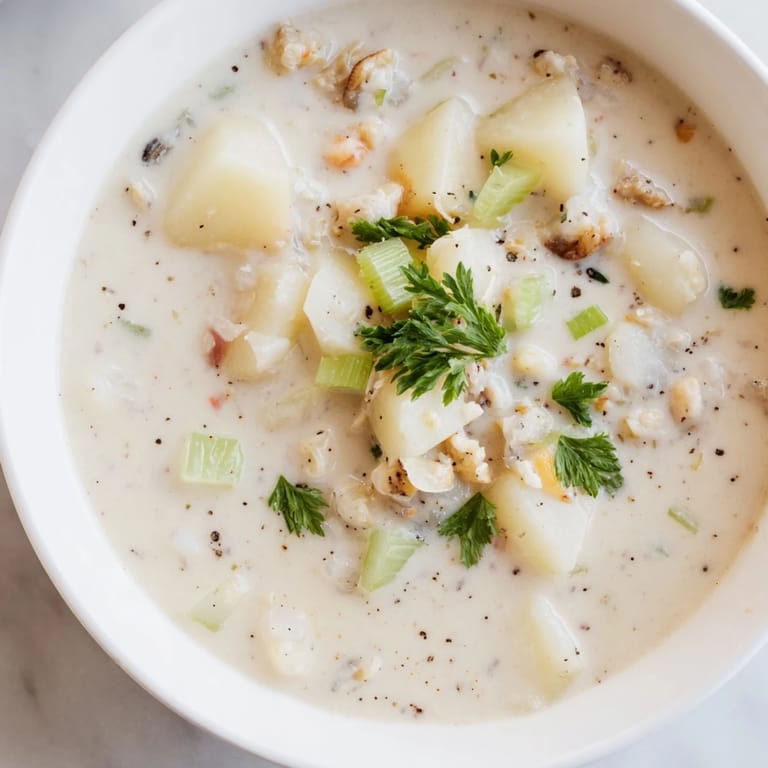
Save Years later, I made this for a friend who'd never had homemade chowder, only the canned stuff from their childhood. Their eyes went wide on the first spoonful, and they just kept eating in quiet amazement. That's when I understood that good cooking isn't about technique or ingredients—it's about giving someone a moment they didn't know they needed.
Fresh Clams vs. Canned: Which to Choose
Fresh clams are beautiful if you can get them from a good fishmonger, and steaming them yourself gives you that precious briny liquid that's pure ocean flavor. But honestly, I've made this a hundred times with canned clams when life is busy, and it's still incredible. Canned clams are already cooked and chopped, which saves you time and stress, and that reserved juice is honestly just as flavorful. The only real difference is the textural satisfaction of pulling open a fresh clam and the kitchen theater of it—but if canned is what you have, trust it completely. This soup has room for both.
The Secret to Creamy Without Being Heavy
The magic ratio here is using both cream and milk instead of all cream, which keeps the richness from tipping into that feeling of eating pure butter. The roux helps too—it distributes the fat evenly so every spoonful feels luscious without coating your mouth. I've learned that the best comfort food isn't about maximizing richness; it's about balance. Some nights I've even used half-and-half and a splash of chicken stock, and it's still wonderful, just lighter. The principle is what matters: let the clams be the star, not the dairy.
Variations and Personal Touches
This recipe is sturdy enough to bend to your preferences without breaking. Some people add bacon—crisp it first, use the rendered fat instead of butter, and suddenly you have a completely different soul to the soup, more robust and smoky. Others mash a few potatoes right in the pot to thicken it into something almost porridge-like, which is perfect if you want it heavier. I've even made it with roasted garlic for depth, or added a pinch of Old Bay when I'm feeling adventurous. The chowder will always taste like itself, just with your fingerprints on it.
- Try whisking in a splash of white wine before the clam juice for a brighter, more sophisticated edge.
- If you want extra body, save one potato and mash it into the finished soup—it'll thicken naturally without flour.
- A squeeze of fresh lemon juice at the end wakes everything up and cuts through the richness beautifully.
 Save
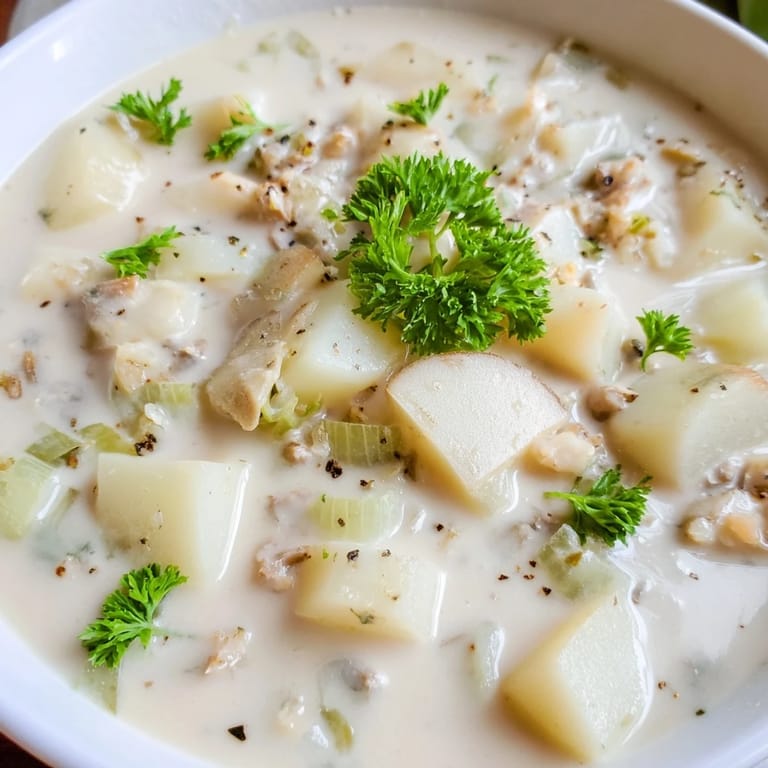
Save There's something about a bowl of clam chowder that feels like wrapping yourself in something warm after being cold. It's the kind of dish that teaches you about cooking through doing it, and every time you make it, you'll do it a little differently because you'll remember something you learned the last time. That's the real recipe.
Recipe FAQs
- → What type of clams are best for this dish?
Fresh clams are preferred for the best flavor, steamed and chopped, but canned clams with their juice can be used as a convenient substitute.
- → How can I thicken the chowder?
Cooking a roux of butter and flour before adding liquids thickens the base, and mashing a few potatoes in the pot helps create a richer texture.
- → Can I make this chowder lighter?
Yes, substitute half-and-half for heavy cream to reduce richness while maintaining creaminess.
- → What herbs and seasonings complement the flavors?
Bay leaf, thyme, and fresh parsley add aromatic and fresh notes that enhance the briny sweetness of clams.
- → What are good accompaniments for serving?
Oyster crackers, crusty bread, or a crisp lager or Chardonnay pair wonderfully with this creamy dish.
- → Can I add bacon to this dish?
Sautéing chopped bacon strips before vegetables and using the bacon fat instead of butter adds smoky depth.