 Save
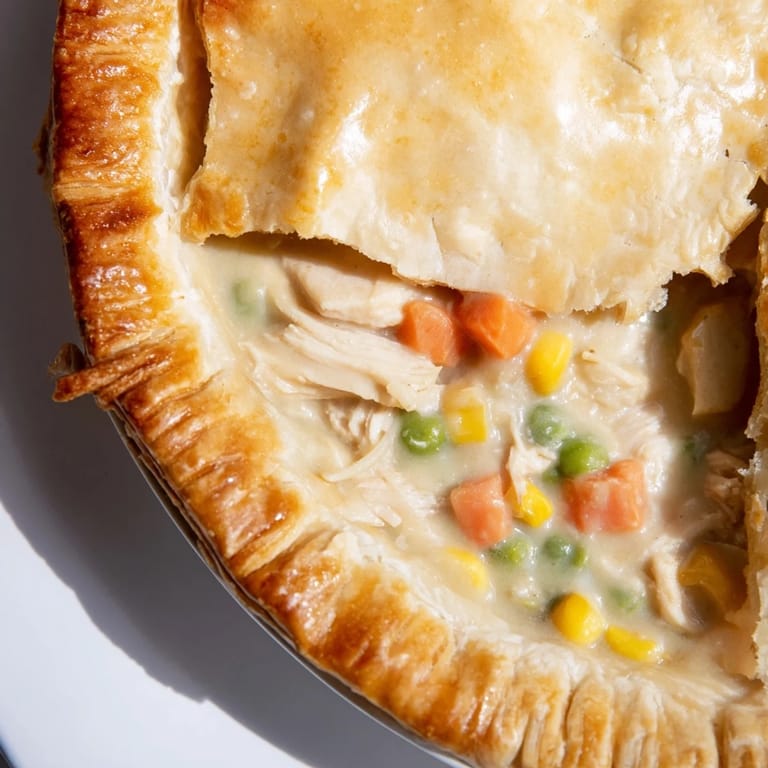
Save There's a particular kind of magic that happens when you bake a chicken pot pie in your own kitchen—that moment when the crust turns golden and you catch the savory aroma drifting through your home feels like an accomplishment worth celebrating. I discovered this dish not from a recipe book, but from watching my neighbor pull one from her oven on a chilly afternoon, and the way her whole face lit up made me realize I needed to learn how to make this myself. What started as simple curiosity became a weeknight tradition that somehow turns ordinary ingredients into something that feels like a warm hug on a plate. The beauty of this recipe lies in how forgiving it is—even if your vegetables aren't perfectly diced or your crust isn't picture-perfect, the result tastes homemade in the best possible way.
I remember the first time I made this for my book club—I was nervous about the timing, worried the crust wouldn't brown evenly or the filling would be too thin. When everyone arrived and I pulled it from the oven, the kitchen was thick with that unmistakable savory steam, and one friend said, "This smells exactly like comfort," which is honestly the highest compliment a home cook can receive. That night taught me that chicken pot pie isn't really about perfection; it's about showing up with something warm and honest.
Ingredients
- Cooked chicken breast (2 cups, diced): Using pre-cooked or leftover rotisserie chicken saves time and keeps the meat tender; avoid shredding it too finely or it disappears into the sauce.
- Unsalted butter (2 tablespoons): This is your flavor foundation, so don't skip it or substitute with oil—the butter creates that rich, silky base that makes the whole dish taste homemade.
- Yellow onion (1 medium, finely chopped): The onion is your secret weapon for depth; cook it long enough to soften and turn slightly translucent, which mellows its sharpness.
- Carrots (2 medium, peeled and diced): Cut them into small, uniform pieces so they cook through in the time it takes for the sauce to thicken.
- Celery stalks (2, diced): Yes, really—celery adds a subtle vegetal note that you won't identify but will absolutely taste the absence of if you skip it.
- Garlic (2 cloves, minced): Mince it finely and add it quickly; garlic can taste bitter if it cooks too long, so just let it fragrance the pan for about a minute.
- Frozen peas (1 cup): Frozen peas are actually preferable here because they're picked at peak ripeness and stay tender; fresh ones can turn mushy.
- Frozen corn (1 cup): Same logic as the peas—frozen corn holds its sweetness and texture better than thawed kernels.
- All-purpose flour (1/4 cup): This is your thickening agent; cook it briefly with the vegetables to eliminate the raw flour taste before adding the liquid.
- Low-sodium chicken broth (2 cups): Low-sodium lets you control the salt level and prevents the filling from tasting overly salty once it simmers.
- Whole milk (1 cup): The milk is what makes this creamy and luxurious; don't use low-fat, as the flavor suffers noticeably.
- Salt (1 teaspoon): Taste as you go—you may need slightly less if your broth is salty or slightly more depending on your preference.
- Freshly ground black pepper (1/2 teaspoon): Fresh pepper makes a real difference here; pre-ground loses its punch over time.
- Dried thyme (1/2 teaspoon): Thyme brings an earthy, herbaceous note that feels essential to the dish's character.
- Dried sage (1/4 teaspoon, optional): Sage adds warmth and is worth including if you have it; it's subtle but unmistakable.
- Refrigerated pie dough (1 sheet): Store-bought pie dough is a legitimate shortcut that yields beautiful, flaky results—no shame in using it.
- Egg (1, beaten): The egg wash gives the crust that shiny, golden-brown finish that makes people think you're a better baker than you actually are.
Tired of Takeout? 🥡
Get 10 meals you can make faster than delivery arrives. Seriously.
One email. No spam. Unsubscribe anytime.
Instructions
- Preheat and prepare:
- Set your oven to 400°F and give it time to heat while you prep your ingredients. Having everything chopped and ready before you start cooking means you won't be scrambling when the heat is on.
- Build the vegetable base:
- Melt the butter over medium heat and add the onion, carrots, and celery together; you'll notice the kitchen starting to smell amazing after about 5-6 minutes when the vegetables soften and release their sweetness. Listen for a gentle sizzle—not a violent sizzle—which means the heat is just right.
- Wake up the garlic:
- Add the minced garlic and let it bloom for about 1 minute; you'll know it's ready when the aroma shifts from raw to toasted and fragrant.
- Create the roux:
- Sprinkle the flour directly over the vegetables and stir it in thoroughly, cooking for about 2 minutes; this step cooks out the raw flour taste and creates the base that will thicken your sauce. The mixture should look like wet sand at this point.
- Build the sauce:
- Whisk in the chicken broth and milk slowly, starting with just a splash to break up any flour lumps before adding the rest; watch it transform from thin and soupy to creamy and silky as it simmers for 4-5 minutes. If lumps form, push them against the side of the pan with your whisk to break them down.
- Combine the filling:
- Stir in the chicken, peas, corn, salt, pepper, thyme, and sage; taste it right now and adjust the seasoning if needed, as this is your last chance to fix it before it goes into the pie. The filling should smell herbaceous and savory, like a comforting home-cooked meal.
- Assemble the pie:
- Pour the hot filling into a 9-inch pie dish and let it cool slightly while you work with the crust; a slightly cooled filling means the crust won't immediately soften from the steam underneath. Roll out the pie dough and drape it over the filling, trim any ragged edges, and crimp the borders with your fingers for a rustic finish or a fork for a cleaner look.
- Vent and finish:
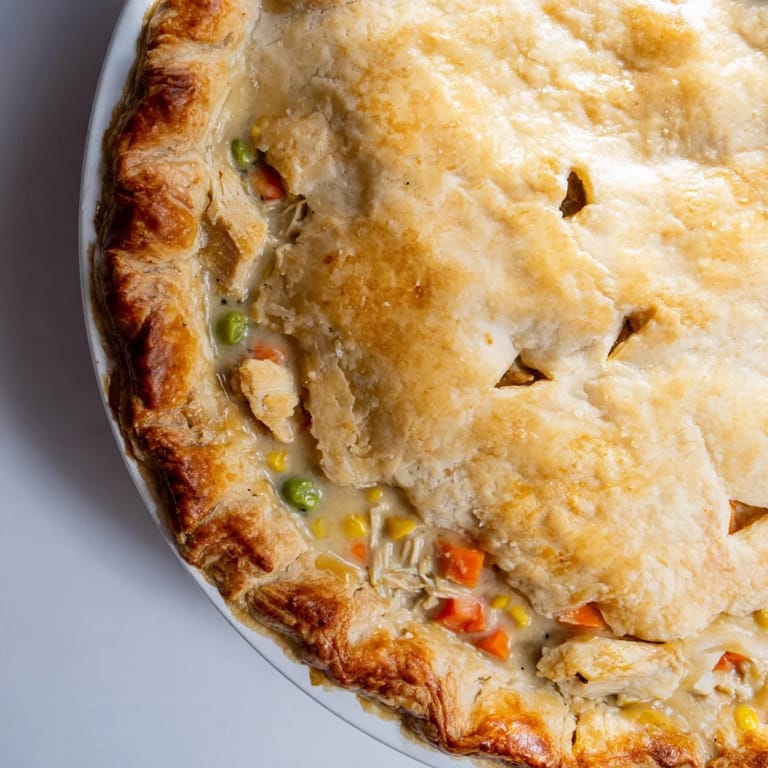
- Cut 2-3 small slits in the center of the crust to let steam escape, which prevents the crust from getting soggy and the filling from bubbling over. Brush the entire surface with beaten egg, which gives it that bakery-quality golden shine.
- Bake until golden:
- Slide it into the oven and bake for 35-40 minutes; the crust should be deep golden brown and the filling should bubble slightly around the edges. If the crust browns too quickly, loosely tent it with foil for the last 10 minutes.
- Rest before serving:
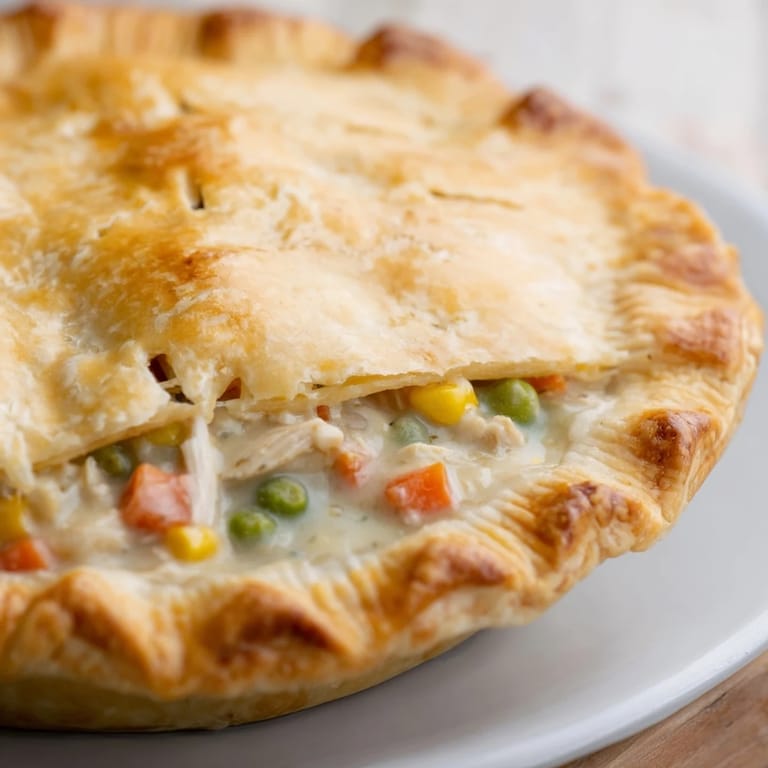
- Let the pie rest for 10 minutes after coming out of the oven—this is when the filling sets slightly and becomes less likely to run all over the plate when you cut into it. Those 10 minutes are hard to wait through, but they make a real difference.
 Save
Save What stuck with me most was the moment my daughter, who usually picks at her vegetables, asked for thirds and genuinely wanted to know if we could make this every week. That's when I realized that chicken pot pie isn't just dinner—it's an edible conversation about care and comfort, wrapped in golden pastry.
Variations and Substitutions
Once you've mastered the basic formula, this recipe becomes a canvas for whatever sounds good to you. I've added roasted mushrooms when I had them on hand, swapped turkey for chicken in the fall, and even experimented with a splash of white wine when I wanted something with a bit more sophistication. The core technique remains the same—build a roux, add liquid, combine proteins and vegetables, top with pastry—so feel free to play within those bounds.
The Double Crust Question
Some people swear by a double-crust pie, with pastry on both the bottom and top, and I understand the appeal—there's something appealing about entirely encasing the filling in flaky dough. Honestly, I've never gone that route because a bottom crust tends to turn soggy from the filling, and I'd rather have one perfect golden top crust than two mediocre ones. That said, if you want to try it, roll out a second sheet of dough, place it in the dish before adding the filling, and proceed as normal—just add a few extra minutes to the baking time.
Serving and Storage Tips
Chicken pot pie is best served warm, ideally within a few hours of coming out of the oven when the crust is still flaky and the filling is at its creamiest. Leftovers keep beautifully in the refrigerator for up to three days and can be reheated gently in a 325°F oven for about 15 minutes—just cover it loosely with foil so the crust doesn't darken further.
- Pair it with a simple green salad dressed in a bright vinaigrette to cut through the richness of the cream sauce.
- Don't feel obligated to make it from scratch every time; this is one of those dishes where store-bought pie dough is genuinely a smart move.
- If you're cooking for a crowd, you can assemble it hours ahead and pop it in the oven just before guests arrive for that fresh-from-the-kitchen impression.
 Save
Save There's something quietly powerful about feeding people food that tastes like you spent all day in the kitchen when really, you just showed up and followed your instincts. Make this chicken pot pie whenever you need to feel like you've done something good.
Recipe FAQs
- → What vegetables are used in this dish?
Carrots, celery, peas, corn, and onion provide a flavorful vegetable medley.
- → How do you achieve a flaky crust?
Using refrigerated pie dough or homemade dough and brushing with beaten egg before baking helps create a golden, flaky crust.
- → What herbs enhance the sauce?
Thyme and optional sage add subtle earthiness and depth to the creamy filling.
- → Can other meats be used instead of chicken?
Yes, turkey is a great alternative and works well with the same cooking process.
- → How is the sauce thickened?
A mixture of flour, chicken broth, and milk is simmered until thick, creating a smooth, creamy filling.