 Save
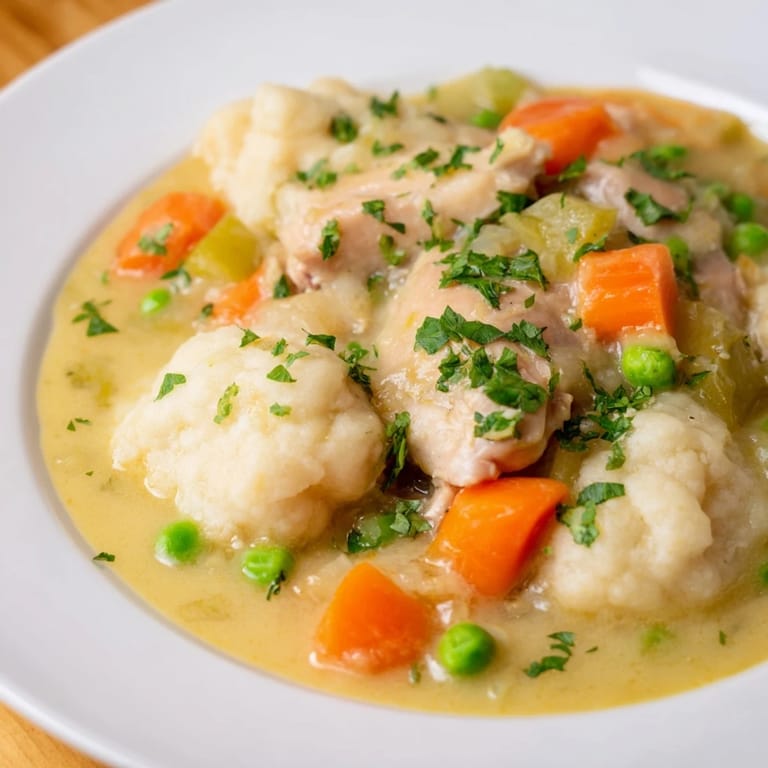
Save There's something about the smell of butter and herbs hitting hot oil that still takes me back to my aunt's kitchen, where chicken and dumplings was less of a recipe and more of a remedy. She'd make it on gray afternoons when the house needed warmth, and I'd watch those fluffy dumplings bob to the surface like little edible clouds. Years later, I realized it wasn't magic—just technique, patience, and knowing exactly when to stop stirring the dumpling dough. Now I make it for my own kitchen, and it never fails to fill the room with that same sense of comfort and promise.
I made this for my neighbor last winter after she mentioned missing her grandmother's cooking. Watching her take that first spoonful and close her eyes—I knew I'd gotten something right. She came back three days later asking for the recipe, and when I gave it to her, I made sure to write a note: Don't skip the milk. It's what makes it creamy, not heavy.
Ingredients
- Boneless, skinless chicken thighs (2 lbs): They're forgiving and stay tender even if you simmer a bit longer than intended, unlike breasts which can turn tough.
- Unsalted butter and olive oil: The combination gives you a richer sear and prevents the butter from browning too fast.
- Onion, carrots, and celery: This classic trinity builds a foundation of flavor that makes people ask what your secret ingredient is.
- All-purpose flour: This creates a roux that thickens the broth to a silky consistency without needing any cornstarch.
- Low-sodium chicken broth (6 cups): Low-sodium lets you control the salt level and prevents the broth from becoming too intense as it reduces.
- Whole milk or heavy cream (1 cup): Added at the end, this turns the broth into something luxurious without overwhelming the delicate chicken flavor.
- Dried thyme and bay leaf: Thyme gives earthiness; the bay leaf adds a subtle complexity that ties everything together.
- Frozen peas (1 cup): They cook through in seconds and add color and sweetness that balances the savory elements.
- All-purpose flour for dumplings (2 cups): Make sure it's fresh and measured correctly—scooped and leveled, not packed.
- Baking powder (1 tbsp): This is what makes the dumplings rise and stay fluffy instead of dense and heavy.
Tired of Takeout? 🥡
Get 10 meals you can make faster than delivery arrives. Seriously.
One email. No spam. Unsubscribe anytime.
Instructions
- Sauté your aromatics:
- Heat butter and oil over medium heat in your Dutch oven, then add onions, carrots, and celery. You're not looking for color here—just softness, which takes about 5 minutes. The sound of the vegetables getting quieter in the pot is usually your cue.
- Build the base:
- Stir in garlic and cook until it fills the pot with that sharp, warm smell—about 1 minute. Sprinkle flour over everything and stir constantly for 2 minutes so it coats the vegetables and loses its raw taste.
- Create the broth:
- Slowly pour in the chicken broth while stirring, working out any lumps as you go. The mixture should start to bubble and thicken slightly.
- Add the chicken:
- Drop in the chicken chunks along with thyme, bay leaf, salt, and pepper. Bring it to a boil, then lower the heat, cover, and let it simmer for 20 minutes until the chicken is cooked through and tender.
- Finish the stew:
- Remove the bay leaf, then stir in the milk, peas, and fresh parsley. Keep the heat low while you make the dumplings—you want it just barely simmering.
- Mix the dumpling dough:
- Whisk flour, baking powder, and salt together in a separate bowl. Stir in melted butter and milk until just combined—stop as soon as everything comes together, because overworking develops gluten and makes them tough.
- Drop the dumplings:
- Using a spoon or small ice cream scoop, drop roughly 2-tablespoon portions of dough onto the simmering stew, leaving a little space between each one so they can puff up. You should fit about 12 to 16 dumplings depending on size.
- Steam them undisturbed:
- Cover the pot with a tight-fitting lid and simmer on low for exactly 15 minutes. Do not lift the lid—the steam is doing the work, and opening it releases moisture that the dumplings need to cook through.
- Finish and serve:
- After 15 minutes, check that the dumplings are puffed and cooked through, then taste the broth and adjust seasoning. Ladle into bowls and finish with fresh parsley.
 Save
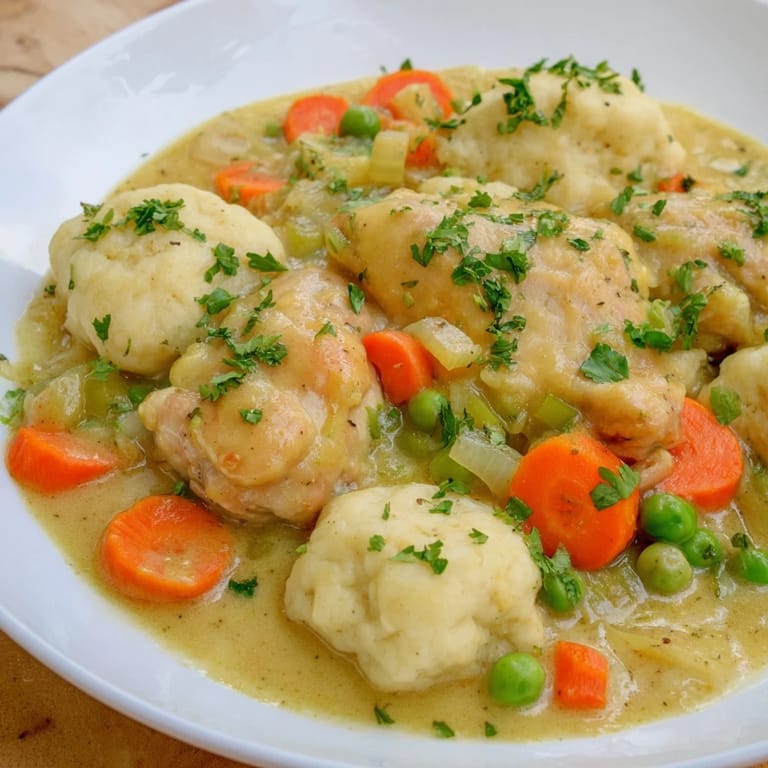
Save I learned the real power of this dish when my teenage son asked for seconds and then thirds. He's not usually one to gush about food, so watching him slow down and savor each spoonful told me everything. Comfort food isn't about complexity—it's about knowing you're cared for with every bite.
Why This Dish Works Every Time
The magic here is in the timing and the restraint. The roux thickens the broth without any special ingredients, the chicken thighs stay moist through the entire cook, and the dumplings are forgiving if you nail that dough ratio. I've made this in different kitchens, with different pots, and it's always come out tasting like home. The key is respecting each step—not rushing the sauté, not skipping the bay leaf, not peeking at the dumplings.
How to Make It Your Own
This recipe is a foundation, not a prison. I've made it with turkey thighs when chicken wasn't available, and it was just as good. Some nights I add a splash of dry white wine right after the flour toasts, and it brings a subtle depth that makes people pause and ask what you did differently. You can use half-and-half instead of heavy cream if you want something lighter, or add extra herbs like sage or parsley right into the dumpling dough.
Kitchen Moments and Troubleshooting
If your broth seems too thin after adding the milk, you can always simmer it uncovered for a few extra minutes before adding the dumplings—it'll thicken as liquid reduces. If the chicken seems like it's not tender at 20 minutes, give it another 5 to 10 minutes; every stove is different. And if your first batch of dumplings doesn't turn out perfect, the second one will be better because you'll know exactly how the dough should feel and how quickly things happen in your pot.
- Taste as you go and don't be shy about seasoning—the milk can mute flavors, so add salt a little at a time.
- If you're making this ahead, cool the stew completely before adding dumplings, then reheat gently and finish the cooking when you're ready to eat.
- Leftovers keep for three days in the fridge and actually taste better the next day as flavors deepen.
 Save
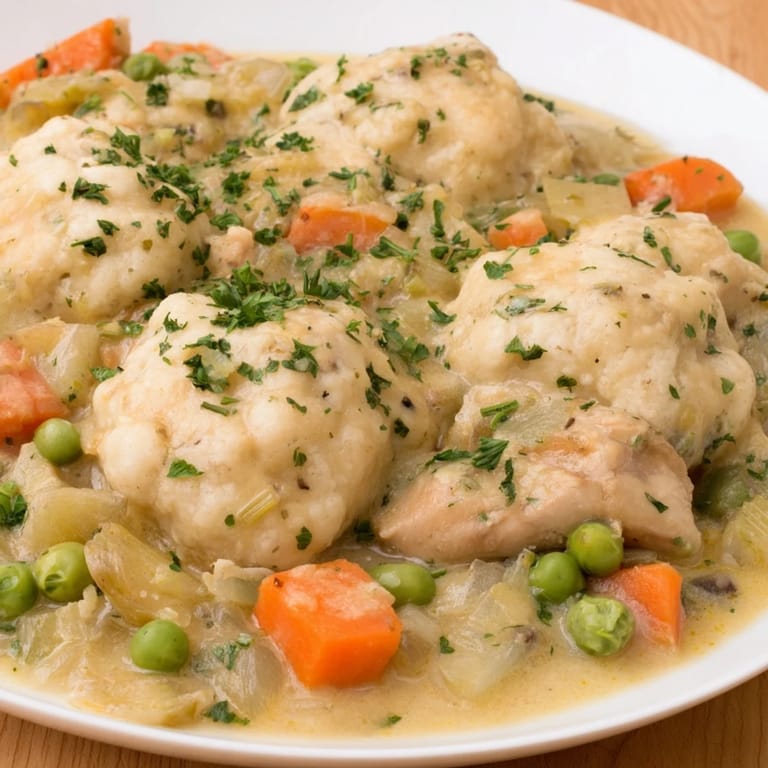
Save Chicken and dumplings is one of those dishes that proves food is really about connection—it brings people to the table and makes them feel like they belong. Make it often, share it freely, and don't worry about perfection.
Recipe FAQs
- → What cut of chicken works best for this stew?
Boneless, skinless chicken thighs or breasts cut into large chunks work well, providing tender and flavorful meat.
- → How do I avoid lumps when adding flour or broth?
Sprinkle flour evenly over sautéed vegetables and stir well to coat before gradually adding the broth while stirring constantly.
- → Can I use a different liquid instead of milk or cream?
Yes, half-and-half or a lighter milk alternative can be used for a lighter broth consistency without losing creaminess.
- → How should dumpling dough be handled to ensure fluffiness?
Mix just until combined without overmixing to keep dumplings light and tender after cooking.
- → What is the best way to cook dumplings properly on the stew?
Drop spoonfuls of dough onto simmering stew, cover tightly, and cook on low without lifting the lid for 15 minutes for fluffy, fully cooked dumplings.
- → Can any herbs be added for extra flavor?
Fresh parsley added after cooking enhances freshness, and thyme is used in the stew for earthy notes; bay leaf imparts subtle depth.