 Save
Save There's something almost magical about watching orange slices transform into silk in a pot of simmering broth. My neighbor handed me a bunch of carrots from her garden one autumn afternoon, and I had no idea what to do with them until the ginger in my pantry caught my eye. That first bowl, stirred with a squeeze of lemon, became my answer to everything—a quiet lunch, a gift to a friend who needed comfort, eventually a recipe I'd make without thinking.
I made this soup for my sister during her first week in a new apartment, serving it in mismatched bowls because she hadn't unpacked her kitchen yet. She ate two helpings standing at her counter, and I realized then that the best meals are the ones that make someone feel like they belong somewhere. Now whenever she calls saying she's had a rough day, this is what I promise to deliver.
Ingredients
- Olive oil: Just enough to coat the bottom of your pot and create a gentle starting point for the onions; don't skip this step as it builds the flavor base.
- Medium onion, chopped: This becomes nearly invisible once blended but carries the soup's foundation, so don't rush the sautéing.
- Garlic cloves, minced: Fresh garlic matters here—it cuts through the sweetness of the carrots with just the right amount of sharpness.
- Carrots, peeled and sliced: About a kilogram sounds like a lot until they're cooking, then they melt down into something entirely different and wonderful.
- Potato, peeled and diced: This optional ingredient is actually worth including if you want the soup to feel more substantial and creamy without any dairy.
- Fresh ginger, peeled and finely grated: This is where the personality lives—use real ginger, not the bottled kind, and grate it while the onions cook so the smell fills your kitchen.
- Vegetable broth: Quality matters; a good broth will taste clean and let the vegetables shine through without overpowering them.
- Water: Keep this nearby to adjust the soup's thickness to your preference at the end.
- Salt and black pepper: Taste as you go; these seasonings do their real work in the final moments.
- Lemon juice: Those few drops at the end wake everything up and bring all the flavors into focus.
- Fresh coriander or parsley: A handful scattered on top isn't just decoration—it adds a fresh note that contrasts beautifully with the warm spice.
- Coconut cream or yogurt: Optional but transformative; a swirl adds richness and a subtle tang.
Tired of Takeout? 🥡
Get 10 meals you can make faster than delivery arrives. Seriously.
One email. No spam. Unsubscribe anytime.
Instructions
- Warm the oil and soften the aromatics:
- Heat olive oil in a large pot over medium heat until it shimmers slightly, then add the chopped onion. Let it cook gently, stirring occasionally, for about 4 minutes until it becomes translucent and starts to soften—you'll notice the sharp raw smell beginning to mellow.
- Build the flavor base:
- Add the minced garlic and grated ginger, stirring constantly for just about 1 minute. The kitchen will fill with a warming, spicy aroma that tells you everything is happening right.
- Add the vegetables:
- Stir in the sliced carrots and diced potato, letting them cook for 3 to 4 minutes so they begin to release their sweetness and soften slightly at the edges.
- Simmer to tenderness:
- Pour in the vegetable broth and bring everything to a boil, then reduce the heat and cover the pot. Let it simmer for 20 to 25 minutes until the carrots are completely tender when pierced with a fork and the potato breaks apart easily.
- Transform into silk:
- Use an immersion blender to puree the soup directly in the pot, working in steady strokes until no chunks remain and the color becomes uniform and vibrant. If using a countertop blender, work in batches and let the soup cool slightly first for safety.
- Adjust and season:
- Add water gradually to reach your desired consistency, then stir in the lemon juice, salt, and pepper. Taste and adjust the seasonings—this moment of tasting and tweaking is when the soup becomes truly yours.
- Serve with intention:
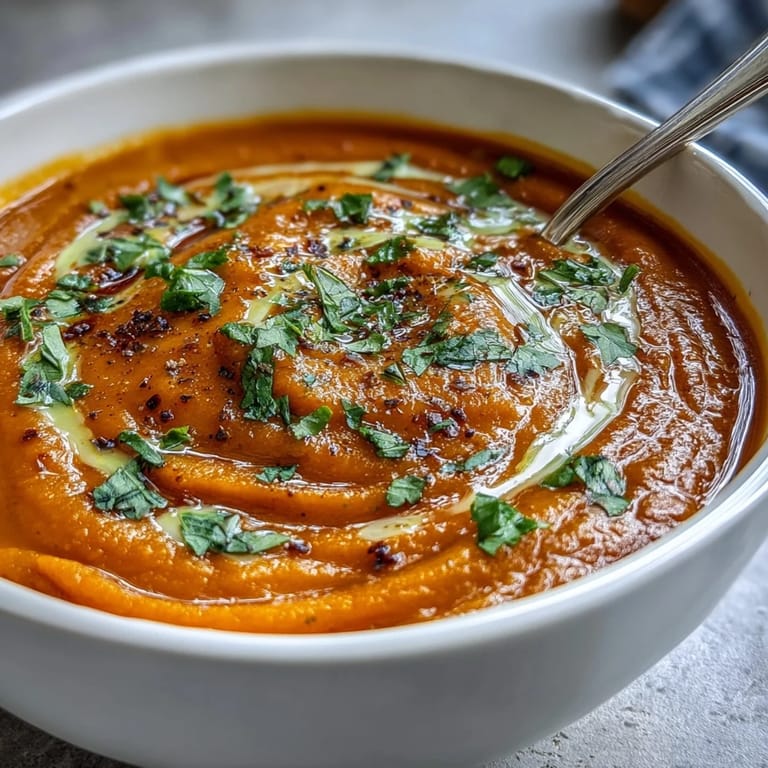
- Ladle the soup into bowls and top with a handful of fresh herbs and a swirl of coconut cream or yogurt if you'd like that richness.
 Save
Save There was a morning when my daughter, who usually avoids vegetables, asked for a second bowl without me even suggesting it. That small victory taught me that good food doesn't need convincing—it just needs to be treated with care and intention.
The Ginger Question
Fresh ginger is non-negotiable here, and it's worth taking a moment to peel and grate it properly. Use a microplane grater if you have one, or the small holes on a box grater—the goal is to release the oils and create something fine enough to disappear into the soup while still delivering its characteristic warmth. Older ginger tends to be more fibrous, so if you're using a piece that's been sitting in your produce drawer for weeks, add it to the pot earlier in the cooking process so those fibers have time to soften.
Building Heat Gradually
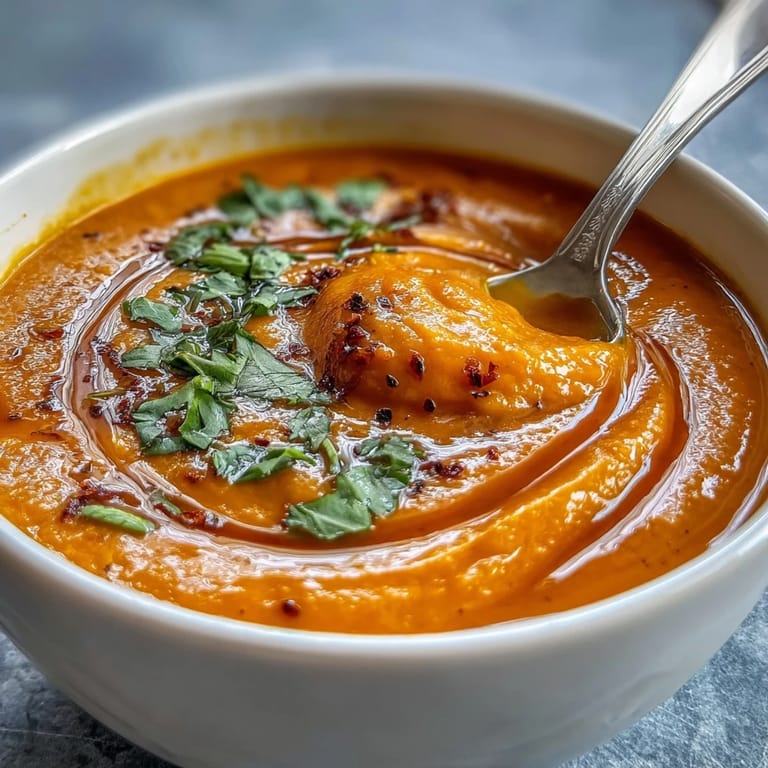
The beauty of this soup is how forgiving it is with heat levels. If you want more warmth without sharp spice, grate extra ginger into the pot after tasting. If you're feeling adventurous, add a pinch of cayenne or a finely chopped fresh chili with the ginger—it'll infuse the entire pot with a gentle heat that builds slowly rather than hitting all at once. Some people stir in a touch of chili oil at the table, which adds both flavor and visual interest.
Serving and Storing
This soup is equally at home as an elegant first course or a satisfying lunch eaten straight from the pot on a Tuesday afternoon. It keeps beautifully in the refrigerator for up to four days and freezes well for up to three months—just leave space at the top of the container for expansion. When reheating, do it gently over low heat or in the microwave, stirring occasionally to ensure even warming without scorching the bottom.
- Serve with crusty bread for soaking up every last bit, or offer toasted seeds on the side for a textural contrast.
- A dollop of coconut cream or a spoonful of tangy yogurt transforms it into something feel-good and complete.
- Leftovers taste even better the next day as the flavors settle and deepen.
 Save
Save This soup has a way of becoming a ritual—something you make when you need comfort, when you want to nourish someone you care about, or simply because the kitchen needs to smell like warmth and spice. It's become mine.
Recipe FAQs
- → Can I freeze this soup?
Yes, this soup freezes exceptionally well for up to 3 months. Allow it to cool completely before transferring to airtight containers. Thaw overnight in the refrigerator and reheat gently, adding a splash of water if needed to restore consistency.
- → How can I make it creamier without dairy?
The potato naturally adds creaminess, but you can also blend in a quarter cup of coconut milk or cashew cream before serving. Another option is adding extra potato or using a high-speed blender for an ultra-smooth texture.
- → What can I serve with this soup?
Crusty bread, warm naan, or roasted chickpeas make excellent accompaniments. For a complete meal, pair with a fresh green salad or quinoa dish. The soup also shines alongside grilled vegetables or a light grain bowl.
- → Is the ginger flavor too strong?
The two tablespoons provide a pleasant warmth without overwhelming heat. If you're sensitive to ginger, start with one tablespoon and taste before adding more. The cooking process mellows the spice significantly while preserving the aromatic qualities.
- → Can I use pre-cut carrots or baby carrots?
Yes, baby carrots work wonderfully and save prep time. Use about 1kg (roughly 4-5 cups). Pre-cut carrots are also fine, though larger carrots typically offer better flavor. Just adjust the cooking time if pieces are particularly large.
- → How long does this keep in the refrigerator?
Stored in an airtight container, this soup stays fresh for 4-5 days. The flavors actually develop and improve after a day. Reheat gently on the stovetop, adding a splash of water or broth if it has thickened.