 Save
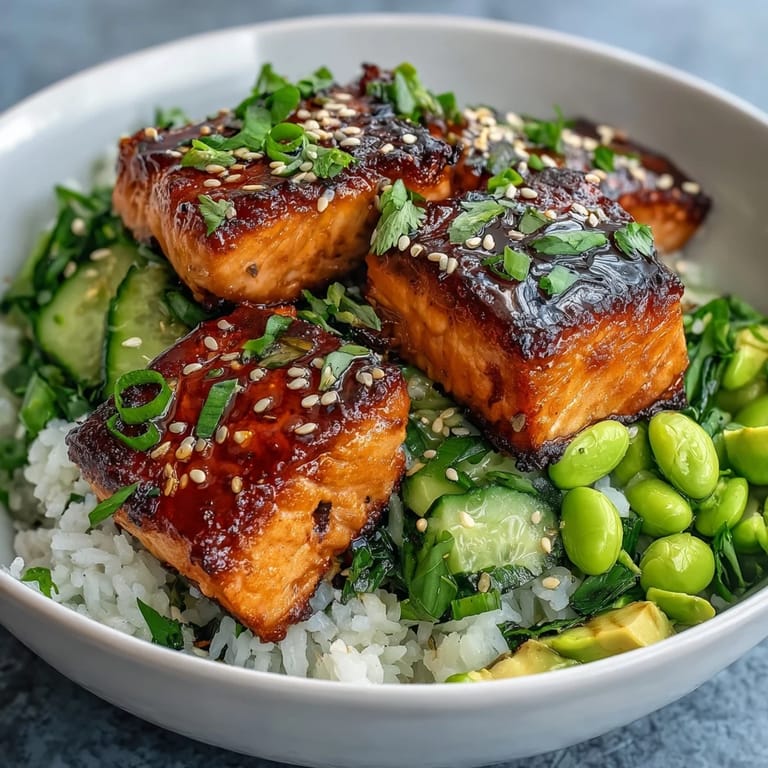
Save There's something about the smell of salmon hitting a hot oven that makes you feel like you've actually got your life together, even if you're eating at your desk fifteen minutes later. I discovered this bowl on a Tuesday when I had salmon thawing, leftover rice in the fridge, and absolutely zero energy to pretend I was cooking anything fancy. What started as kitchen improvisation became my go-to answer whenever someone asks what I eat on nights when I need something that tastes intentional but doesn't require much thinking. The beauty of it is how forgiving it is—swap vegetables, change the sauce, use whatever rice you have. It just works.
I made this for my roommate after she mentioned being tired of sad desk salads, and watching her eyes light up when she tasted that salty-sweet salmon against creamy avocado reminded me why food matters. She asked for the recipe immediately, and that's when I realized this bowl had somehow become the thing I'm known for in our group—people text asking if I'm making it when they come over. It's become less about nutrition and more about that moment when simple ingredients feel like care.
Ingredients
- Salmon fillet, 500 g (1.1 lbs), cut into 2 cm cubes: Buy it the day you'll cook it if possible—the fresher it is, the less "fishy" it tastes and the better it takes the glaze.
- Soy sauce, 2 tbsp: This is your umami anchor; don't skip it even if you think you're not a soy sauce person.
- Sesame oil, 1 tbsp: Use toasted sesame oil for that nutty depth, and measure it carefully because it dominates quickly.
- Honey or maple syrup, 1 tbsp: Balances the salt and creates a subtle glaze when the salmon hits the heat.
- Fresh ginger, 1 tsp grated: The fresher you grate it, the more alive the marinade becomes—bottled ginger doesn't have the same spark.
- Garlic, 1 clove minced: One clove is gentle; add more if you want the marinade to announce itself.
- Black pepper, ½ tsp: Freshly cracked makes a real difference if you have a grinder.
- Jasmine or sushi rice, 2 cups (400 g): Jasmine rice is fluffy and slightly sweet; sushi rice is stickier—both work, just pick based on your texture preference.
- Water, 3 cups (720 ml): Ratio matters; use this amount for foolproof rice.
- Salt for rice, ½ tsp: Taste the rice after it's done and add more if it feels bland.
- Cucumber, 1 cup (100 g) thinly sliced: Slice it just before assembling so it stays crisp and doesn't release water into the bowl.
- Shredded carrots, 1 cup (80 g): Raw adds crunch; feel free to lightly steam them if you prefer them softer.
- Edamame, 1 cup (80 g) shelled and cooked: Buy frozen and thawed, or cook from scratch if you have time—they add protein and a pop of color.
- Avocado, 1 sliced: Add this last or it browns; cut it right before serving.
- Green onions, 2 thinly sliced: These brighten everything—don't skip them even if you think they're just garnish.
- Toasted sesame seeds, 2 tbsp: Toast them yourself in a dry pan for thirty seconds if they're raw; the flavor difference is noticeable.
- Sriracha mayo, 4 tbsp: Mix 4 tbsp mayo with 1–2 tsp sriracha and a lime squeeze; adjust heat to your liking.
- Soy sauce or tamari, 4 tbsp: A simpler sauce option if you want to skip mayo, or drizzle both.
- Pickled ginger, 2 tbsp: Adds brightness and cuts through richness; use Japanese pickled ginger from the sushi section.
- Lime wedges for serving: Essential—a squeeze right before eating lifts everything.
Tired of Takeout? 🥡
Get 10 meals you can make faster than delivery arrives. Seriously.
One email. No spam. Unsubscribe anytime.
Instructions
- Heat your oven and prep your stage:
- Set the oven to 220°C (425°F) and line a baking tray with parchment paper. Having everything ready before you start means you're never scrambling.
- Make the marinade and coat the salmon:
- Whisk soy sauce, sesame oil, honey, ginger, garlic, and pepper together in a bowl until it looks glossy and unified. Add salmon cubes and turn gently to coat every piece; let them sit for 10 minutes while you handle the rice.
- Rinse and start the rice:
- Rinse rice under cold water, stirring with your fingers until the water runs mostly clear—this removes excess starch so each grain stays separate. Combine rice, water, and salt in a saucepan, bring to a boil, then reduce heat to low, cover, and simmer for 12–15 minutes until the water is absorbed and the rice is tender.
- Let the rice rest and broil the salmon:
- Turn off the heat under the rice and let it sit covered for 5 minutes—this sets the grains. Meanwhile, arrange marinated salmon in a single layer on the prepared tray and broil or bake for 8–10 minutes until the edges are lightly browned and the fish is opaque inside.
- Prepare your vegetables and assemble:
- Slice cucumber, shred carrots, thaw edamame if frozen, slice avocado, and chop green onions. Divide rice among four bowls, then layer salmon, vegetables, and sesame seeds on top of each one.
- Sauce and serve:
- Drizzle with sriracha mayo, soy sauce, or both—or add pickled ginger for tanginess. Serve immediately with lime wedges so people can brighten their bowl to their taste.
 Save
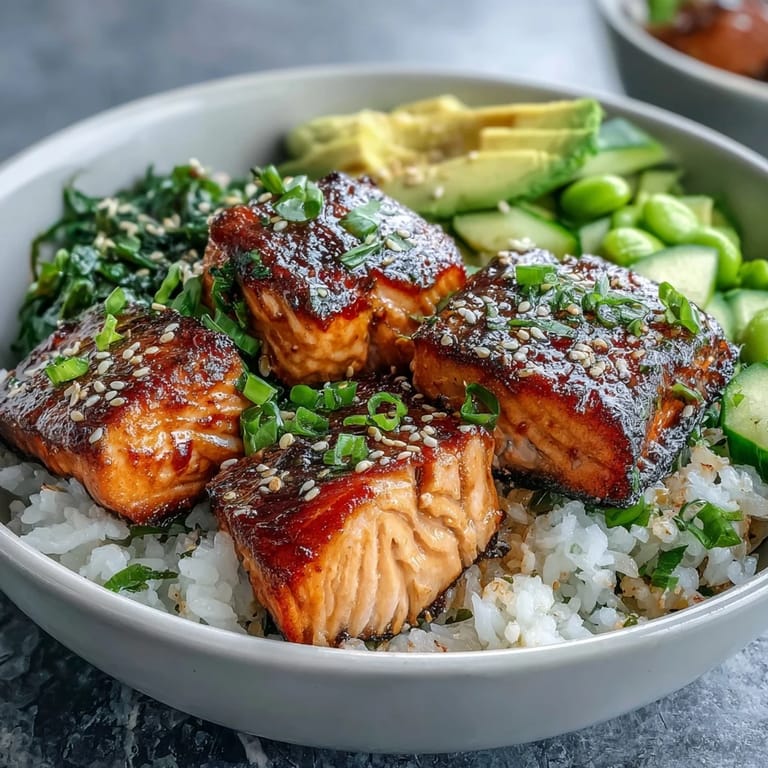
Save My coworker brought her partner in during lunch one day and made this for us all—there was this quiet moment where everyone just ate without talking, and that's when I knew it had crossed from recipe to ritual. Food that makes people pause is food worth making again.
Why the Components Cook Separately
This bowl works because nothing competes for heat or moisture. The salmon gets its own intense dry heat so it glazes properly. The rice steams gently without interference. The vegetables stay raw and crisp because they go in at the last moment. If you tried to combine everything earlier, the cucumber would weep, the rice would get mushy, and the salmon would steam instead of broil—you'd end up with a sad, soggy mess. By treating each element with respect, they all shine individually and taste even better together.
Sauce Strategy: Building Flavor Your Way
The magic of this bowl is that it doesn't demand one sauce—it invites you to decide. Some mornings I want the cooling creaminess of sriracha mayo cutting through the salmon's richness. Other days I'm in the mood for the straight clarity of soy sauce and lime, with pickled ginger adding sharp little surprises. Mix both if you're feeling indulgent, or add neither if the salmon and vegetables feel like enough. Think of sauces not as required but as mood adjustments, ways to make the bowl match how you're feeling that day.
Make-Ahead and Timing Notes
You can prep this bowl in stages without losing quality. Cook the rice in the morning and reheat it gently with a splash of water before serving. Chop the vegetables and store them in separate containers so they stay crisp. Marinate the salmon up to two hours ahead. What you can't do in advance is slice the avocado or assemble the bowls—these need to happen right before eating. The ten minutes of active assembly is worth it for the difference between a soggy bowl and a crisp one.
- Rice holds for hours: Reheat gently by adding a tablespoon of water and microwaving for sixty seconds.
- Vegetables last longest if you don't dress them: Keep dressing separate and add just before eating.
- The whole dish comes together in under five minutes: Once salmon is out of the oven, you're moments from eating.
 Save
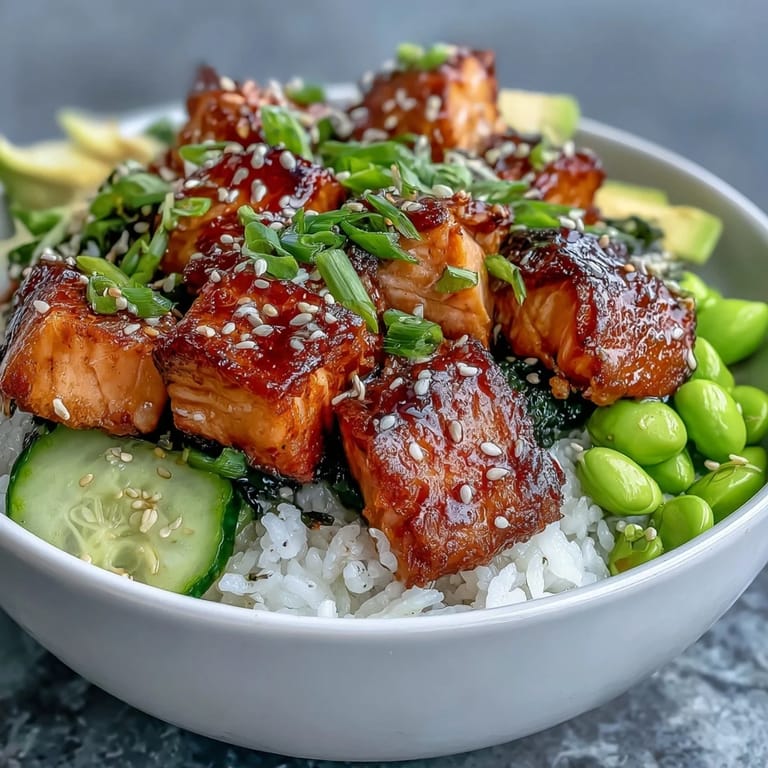
Save This bowl has become my answer to "what should I cook?" when the answer matters—when someone needs something nourishing that doesn't feel like a chore, when you want to impress without effort, when you're feeding yourself with actual care. Make it once and you'll understand why.
Recipe FAQs
- → Can I use frozen salmon for this bowl?
Yes, frozen salmon works well. Thaw it completely in the refrigerator overnight before cutting into cubes and marinating. Pat the fish dry to ensure proper marinating and browning.
- → What rice alternatives can I use?
Brown rice, quinoa, or cauliflower rice make excellent substitutes. Adjust cooking times accordingly—brown rice needs about 45 minutes, while quinoa cooks in 15 minutes and cauliflower rice只需要 5-7 minutes.
- → How do I store leftovers?
Store components separately in airtight containers. Rice keeps for 3-4 days, salmon for 2-3 days, and prepped vegetables for 2-3 days. Reheat salmon and rice gently, then assemble with fresh toppings.
- → Can I make this vegetarian?
Absolutely. Replace salmon with grilled tofu cubes, tempeh, or roasted chickpeas. Use the same marinade and broiling time for tofu, adjusting seasoning to taste.
- → What other vegetables work in this bowl?
Shredded red cabbage, bell pepper strips, snap peas, steamed broccoli, or roasted sweet potatoes complement the flavors beautifully. Choose crunchy textures for contrast.
- → Is the salmon supposed to be fully cooked through?
The salmon should be opaque and flake easily with a fork, reaching an internal temperature of 145°F (63°C). Broiling creates lightly browned edges while keeping the interior moist and tender.