 Save
Save The first time I hosted a hot pot dinner, my kitchen felt electric with possibility. Someone had brought back a tabletop burner from a trip to Thailand, and I remember standing at the market, overwhelmed by the sheer abundance of seafood and vegetables, thinking: what if I just let everyone cook their own bowl? It turned out to be one of those meals where the cooking becomes the conversation, where the clinking of tongs and the gentle bubbling of broth somehow brought everyone closer together.
I made this for my neighbor who'd been having a rough week, and she arrived skeptical—hot pot sounded fussy. But within ten minutes of arranging ingredients on little plates, something shifted. She was laughing, fishing for noodles with chopsticks, asking for a second bowl of broth. That's when I realized this dish isn't really about the seafood or vegetables; it's about slowing down together and giving your hands something meaningful to do while you talk.
Ingredients
- Low-sodium chicken or seafood stock (8 cups): This is your foundation, so use something you'd actually taste on its own—don't skimp on quality here, because every other ingredient is just a supporting actor to this broth.
- Fresh ginger (3 slices), garlic (3 cloves smashed), lemongrass (2 stalks bruised and chopped): These three create the aromatics that make people ask what you're cooking the moment they walk in the door.
- Soy sauce, fish sauce, and rice vinegar: The salty, umami, and bright notes that balance each other like a perfect chord—don't skip the vinegar, it's what keeps the broth from feeling one-dimensional.
- Fresh red chilies (1–2, sliced): Leave these in or take them out depending on your crowd, but keep them whole or in big pieces so cautious eaters can navigate around them.
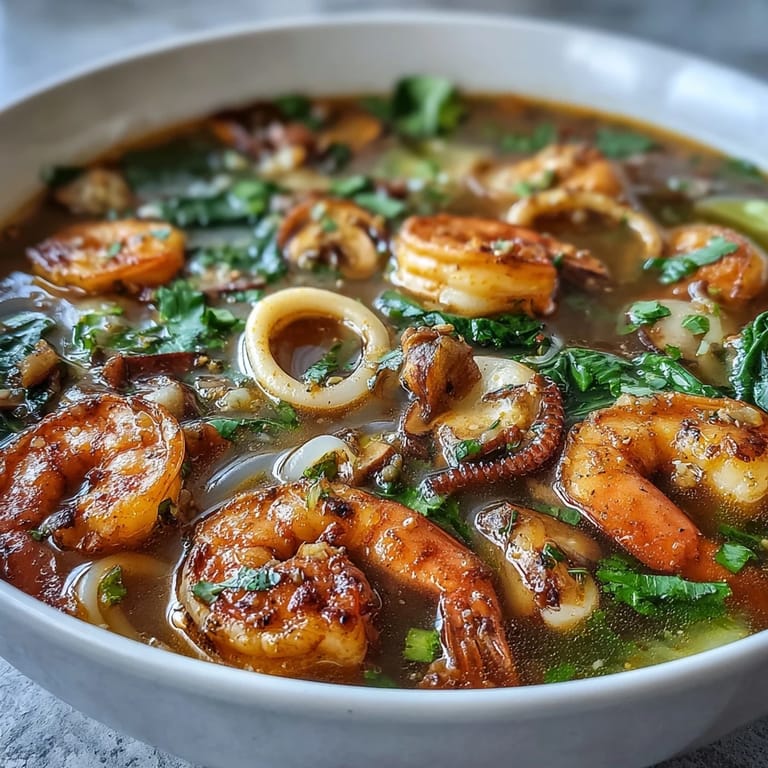
- Raw shrimp (8 large), white fish fillet (200 g), mussels or clams (8), squid rings (150 g): Mix and match based on what looks best at your fishmonger; the variety is what makes each spoonful feel like you're discovering something new.
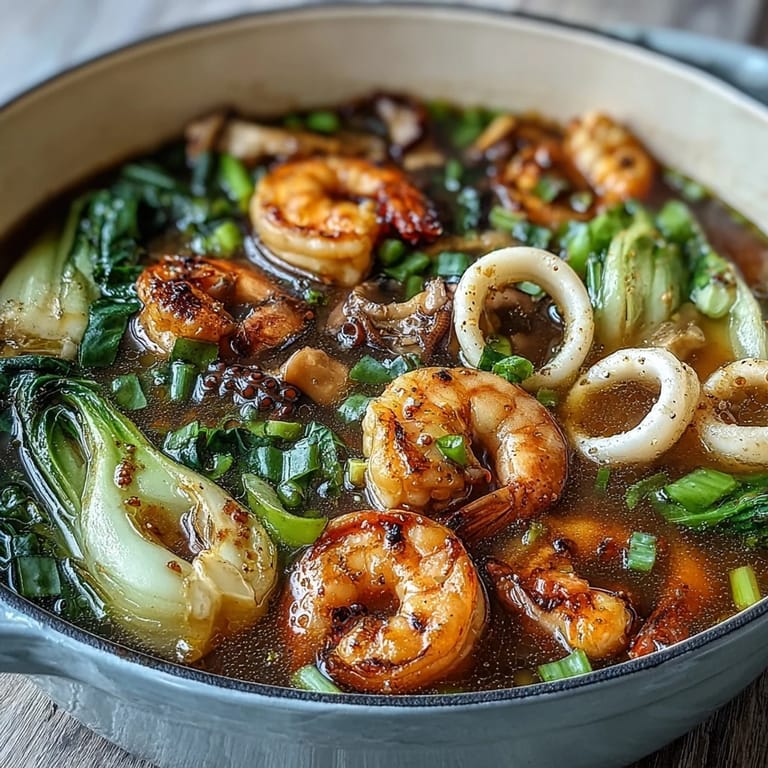
- Napa cabbage, bok choy, shiitake and enoki mushrooms, carrot, zucchini, and firm tofu: Arrange these in separate little piles so guests feel like they're at a sushi bar deciding what goes into their bowl.
- Glass noodles or rice vermicelli (200 g, soaked): These get silky and tender in just a few minutes in the broth, perfect for soaking up all those flavors at the end.
- Spring onions, fresh cilantro, and lime wedges: The finishing touches that make you feel like you're eating something restaurant-quality, but they're just fresh herbs.
Tired of Takeout? 🥡
Get 10 meals you can make faster than delivery arrives. Seriously.
One email. No spam. Unsubscribe anytime.
Instructions
- Build your flavor base:
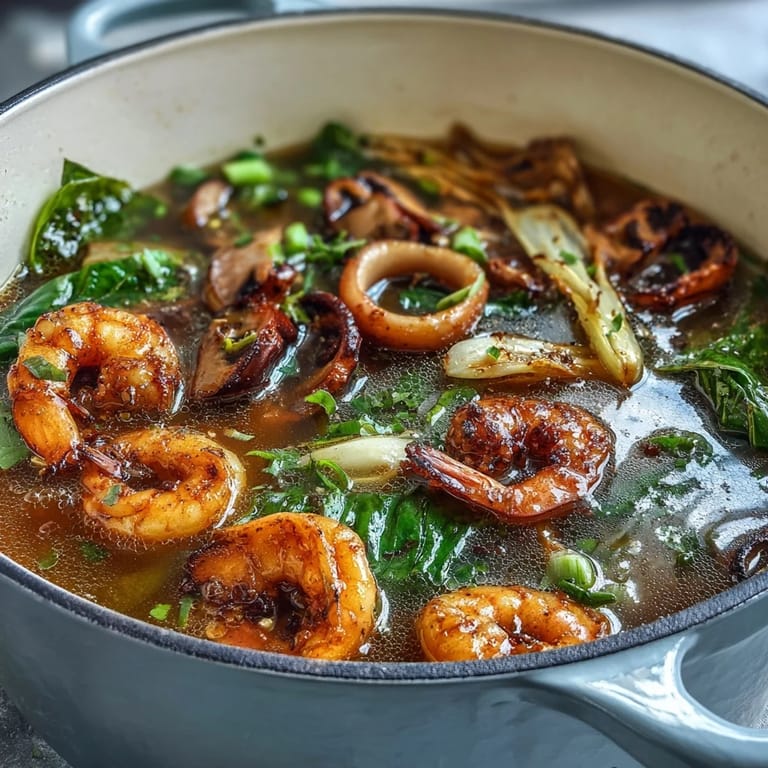
- In a large pot, combine stock with ginger, garlic, lemongrass, soy sauce, fish sauce, rice vinegar, and chilies. Bring to a boil, then lower the heat and let it simmer gently for 20 minutes—you're not rushing this, you're letting the aromatics slowly infuse into the broth until it smells like a Bangkok street market. Strain out the solids and set the clear, fragrant broth aside.
- Create your mise en place theater:
- Arrange all your seafood, vegetables, tofu, and soaked noodles on separate platters or in small bowls—this is your moment to make the table look inviting and abundant. Everything should be within arm's reach, prepped and ready, because once people sit down, the last thing you want is to be scrambling in the kitchen.
- Set the stage at the table:
- Place your portable burner or induction cooktop in the center of the table where everyone can see it, then pour the broth into a hot pot or wide saucepan and bring it back to a gentle simmer. The sound of that broth simmering becomes the heartbeat of the meal.
- Let everyone cook their own journey:
- Invite each diner to add whatever seafood, vegetables, and noodles they want to the simmering broth—this is where the magic happens, where everyone becomes the chef. Things cook fast, usually 2–3 minutes until the seafood turns opaque and the vegetables are tender-crisp with just a tiny bit of bite.
- Finish with flourish:
- Ladle cooked ingredients and broth into individual bowls, then scatter spring onions and cilantro on top and squeeze a wedge of lime over everything. That lime juice hits the warm broth and somehow makes it taste even more alive.
 Save
Save I learned the real trick when a friend asked if we could make the broth earlier in the day. The flavors only deepened as they sat, and when we reheated it that evening, it tasted even more rounded and complete, like the ingredients had finally made peace with each other. Now I always make the broth ahead—it's one less thing to stress about and one more reason to gather people around your table.
Seafood Selection and Timing
The order you add things to the pot matters more than you'd think. Fish fillets and squid are the speed demons—they need just a minute or two before they're perfect. Shrimp comes next, turning from translucent to opaque in what feels like a blink. Mussels and clams demand patience; they'll sit in the broth for a few minutes before they decide to open up and reveal themselves.
Building Layers of Flavor
The broth is really a meditation on balance: the warm spice of ginger, the pungent whisper of fish sauce, the bright pop of vinegar, all humming together in a low simmer. Some people are intimidated by fish sauce, but trust it—it's the invisible backbone that makes everything taste more like itself, not fishy at all but deeply savory and complex. Once you understand that balance, you can adjust the broth to match your mood: more chilies if you're feeling bold, extra vinegar if you want brightness, a splash more soy sauce if you want earthiness.
Making It Work for Your Crowd
Hot pot is forgiving in the best way because everyone gets to be in control of their own experience. Someone doesn't eat shellfish? They focus on fish and vegetables. Someone's heat-averse? They fish out the chilies before cooking. The one thing I've learned is to always set out dipping sauces—a little soy sauce, some chili oil, maybe a sesame-based sauce if you're feeling fancy—because people love having a little something extra to dunk things into, and it makes the experience feel more complete.
- If you can find a tabletop burner or induction cooktop, splurge on it—the experience of cooking at the table is half the appeal.
- Keep the broth at a gentle simmer, not a rolling boil, or everything will cook too fast and the delicate seafood will toughen up.
- Don't be afraid to add more broth from a kettle kept warm on the stove if the level gets low during the meal.
 Save
Save Hot pot is less a recipe and more an invitation—to cook together, to eat slowly, to let conversation meander while steam rises from a shared pot. It's the kind of meal that sticks with people not because of what's in the broth, but because of who was sitting around the table when you shared it.
Recipe FAQs
- → What seafood varieties can be used in the hot pot?
Common selections include shrimp, white fish fillets like cod or snapper, mussels or clams, and squid rings. You can also add scallops or crab for more variety.
- → How is the broth prepared for maximum flavor?
The broth is simmered with ginger, garlic, lemongrass, soy and fish sauces, rice vinegar, and optional fresh chilies to create an aromatic and balanced base.
- → What vegetables complement this hot pot style dish?
Crisp napa cabbage, baby bok choy, shiitake and enoki mushrooms, carrots, zucchini, and firm tofu all add texture and freshness.
- → How do you cook ingredients in the hot pot at the table?
Place the simmering broth on a portable burner or induction cooktop. Diners add seafood, vegetables, and noodles to the broth, cooking them 2–3 minutes until done.
- → What garnishes enhance the flavors?
Fresh spring onions, cilantro, and a squeeze of lime brighten the dish, adding fresh and zesty notes.
- → Can this dish accommodate dietary preferences?
It suits pescatarians naturally, but you can substitute chicken or beef if preferred. Be mindful of shellfish and soy allergens.