 Save
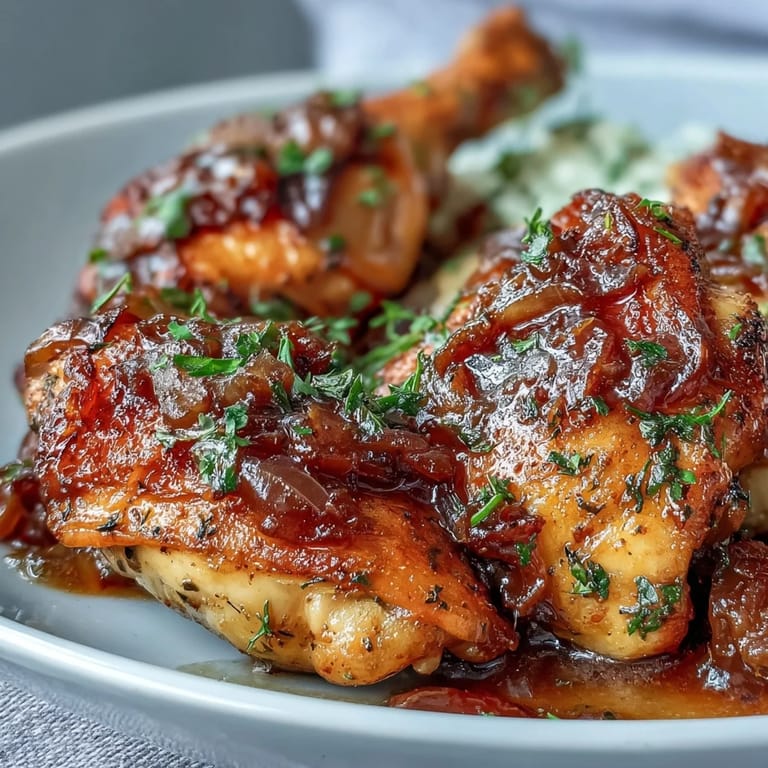
Save My grandmother's kitchen smelled like caramelized onions and cast iron on Sunday afternoons, and this smothered chicken was always the reason why. She'd stand at her stove with a wooden spoon in one hand and a glass of sweet tea in the other, letting the chicken braise low and slow until the meat practically fell off the bone. I watched her do this a hundred times before I finally understood that the magic wasn't in any one ingredient—it was in the patience, the way she'd stir those onions until they turned deep golden, the gentle simmer that made everything tender and forgiving. Now when I make this dish, I'm cooking her kitchen all over again.
Years ago, I made this for my first dinner party in my own apartment, and I was so nervous about the timing that I set three phone alarms. My best friend showed up early and found me frantically checking the chicken temperature with a meat thermometer like it was defusing a bomb. By the time everyone sat down, we were all laughing, and the first bite of that chicken—with its crispy skin and silky, onion-soaked meat—made the whole anxious afternoon worth it. That night, I learned that good food has a way of erasing all the small disasters that happened along the way.
Ingredients
- Bone-in, skin-on chicken thighs and drumsticks: These dark meat cuts stay juicy and flavorful during the long braise, unlike breast meat which can dry out; the skin crisps up beautifully in the pan and keeps everything moist underneath.
- All-purpose flour: Use it both for dredging and as the thickening agent in the gravy; some cooks save the seasoning-flour mixture instead of using plain flour for extra flavor.
- Vegetable oil: Neutral and high-heat stable, perfect for getting that initial golden crust without burning; don't skimp here, as it's crucial for both texture and flavor.
- Yellow onions: They caramelize beautifully and develop a natural sweetness that balances the savory chicken and broth.
- Low-sodium chicken broth: This lets you control the salt level; homemade stock elevates the entire gravy if you have it on hand.
- Unsalted butter: Added at the end, it enriches the gravy with a subtle richness that ties everything together.
- Dried thyme, paprika, garlic powder, and onion powder: These seasonings build layers of flavor; don't skip them, as they're what make this taste authentically Southern.
Tired of Takeout? 🥡
Get 10 meals you can make faster than delivery arrives. Seriously.
One email. No spam. Unsubscribe anytime.
Instructions
- Prep and season your chicken:
- Pat the chicken completely dry with paper towels—this step is essential for crispy skin, so don't rush it. Season every side generously with salt, pepper, paprika, garlic powder, and onion powder, making sure the seasonings really stick to the meat.
- Bread the chicken:
- Mix flour with salt and pepper in a shallow bowl, then dredge each piece thoroughly, shaking off the excess flour; this flour will later become part of your gravy, so save what's left over. The coating should be even but not thick or clumpy.
- Fry until golden:
- Heat the oil in your skillet over medium heat until it shimmers, then carefully add the chicken skin-side down. You'll hear a satisfying sizzle—that's the sound of the skin crisping up, which takes about 6–8 minutes. Flip and cook the other side for another 6–8 minutes until everything is a beautiful golden brown; the chicken won't be fully cooked yet, and that's okay.
- Build the onion foundation:
- After removing the chicken, pour off most of the oil, leaving about 2 tablespoons in the pan. Add your sliced onions and cook them gently over medium heat, stirring frequently, until they're soft and deeply golden—this takes patience, usually 8–10 minutes, and it's worth every minute of it. The onions should smell sweet and slightly caramelized, not burnt.
- Make the gravy base:
- Sprinkle your reserved flour over the softened onions and stir constantly for about a minute until the flour turns light brown and coats everything. This is called making a roux, and it's what will thicken your gravy into silky perfection.
- Bring it all together:
- Slowly whisk in the chicken broth, scraping up all those browned, flavorful bits stuck to the bottom of the pan—that's pure liquid gold. Add the thyme, paprika, salt, pepper, and butter, then let everything simmer for 2–3 minutes until the gravy thickens slightly and tastes balanced.
- Finish in the oven:
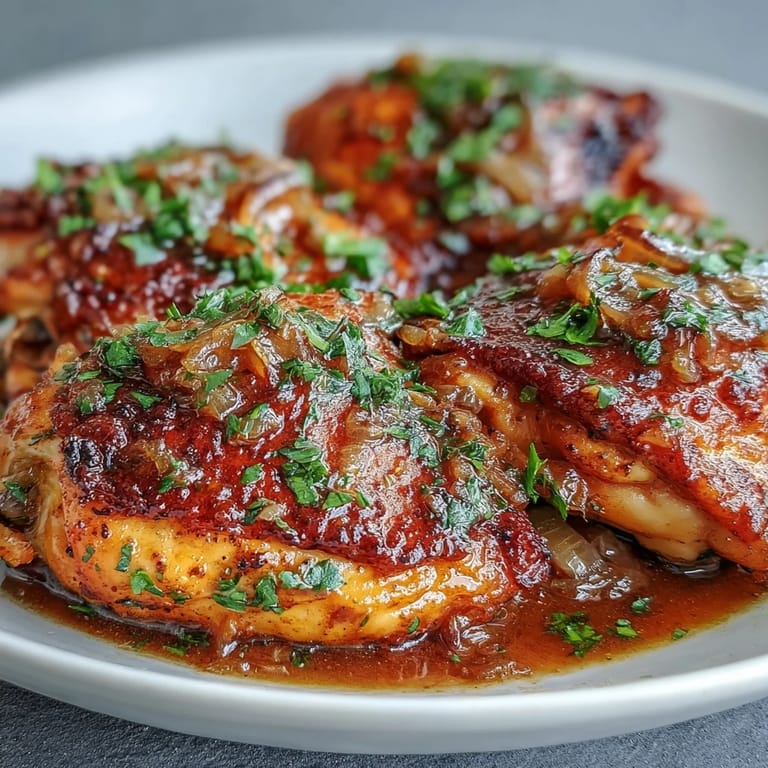
- Return the chicken to the skillet, nestling each piece into the gravy so it's partially submerged. Spoon some gravy over the top, cover, reduce the heat to low, and let it simmer gently for 25–30 minutes until the chicken is completely tender and has reached 165°F internally. The house will smell absolutely incredible during this time.
 Save
Save There's a moment, about halfway through the simmering, when you lift that lid and the steam rises up and you catch the full aroma of chicken, onions, and herbs mingling together—that's when you know this dish is going to be exactly what everyone needs. It's comfort in its most honest form, the kind of meal that makes people sit quietly for a moment before they start eating, just taking it all in.
Why Bone-In Chicken Matters
I learned this lesson the hard way years ago when I tried to shortcut the recipe with boneless chicken breasts. They cooked too fast, dried out in the gravy, and the whole dish felt one-dimensional by comparison. Bone-in dark meat releases gelatin and collagen into the liquid as it cooks, which creates that rich, silky mouthfeel that makes you want to keep eating. The bones also keep the meat incredibly moist, even if you accidentally leave it on the heat a few minutes too long.
The Secret Power of Low and Slow
This dish teaches you something important about cooking in general: the lowest heat and longest time almost always win over high heat and speed. Rushing the simmering by turning up the heat will toughen the meat and make the gravy break, while keeping it low allows the flavors to meld and deepen. I've found that covering the skillet traps steam, which helps keep everything moist and prevents the gravy from reducing too much, so don't be tempted to leave the lid off.
Serving and Pairing Suggestions
This smothered chicken is meant to be served with something to soak up all that gorgeous gravy—creamy mashed potatoes are the classic choice, but rice works beautifully too, and collard greens add just the right amount of brightness on the side. Some people like to serve cornbread for soaking up the last bits of gravy on the plate, which is honestly the best use of cornbread you'll ever find.
- Mashed potatoes are the traditional pairing, but buttered egg noodles work wonderfully if you want something different.
- If you're making collard greens, cook them with a little bacon or smoked turkey to echo the savory richness of the chicken.
- Cornbread or biscuits on the side are non-negotiable for most Southern tables, and for good reason.
 Save
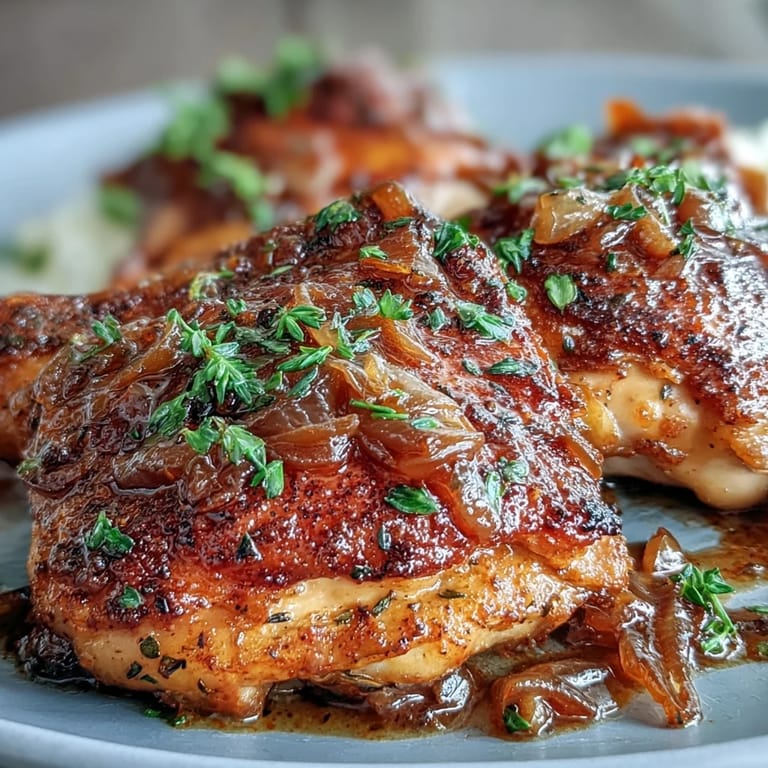
Save This is the kind of cooking that connects you to something real and true, the food that shows up on tables where people matter to each other. Make it when you need comfort, when you want to feed people well, or simply because sometimes the best meals are the ones that ask very little of you except patience and care.
Recipe FAQs
- → What type of chicken is best for this dish?
Bone-in, skin-on chicken thighs and drumsticks are preferred for their flavor and moisture retention during cooking.
- → Can I use boneless chicken instead?
Yes, boneless, skinless chicken works as well; just reduce simmering time by about 10 minutes to prevent drying.
- → How is the onion gravy made rich and flavorful?
The gravy thickens with flour and butter while incorporating caramelized onions and chicken broth, enhanced with paprika and optional thyme.
- → What sides pair well with this dish?
Mashed potatoes, rice, or collard greens complement the savory flavors and provide a classic Southern meal.
- → Can I add extra heat to the dish?
Yes, adding a pinch of cayenne pepper to the flour mixture before frying introduces a nice spicy kick.