 Save
Save There's a photograph somewhere in my phone of my grandmother's kitchen, flour dust caught in the afternoon light, and on her counter sat a New York cheesecake she'd made for my twenty-first birthday. I remember being struck not by how perfect it looked, but by how she'd casually mentioned the secret was patience—and cream cheese that didn't come straight from the fridge. Years later, when I finally made one myself, that advice echoed through every step, and I understood why she'd always said the cake was more about listening to what the oven was telling you than following the clock.
I made this for a dinner party once where everyone brought their favorite dessert, and mine was somehow the one that disappeared first—even though there was homemade tiramisu and a show-stopping chocolate torte on the table. My friend Sarah told me afterward that she loved it because it tasted like someone had actually cared, that you could taste the difference between this and a grocery store version. That moment changed how I thought about baking; it wasn't just about ingredients anymore, it was about the deliberate slowness of doing something right.
Ingredients
- Graham cracker crumbs (200 g / 2 cups): The foundation deserves attention—use actual graham crackers, not cookie crumbs that taste vaguely of honey but have lost all character.
- Unsalted butter, melted (100 g / 7 tbsp): The butter binds everything into that satisfying crunch that catches between your teeth before melting away.
- Granulated sugar for crust (2 tbsp): Just enough to remind your palate there's sweetness beyond the filling.
- Salt (pinch): It's easy to skip, but it's the whisper that makes everything else taste like itself.
- Full-fat cream cheese, room temperature (900 g / 2 lbs): This is non-negotiable—cold cream cheese will give you lumps, and lumps are the enemy of velvet.
- Granulated sugar for filling (200 g / 1 cup): Beat it in slowly with the cheese until you forget where one ends and the other begins.
- Sour cream, room temperature (240 ml / 1 cup): This is what keeps it from being too sweet, grounding everything with a subtle tang.
- Large eggs, room temperature (3): Temperature matters here more than anywhere else—cold eggs seize up and fight the batter.
- Cornstarch (1 tbsp): A small miracle worker that prevents cracking and smooths out the final set.
- Pure vanilla extract (2 tsp): Not the imitation; you'll taste the difference in every bite.
- Fresh lemon juice (1 tbsp): It brightens everything without announcing itself, like opening a window on a spring morning.
- Salt for filling (1/4 tsp): It deepens flavor in ways that are impossible to describe until you taste the difference.
Tired of Takeout? 🥡
Get 10 meals you can make faster than delivery arrives. Seriously.
One email. No spam. Unsubscribe anytime.
Instructions
- Prepare your stage:
- Preheat the oven to 160°C (325°F) and line a 23 cm springform pan with parchment paper on the base. Low heat is your friend here—it coaxes rather than forces.
- Make the crust that holds everything:
- Toss graham cracker crumbs with melted butter, sugar, and salt until it looks like wet sand between your fingers. Press it firmly into the pan, then bake for 10 minutes until it's set but still pale—you're building a foundation, not making toast.
- Begin with cream cheese:
- Beat room-temperature cream cheese on medium speed for about 2 minutes, until it's absolutely smooth with no lumps hiding at the edges. This is where your patience pays off; rushing this step haunts you later.
- Add sweetness and tang:
- Add sugar gradually while beating, then pour in the sour cream, vanilla, lemon juice, cornstarch, and salt until just combined. Don't overmix—you're folding flavors together, not airing out the batter.
- Introduce the eggs with care:
- Add eggs one at a time on low speed, scraping the bowl after each one and waiting until each egg is fully incorporated before adding the next. Each egg is a commitment, not an afterthought.
- Build the water bath:
- Pour the filling over the cooled crust, then place the springform pan inside a larger roasting pan. Pour hot water into the outer pan until it reaches halfway up the sides—this gentle heat keeps the center creamy instead of cracked.
- Bake into patience:
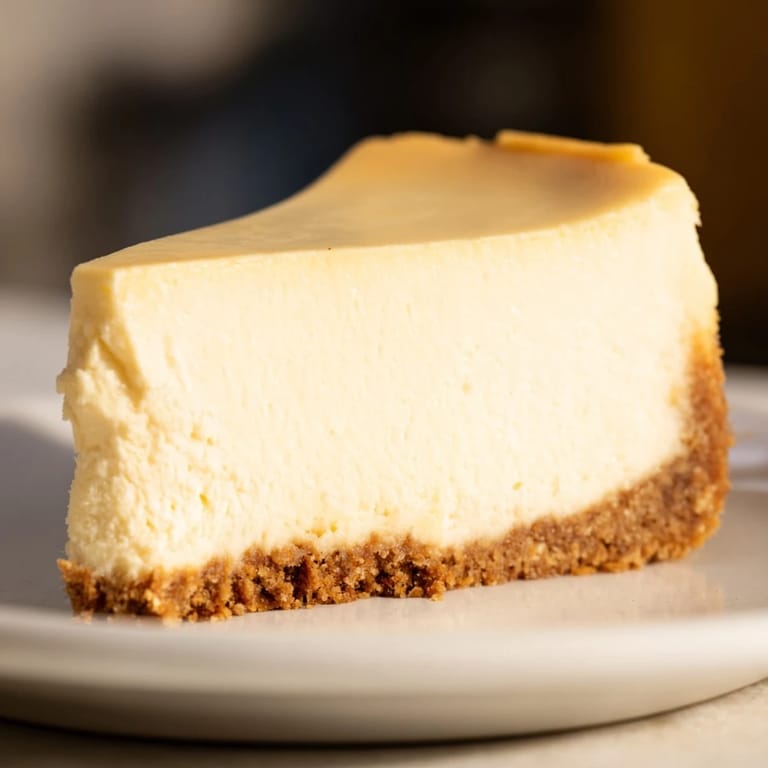
- Bake for 55-65 minutes until the edges are set but the very center still wobbles like it's breathing. You're looking for that jiggle, that sign that the inside is still yielding.
- Let it rest in the oven:
- Turn off the heat, crack the oven door open a few inches, and let the cheesecake sit for 1 hour while everything cools slowly. This gradual transition prevents the shock that causes cracks.
- Finish the cooling:
- Remove from the oven, run a thin knife around the edges to loosen it gently, then let it come to room temperature on the counter. Patience again—this is where the texture becomes what you've been waiting for.
- Chill and reset:
- Refrigerate for at least 6 hours, though overnight is when it truly becomes itself, cold and dense and ready to slice cleanly.
- The optional topping:
- Mix sour cream, powdered sugar, and vanilla into a soft spread, then smooth it over the chilled cake. This layer is like wrapping it in luxury.
- Slice with intention:
- Use a hot, clean knife—dip it in hot water and wipe it dry between each cut for clean edges that don't drag.
 Save
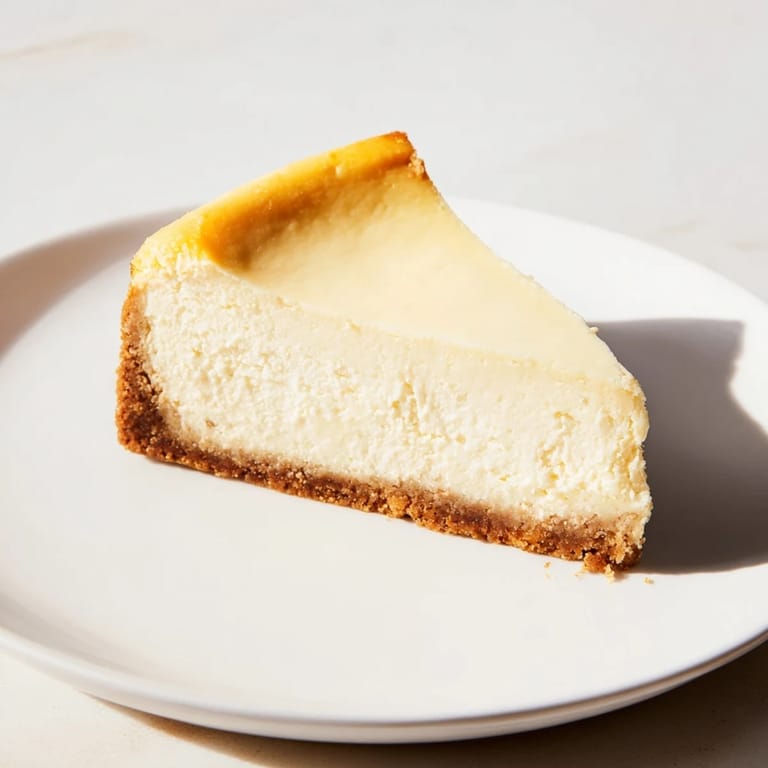
Save The first time I made this without cracking it across the top, I felt something shift—like I'd finally heard what the recipe was trying to tell me all along. It wasn't about being perfect; it was about understanding that every step was designed to respect the delicate chemistry happening inside that pan.
The Water Bath, Explained
The water bath seems intimidating until you understand what it's actually doing: it's creating an oven within the oven, a humid environment where the filling sets gently from the outside in rather than racing to cook at the edges while the center stays soft. This is why New York cheesecake has that specific dense-but-creamy texture that grocery store versions miss entirely. The water bath is also why you hear that gentle jiggle described so often—it means the heat has penetrated evenly enough that the center is set but still has that yielding quality that makes each forkful feel luxurious.
Why Room Temperature Matters More Than You Think
Cold cream cheese doesn't blend smoothly into the sugar; it stays in small, grainy particles that never fully dissolve, and you'll taste that graininess in every bite. Cold eggs do something worse—they shock the batter and can actually cause it to separate slightly, creating an odd texture that no amount of baking can fix. I learned this the hard way on my second attempt, when I grabbed the cream cheese straight from the fridge because I was running late. The cake baked fine, looked fine, but when I cut into it, the texture was slightly off, almost chalky. That's when I understood it wasn't about following rules; it was about the ingredients speaking to each other.
Variations and When to Try Them
The classic version is perfect, but once you've made it a few times, you might want to explore gentle variations. Swirl melted chocolate into the filling before baking for a marbled effect, or add a thin layer of fresh berry compote on top just before serving. Some people add a hint of almond extract alongside the vanilla, and it's like suddenly seeing a familiar room in a new light.
- Chocolate swirl: melt 85 g of good dark chocolate and drizzle it across the filling in ribbons, then use a skewer to create patterns before baking.
- Fruit topping: arrange fresh raspberries or a thin layer of strawberry jam on top of the sour cream topping for a pop of color and tartness.
- Save the leftover sour cream topping mixture in the fridge for up to 3 days if you make it separately.
 Save
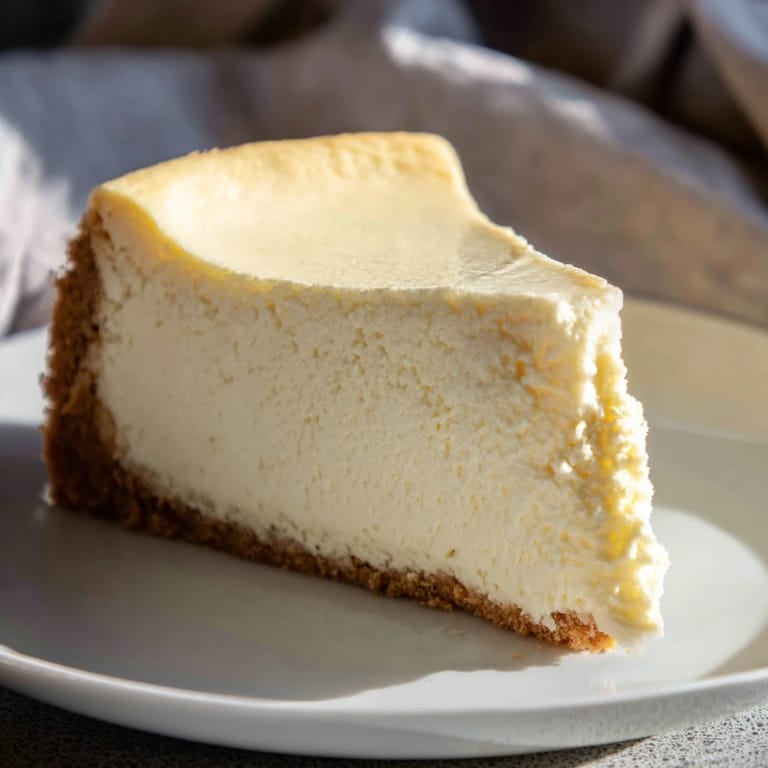
Save This cheesecake is the kind of dessert that becomes a tradition once someone experiences it at your table. Make it, let it teach you what patience tastes like, and watch people close their eyes on the first bite.
Recipe FAQs
- → What is the purpose of the water bath in baking?
The water bath provides gentle, even heat to prevent cracks and helps achieve the creamy, smooth texture typical of this cheesecake.
- → Can I prepare this dessert in advance?
Yes, chilling the cheesecake overnight enhances its flavor and allows it to set firmly for easier slicing.
- → What variations can be added to the filling?
Incorporate chocolate swirls, fruit compote, or zest to customize flavors while maintaining the rich, creamy base.
- → How important is the room temperature of ingredients?
Using room temperature cream cheese, eggs, and sour cream ensures a smooth filling and prevents lumps during mixing.
- → What pairs well with this dessert?
This cheesecake complements late harvest Riesling wines or strong coffee, enhancing its rich flavors.