 Save
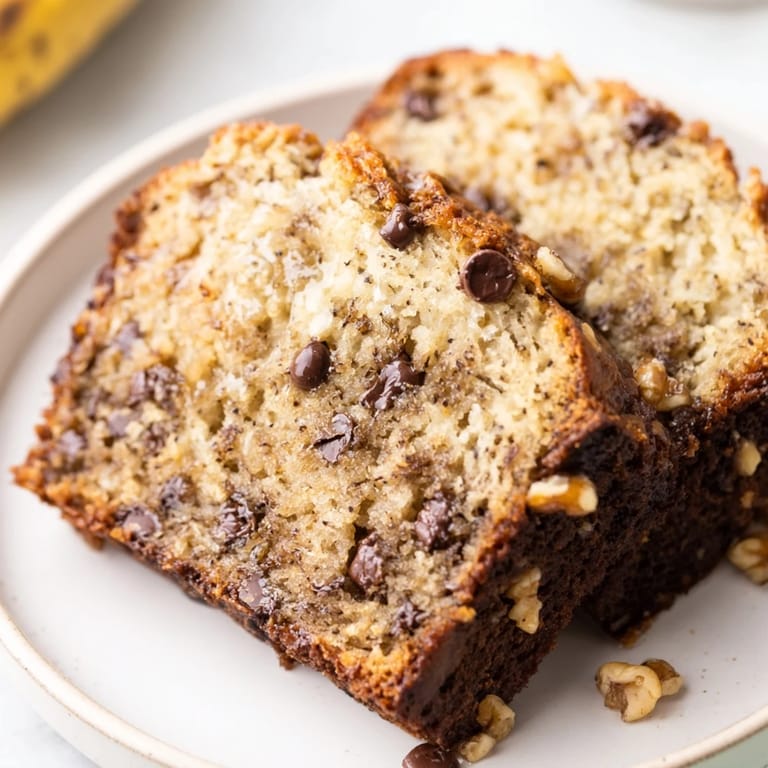
Save There's something about the smell of banana bread baking that feels like coming home. I discovered this recipe on a gray Saturday morning when I had three spotty bananas sitting on my counter and absolutely nothing sweet in the house. The first loaf I pulled from the oven was slightly underbaked, but when I bit into that tender, almost gooey center, I understood why people keep this recipe folded into their favorite cookbooks. Now whenever bananas start turning that speckled brown, I know exactly what needs to happen.
I baked this for my neighbor one autumn when she was going through a rough stretch, and she cried a little when she tasted it warm from my cooling rack. There's no fancy technique here, just honest ingredients that somehow create something that feels both comforting and celebratory. That loaf taught me that sometimes the simplest recipes carry the most meaning.
Ingredients
- Ripe bananas: Three large ones, mashed until smooth—look for that deep yellow with brown freckles, because those bananas have converted their starches to sugar and will make your bread naturally sweet without tasting cloying.
- Eggs: Two large ones at room temperature will emulsify better and create a more tender crumb.
- Melted butter: One hundred twenty milliliters cooled slightly, which carries the rich flavor through every bite without making the loaf greasy.
- Sugars: One hundred grams granulated and fifty grams brown, layered together for depth—the brown sugar brings moisture and a subtle molasses warmth.
- Vanilla extract: A single teaspoon that somehow amplifies the banana instead of competing with it.
- All-purpose flour: Two hundred twenty grams sifted with the dry ingredients to avoid lumps that catch in your teeth.
- Baking soda: One teaspoon, the leavening agent that gives you that tender rise without the metallic aftertaste you get from baking powder.
- Salt: Half a teaspoon that you might think is too much until you taste how it makes the banana flavor pop.
- Ground cinnamon: Half a teaspoon optional, but I always add it because it whispers rather than shouts.
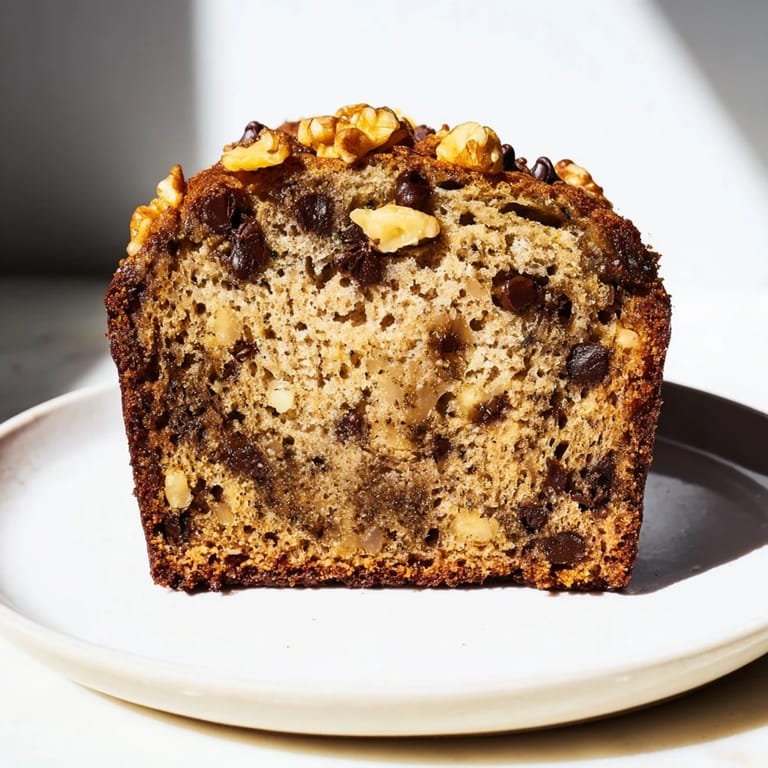
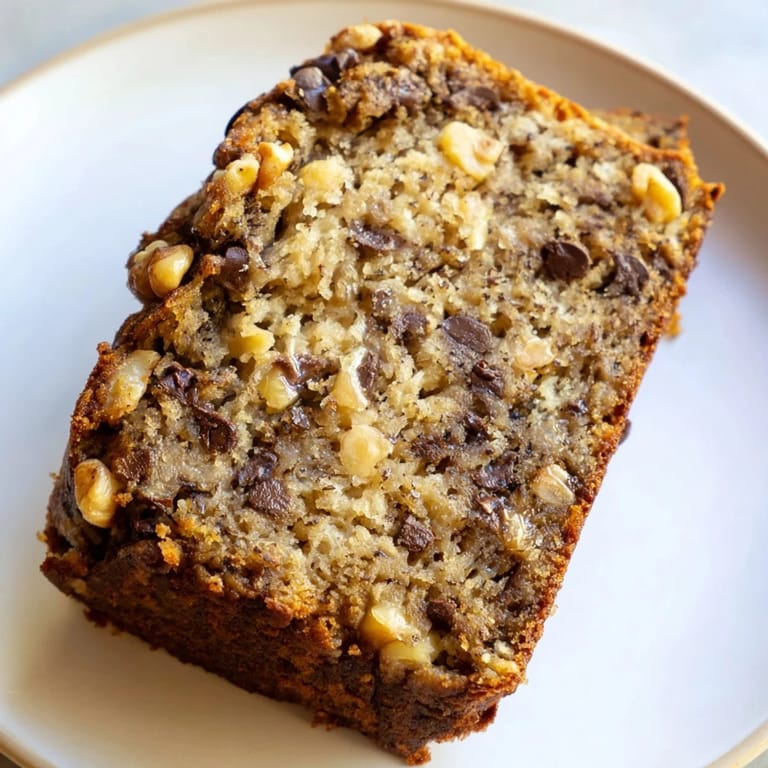
- Walnuts or pecans: Eighty grams chopped, which add texture and a slight bitterness that balances the sweetness beautifully.
- Chocolate chips: Seventy grams optional, because sometimes you want the pure banana experience and sometimes you want a little chocolate surprise.
Tired of Takeout? 🥡
Get 10 meals you can make faster than delivery arrives. Seriously.
One email. No spam. Unsubscribe anytime.
Instructions
- Heat your oven and prepare the pan:
- Set your oven to 175°C (350°F) and grease your loaf pan thoroughly or line it with parchment paper—this prevents the edges from sticking and browning too dark. Let the oven preheat while you gather everything, so it's at full temperature when your batter is ready.
- Combine wet ingredients into a pool of banana sweetness:
- Whisk your mashed bananas, eggs, cooled melted butter, both sugars, and vanilla together in a large bowl until the mixture looks smooth and slightly glossy. The banana should break down into an almost creamy consistency, and the eggs should disappear into the mixture rather than sitting in streaks.
- Sift and mix the dry team:
- In a separate bowl, sift together flour, baking soda, salt, and cinnamon, which aerates the flour and eliminates any hidden lumps that could toughen your final loaf. The sifting takes maybe two minutes but changes everything about texture.
- Fold everything together with restraint:
- Pour your dry mixture into the wet ingredients and fold gently with a spatula using a few decisive strokes—overmixing develops gluten and creates a tough, dense crumb that tastes more like cake than banana bread. You want some streaks of flour still visible before you stop.
- Add your mix-ins if using:
- Fold in nuts and chocolate chips last, so they're distributed without you having to stir the batter more than necessary.
- Transfer batter to pan and smooth the top:
- Pour everything into your prepared loaf pan and use a spatula to gently level the surface, which helps it bake evenly.
- Bake until golden and just set:
- Bake for 50 to 60 minutes—at 50 minutes, insert a toothpick into the center and pull it out. If it comes out clean or with just a few moist crumbs clinging to it, your bread is done; if it has wet batter, give it another few minutes and check again. The top should be golden brown and a gentle press should leave your fingerprint for just a moment.
- Cool with patience:
- Let the bread sit in its pan for 10 minutes, which helps it set and makes it less likely to break when you turn it out. Then transfer it to a wire rack where air can circulate underneath, and wait until it's completely cool before slicing—I know this is hard.
 Save
Save One Sunday afternoon, my daughter helped me make this, and she insisted on mashing the bananas by hand even though it took forever. When we pulled it from the oven and the whole kitchen smelled like butter and caramelized banana, she declared it the best smell in the world. That loaf became part of our routine, something we made together whenever she wanted to feel like we were creating magic in the kitchen.
The Secret of Ripeness
I learned early on that banana bread is forgiving with ripeness in a way most baking isn't. Green or yellow bananas will make a less sweet loaf with a slightly firmer crumb, which some people prefer for texture. Brown-spotted bananas give you maximum sweetness and moisture, turning the bread into something almost custardy in the center. I've made this so many times now that I can judge doneness by smell alone—when the whole kitchen smells like toasted banana and butter, you're close to ready.
Variations and Add-Ins
The beauty of this recipe is how it welcomes improvisation without falling apart. I've made it with crushed pineapple stirred into the wet ingredients for a subtle tropical note, and I've swapped pecans for walnuts depending on what was in the pantry. Some mornings I make it with chocolate chips mixed throughout, other times I layer them only on top for visual interest and selective bites of chocolate.
Serving and Storage
Banana bread reaches its peak flavor the day after baking, when the flavors have settled and the texture has become even more tender. Toast a thick slice with a little butter or cream cheese, and serve it alongside strong coffee or tea for a breakfast that feels substantial without being heavy. The loaf stays fresh wrapped in plastic for about three days on your counter, or you can freeze individual slices and toast them directly from frozen whenever the craving strikes.
- If your bread seems dry the next day, wrap it tightly and it will rehydrate slightly from its own moisture overnight.
- For breakfast-to-go, slice and wrap individual pieces before the bread cools completely, which seals in moisture.
- Toasting always improves a slice that's been sitting for a few days, bringing back softness and releasing the banana aroma again.
 Save
Save This recipe is the one I return to when I want to feel competent and generous at the same time. It never disappoints and it always tastes like you care, even when you threw it together in fifteen minutes before running out the door.
Recipe FAQs
- → What makes the banana loaf moist?
Using very ripe bananas packed with natural sweetness and moisture contributes to the tender, moist texture of the loaf.
- → Can I add nuts or other mix-ins?
Yes, chopped walnuts or pecans complement the loaf well, and chocolate chips provide a sweet twist if desired.
- → How do I prevent the bread from drying out?
Avoid overmixing the batter and bake until a toothpick inserted comes out with a few moist crumbs, ensuring the loaf stays tender.
- → What temperature and pan size are recommended?
Bake at 175°C (350°F) using a greased and floured 9x5-inch loaf pan for even cooking and shape.
- → Can I make substitutions for dietary needs?
Use gluten-free flour for gluten intolerance and plant-based butter for dairy-free options to suit your dietary preferences.