 Save
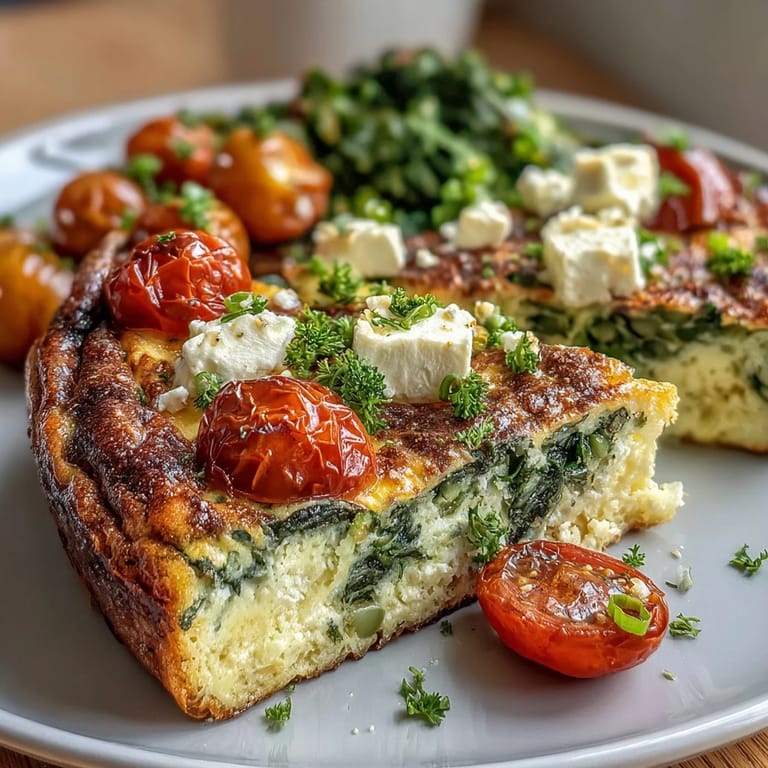
Save There's something about spring vegetables hitting the market that makes me want to cook eggs immediately. One Saturday morning, I stood in my kitchen with a handful of asparagus, some spinach that was almost too pretty to use, and this sudden clarity that I needed to make something green and alive in a single pan. No fussing, no multiple dishes—just the smell of olive oil warming up and the promise of herbs doing their quiet magic. That frittata taught me that the simplest meals often taste the most like the season they come from.
I made this for a friend who'd been going through a rough patch, and she sat at my kitchen counter watching the vegetables soften in the skillet, just breathing in the steam. When I pulled it from the oven golden and puffed, something about sharing that warm, herb-scattered slice seemed to shift the whole mood of the day. Food doesn't fix everything, but when it's made with care and spring vegetables, it comes close.
Ingredients
- Asparagus: Cut these into one-inch pieces so they cook evenly and don't become those woody stalks nobody wants to bite into.
- Baby spinach: Fresh is better than frozen here—you want that delicate texture and bright color that wilts down perfectly at the last second.
- Cherry tomatoes: Halving them prevents them from rolling around and keeps their burst of tartness distributed throughout.
- Zucchini: Dice small so it softens without turning into mush, and the pieces stay tender rather than rubbery.
- Red onion: The sharpness mellows as it cooks and adds a gentle sweetness that balances the whole dish.
- Eggs: Room temperature eggs mix more smoothly and cook more evenly, so pull them out a few minutes before you start.
- Milk: This keeps the eggs silky instead of rubbery—don't skip it, and dairy-free alternatives work just as well.
- Feta cheese: Crumbled generously, it adds a salty, tangy note that makes you taste the herbs more clearly.
- Fresh parsley and chives: These are not decorative—stir half of them into the eggs and finish with the rest so you get herb flavor in every bite.
- Olive oil: Use good oil here, not the cheapest bottle, because you can actually taste it.
Tired of Takeout? 🥡
Get 10 meals you can make faster than delivery arrives. Seriously.
One email. No spam. Unsubscribe anytime.
Instructions
- Heat your oven and get the skillet ready:
- Preheat to 375°F and let your 10-inch oven-safe skillet warm over medium heat with a tablespoon of olive oil. The pan should be hot enough that the oil moves easily when you tilt it, but not smoking.
- Start with the onion:
- Sauté the red onion for about two minutes until it's soft and smells sweet. This gives it a head start so it won't be crunchy in the finished frittata.
- Build your vegetable layer:
- Add the asparagus, zucchini, and a pinch of salt, stirring occasionally for three to four minutes until they're just tender. You want them to have softened but still hold their shape—watch them closely because this happens faster than you'd think.
- Wilt the spinach and tomatoes:
- Toss in the spinach and halved cherry tomatoes, cooking for just one to two minutes until the spinach darkens and goes soft. The residual heat will finish everything at just the right moment.
- Whisk the eggs:
- In a bowl, whisk together six eggs, a quarter cup of milk, salt, black pepper, and the red pepper flakes if you like heat. Whisk until the mixture is pale yellow and completely combined—don't leave streaks of white.
- Combine everything:
- Pour the egg mixture evenly over the vegetables in the skillet, then sprinkle feta cheese, parsley, and chives across the top. Let it cook on the stovetop for two to three minutes until you see the edges starting to set and pull away from the sides.
- Finish in the oven:
- Transfer the skillet to the oven and bake for ten to twelve minutes until the center is set and the top is lightly golden. The frittata should jiggle just slightly in the very middle when you gently shake the pan—that's perfect.
- Rest and serve:
- Let it cool for a few minutes so you can handle it without burning your fingers, then slice into wedges. Serve it warm or at room temperature—both are lovely.
 Save
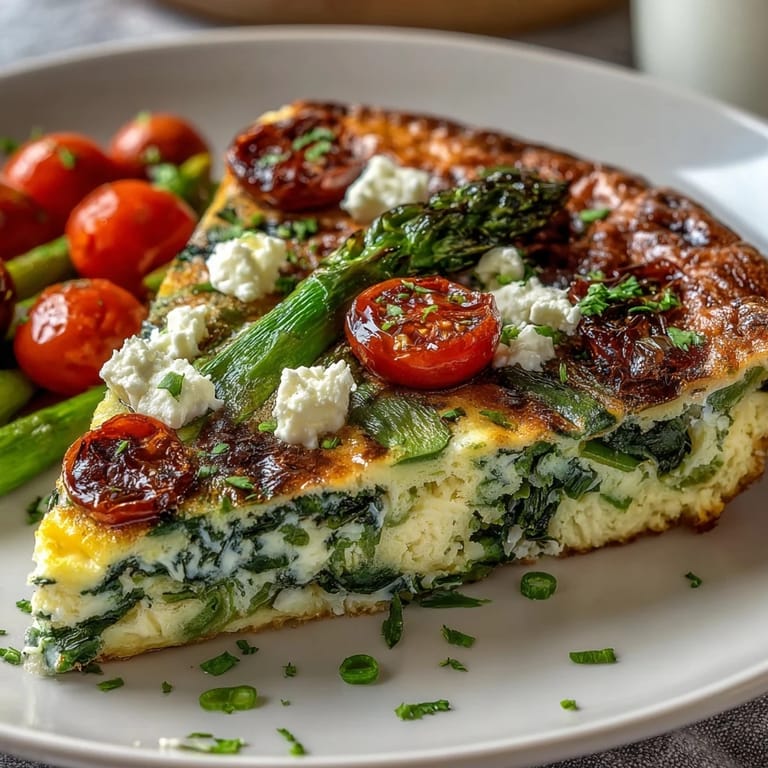
Save My neighbor smelled it cooking one morning and showed up at my door asking if I'd made something with herbs, because the whole hallway smelled like spring. That's the moment I realized this wasn't just breakfast—it was an invitation to notice what grows in the market right now and celebrate it in the simplest possible way.
Making It Your Own
The beauty of a frittata is that it adapts gracefully to whatever's in your kitchen. Spring onions, fresh peas, sautéed mushrooms, artichoke hearts—anything that's cooked until tender belongs here. I once made it with roasted red peppers and it became something completely different but equally good. The vegetables are the story, and you get to write it based on what looks good at the market or what's hiding in your crisper drawer.
Dairy-Free and Dietary Swaps
If dairy isn't in your life, swap the milk for oat or almond milk and skip the feta or use a cashew-based cheese—the frittata is honestly delicious without cheese altogether, letting the vegetables and herbs shine. I've made it for friends with all kinds of dietary needs and never felt like I was compromising the dish. The eggs are the binder and the star; everything else is just supporting them.
Timing and Temperature Notes
The oven temperature matters more than you'd think because too hot and the eggs cook too fast at the edges while the center stays wet, but too cool and you end up with something that feels like it's taking forever. I've learned to trust 375°F because it's forgiving and produces that perfect set-but-creamy texture. If you're using a glass skillet, you might want to lower the temperature by twenty-five degrees since glass conducts heat more aggressively.
- Make sure your skillet is truly oven-safe before transferring it—cast iron, stainless steel, and ceramic all work beautifully.
- Let the frittata cool for at least a few minutes before slicing so it holds together neatly on the plate.
- Leftovers keep for three days in the refrigerator and taste wonderful straight from the cold, or warmed gently in a low oven.
 Save
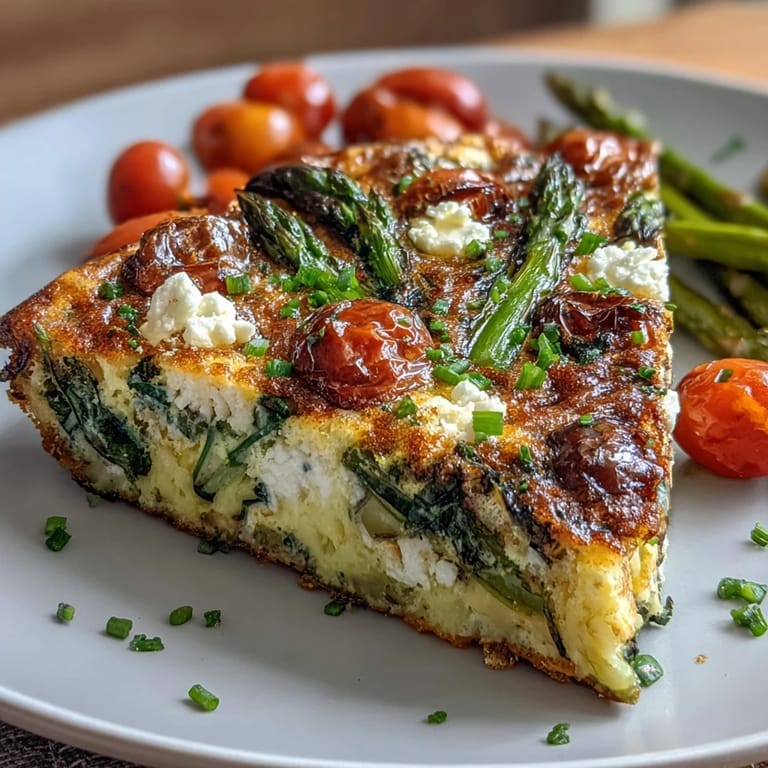
Save This frittata has become my answer to almost every question: what should I make for breakfast, what do I bring to brunch, what can I eat for three days straight without getting bored. It's simple enough that you can make it without thinking, but good enough that people ask for the recipe.
Recipe FAQs
- → Can I use other vegetables instead of asparagus?
Yes, seasonal vegetables like peas, leeks, or bell peppers work well and can be swapped to suit your taste or availability.
- → How can I make this dish dairy-free?
Replace regular milk with plant-based alternatives and omit or substitute the feta with a dairy-free cheese option to maintain rich flavor.
- → What is the best cooking vessel for this dish?
A 10-inch oven-safe skillet is ideal for even cooking and easy transfer from stovetop to oven during preparation.
- → Can it be served cold or only warm?
This frittata can be enjoyed warm or at room temperature, making it versatile for various meal settings.
- → What herbs complement the flavors here?
Fresh parsley and chives are used to add brightness, but other herbs like basil or dill can also enhance the flavor profile.